
Harry Melling and Harry Lighton on divided response to Pillion: ‘Putting it into the world was terrifying’
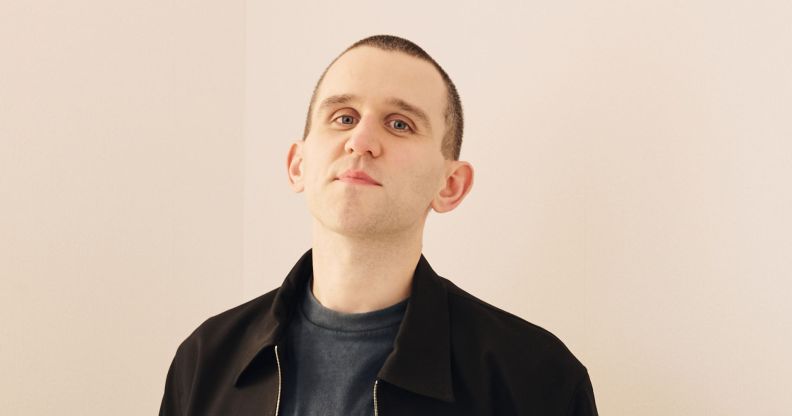
Pillion’s Harry Melling: ‘I want to be the type of actor that supports original storytelling.’ (Getty)
Harry Melling and Harry Lighton had a meaty old task on their hands with Pillion.
It’s a task of firsts: known for his award-winning short films, Pillion was the debut feature for 33-year-old Brit Lighton. It’s certainly not the first time the queer leather community has been captured on film, but it is the first film to bring the subculture to mainstream cinema screens globally, bag three BAFTA Award nominations, and star two bona fide Hollywood heavyweights.
Those stars are Alexander Skarsgård and Harry Melling, who become embroiled in a knotty, titillating and, it turns out, contentious dom-sub romance. Melling’s character Colin, a meek and dowdy traffic warden by day and barbershop quarter performer by night, begins the film with his own meaty task at hand. It involves Skarsgård’s smouldering BDSM biker Ray round the back of a Primark in South London, his leather trousers unzipped, his Prince Albert out. Colin is on his knees. No further explanation required.
From there on in, their relationship becomes a push and pull between Colin’s seeming desire for a more tender, conventional relationship, and Ray’s aloofness, as he maintains the boundaries of the dom-top agreement they supposedly have. Colin sleeps on the floor; Ray in the bed. Colin goes shopping for groceries and butt plugs; Ray goes out biking. Colin wants Ray to meet his family; Ray would, if he spoke, say he’d rather die.

Pillion, based on the 2020 novel Box Hill by Adam Mars-Jones, might zoom in on Ray and Colin, but it’s also a wider depiction of relationship dynamics that can exist within the leather community. In response, community members have been to see it in droves. “I met a guy who’d been to see it seven times the other day, a leather dom,” laughs Lighton, calling over Zoom from America the week after Pillion’s US release (it landed in UK cinemas in November). Melling, sitting next to the director in what appears to be a corporate office basement, pulls a bemused face.
“What I always wanted was for the film to generate a discussion both within that community and without that community, from other people, about whether Ray was a force for good or bad in Colin’s life,” says Lighton. Dozens have gone on record to wax lyrical about Pillion’s real-world impact on the subculture, and Lighton has seen “lots of people take pride” in its existence. “It’s also kind of being knotty and it’s generating points of disagreement within the community. I think that’s also a massive positive.”
Pillion has largely been a critical smash; it garnered a very impressive 99 per cent approval rating on Rotten Tomatoes and won a slew of awards, including Best British Independent Film at the BIFAs and a Best Screenplay gong at last year’s Cannes Film Festival. On Sunday (22 February), it vied for Outstanding British Film, Outstanding British Debut and Adapted Screenplay at the BAFTAs (sadly, it won none).
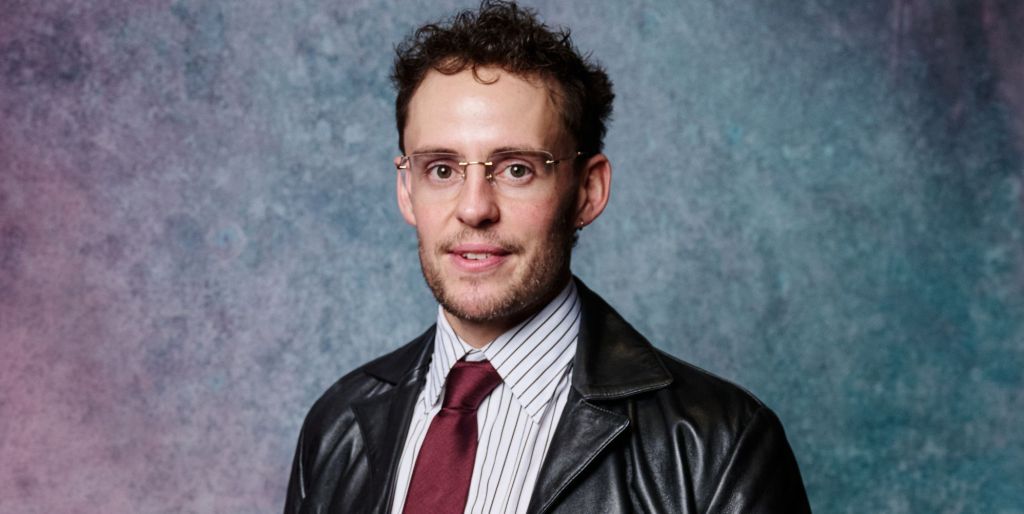
Online, the love for it is loud, but a small few have been less effusive. In January, the BBC published an article exploring the criticism. Some felt its marketing as a charming romcom wasn’t representative of the relationship at hand; at best, they said, it’s morally murky, at worst, Colin is simply in an abusive relationship. The relationship does manage to circuitously fix Colin’s barren love life, but no spoilers here.
While Pillion is by design provocative, Lighton asserts that he had no intention of trying to “divide a community”, rather make a film which does what all good films do: spark conversation.
“I wanted to depict Colin’s first experience of a kinky relationship and for that relationship to have positives and negatives, flaws and things which he gains from it,” he explains. Lighton lights up at the idea of people piling out of the cinema after watching it, everyone taking different sides and having conflicting perspectives. “Those kinds of debates I find really rewarding,” he says.
I wonder what the experience is like for Melling who, having shot to fame as the repugnant Dudley Dursley in Harry Potter, must be used to having his characters put through the wringer. How does he feel, putting the character he has come to know and love into the world for judgment?
“You say yes to a project because you love it and you believe in it,” he says, “and you feel that you can offer something towards that role that might work.” He’s a polite, guileless presence, clearly passionate about the work he’s doing but entirely unshowy with it. “Putting it out into the world and showing it to an audience is kind of terrifying,” he continues.
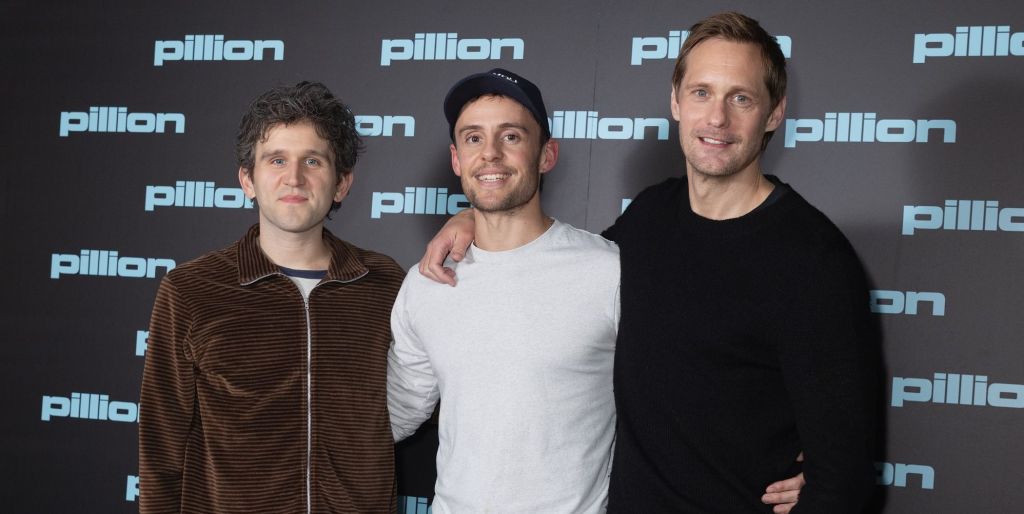
The hope, he says, is that the audience can see what he first saw in the script. Luckily, when Pillion premiered at Cannes, they did. “I flew in from New York. I had sort of no time. I landed, I got changed and I just went to the screening and so I remember feeling really flustered. It was a lot, you know?” The film earned an eight-minute-long standing ovation, and a place on a Wikipedia page under the heading “Longest Standing Ovations at Cannes”. From then on, the experience has been “lovely”, “a joy” and “completely overwhelming”.
Since Harry Potter, and probably to try and shake off its indelible mark, Melling has prided himself on taking on weird and wonderful roles. He was an artist with no limbs in 2018 black comedy The Ballad of Buster Scruggs and macabre 19th century poet Edgar Allan Poe in 2022’s The Pale Blue Eye. Pillion might be his first role wearing an assless wrestling singlet while getting bonked to Tiffany’s “I Think We’re Alone Now”, but it slots into his deliciously odd filmography nicely.
“I’ve always been attracted very much to work that is unique [where] the vision of it is specific. I think the last sort of 10 years has just been me trying to hunt down those projects,” he says. It’s one of the reasons Lighton cast Melling in the role: “I thought it was consistent with a lot of his work.”
Few of Melling’s projects have created as much noise online though, from reactions to Skarsgård’s bawdy red carpet attire to moral squabbles over Ray and Colin’s relationship. It’s a privilege to be in a position to have these conversations. A handful of years ago, a film as explicitly queer as Pillion would likely have been relegated to small-time indie film festivals, not talked about on The Graham Norton Show sofa or celebrated by the BAFTAs.
“I hope it indicates to the commissioners and the financiers that it’s worth taking a risk on stuff which doesn’t scream ‘BAFTA nominee!’,” Lighton laughs. At Cannes, Pillion premiered alongside Urchin and My Father’s Shadow, two other British films by debut feature filmmakers, equally bold in different ways. “I’d say that both within queer film but also within independent film more generally in Britain there’s risks being taken and they’re paying off,” Lighton says.
It’s not just Britain either. Lighton offers Canadian queer ice hockey drama Heated Rivalry as an example of a risk that is more than paying off. “I don’t think before Heated Rivalry financiers would have been charging towards scripts like that and now everyone and their aunt is going to be wanting to find the next Heated Rivalry. You want to be the person who’s at the front of that wave rather than the person who’s fifth in line.”
Some of last year’s most critically-acclaimed films, many of them queer such as Twinless and Ponyboi, struggled to find funding or international promotion. For Melling, its those stories that are often most interesting to create. “I’ve always wanted to be the type of actor that supports original storytelling and within original storytelling is gonna be risks,” he reflects.
“Those are the voices that I want to attach myself to in terms of work. I’m just thrilled that something like Pillion, which is hopefully doing something new, has had such a reach.”
Pillion is in US cinemas now and is streaming on Prime Video in the UK.
Share your thoughts! Let us know in the comments below, and remember to keep the conversation respectful.