
Kansas trans ID ban will have huge health and social consequences, experts warn
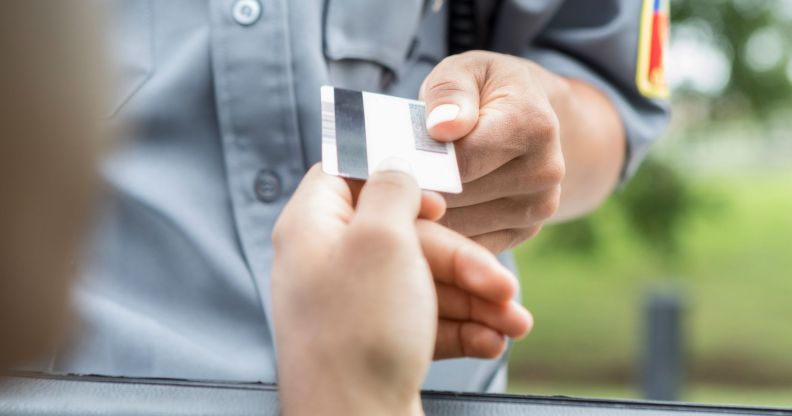
Trans people in Kansas could face up to six months in jail if they don’t surrender their IDs. (Getty)
A trans ID ban in Kansas will have huge health and social consequences, researchers have said.
The sweeping anti-trans bill, SB244, bans trans and non-binary Kansans from using public toilets and locker rooms consistent with their gender identity.
State-issued driver’s licenses, identification cards and birth certificates for holders whose gender marker does not match their sex assigned at birth are also invalidated under the law.
The law means trans and non-binary people could be at risk of a $1,000 fine and up to six months in jail for driving with an invalid license.
Kansas is the first state to invalidate state-issued identification documents that were legally obtained.
Researchers Jae A. Puckett, L. Zachary DuBois and Noelle Martin, who study how marginalisation and resilience affect the lives of trans and non-binary people, have said that the ID ban will have a huge negative impact on the health and well-being of the community.
“By mandating the use of birth-assigned sex on identity documents, Kansas denies transgender people legal recognition and curtails their freedom of movement,” the researchers noted in a piece for The Conversation.
“Invalidating someone’s identification documents has immediate and powerful consequences that cascade into all aspects of their life,” the researchers continued, adding that it will mean many trans and non-binary people will be unable to live their lives, while they risk fines and jail time that would house them according to their sex assigned at birth.
“Taking a train or bus is not a solution that would work for many people,” they note, highlighting that “half of the US population does not have access to public transportation”, and if they do it often isn’t reliable or well maintained.
Two trans men who sued the state of Kansas to block the law noted that being prohibited from driving makes them unable to work.
Invalidating legal documents also means that members of the community will be unable to access “health care, obtain housing, have a job, vote, attend college, access financial assistance or even purchase cold medicine at a pharmacy,” the researchers added.
They also flagged that trans and non-binary people who haven’t updated their identification documents can be subjected to mistreatment and are more likely to experience “psychological distress and suicidality, in part due to increased day-to-day stress”.
The researchers added that complying with the current law is “an impossible situation” for many trans and non-binary people, with “the World Health Organization, United Nations and the World Professional Association for Transgender Health having all called for trans and non-binary people to have the right to legal recognition of their gender”.
Numerous similar bills across the US have resulted in multiple people, cisgender and transgender, being wrongfully confronted or abused for using public bathrooms.
In August last year, Minnesota teenager Gerika Mudra, a cisgender lesbian, said she was forced to expose her breasts to a woman in the bathroom of a Buffalo Wild Wings after she was accused of being “a man”.
Similar cases have emerged in the UK, with a report in the same month highlighting multiple accounts of cisgender and transgender people being harassed or confronted for using public facilities.
Share your thoughts! Let us know in the comments below, and remember to keep the conversation respectful.