
EU court orders states to recognise trans citizens’ gender in landmark ruling
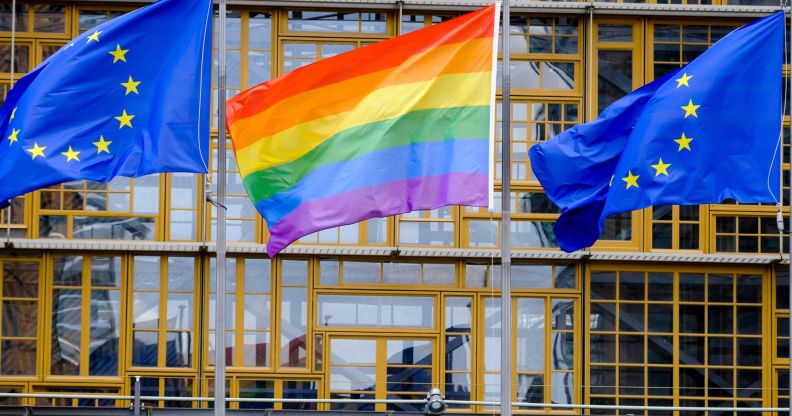
EU member states must recognise trans people, the Court of Justice has ruled. (Getty)
A major EU court has ruled that member states cannot refuse to amend gender data when it interferes with free movement rights, in a landmark ruling for trans rights across Europe.
The European Union’s Court of Justice (CJEU) ruled in a judgment handed down on Thursday (12 March) that trans Europeans have a fundamental right to move to other member states and obtain legal documents recognising their gender.
It further stipulated that member states must have “clear, accessible and effective procedures” for gender recognition to ensure EU rights function properly.

The ruling came in response to a case brought by a Bulgarian trans woman living in Italy who was denied legal recognition of her gender by Bulgarian courts for nearly a decade.
Bulgaria is one of three countries in the EU that has heavily restricted or outright banned legal gender recognition, the others being Hungary and Slovakia.
The court ruled that laws blocking changes to gender data for citizens exercising free movement rights are incompatible with EU law. It did not directly legislate that every state must create a new system, though that may be the outcome.
“To tolerate discrimination based on the difference between biological sex and gender identity would be tantamount, as regards to a transgender person, to a failure to respect the dignity and freedom to which he or she is entitled, and which the Court has a duty to safeguard,” its ruling opinion reads.
Trans rights are fundamental for EU freedom of movement, CJEU says
The decision has major implications for the legal rights of trans people across the EU. It sets a legal precedent that recognising a trans person’s gender identity is a fundamental right within the EU, and member states must abide by this under their human rights obligations.
Judges also said the ruling nullifies any Supreme Court judgment that restricts legal gender recognition in any respective member state, including the Bulgarian Supreme Court’s 2023 judgment that banned lower courts from changing a person’s gender markers on legal documents.
ILGA-Europe senior strategic litigation advisor, Marie-Hélène Ludwig, said the judgment was a “huge step forward” for LGBTQ+ rights across the EU, commending the Court for its ruling.
“The Court said it clearly: a member state’s refusal to grant [legal gender recognition] and issue functioning identity documents hinders the exercise of the right to free movement and residence attached to EU citizenship,” Ludwig said. “The European Commission how has a strong legal basis to swiftly act against states that do not comply with this judgment.”
While the Court’s judgment does not apply to the UK, which is no longer part of the EU, its decision stands in stark contrast to the legal and policy decisions that have attempted to restrict trans people’s rights to identify following the Supreme Court’s decision on FWS v Scottish Ministers.
Last month Europe’s parliament agreed to a resolution declaring that trans women are women, which it will further pursue at the 70th annual UN Commission on the Status of Women.
TGEU expert advisor and litigation lead, Richard Köhler, hoped the judgment would allow trans Europeans to “fully enjoy their freedom of movement,” adding that national laws could no longer “stand in their way.”
“Thousands of trans people in the EU are breathing a sigh of relief today. We thank the plaintiff for her many years of commitment,” they added.
Share your story! Do you have an important, exciting or uplifting story to tell? Email us at [email protected]