
Big Girls Don’t Cry, the film about coming of age as a queer teen girl in rural New Zealand: ‘It’s a hot mess!’
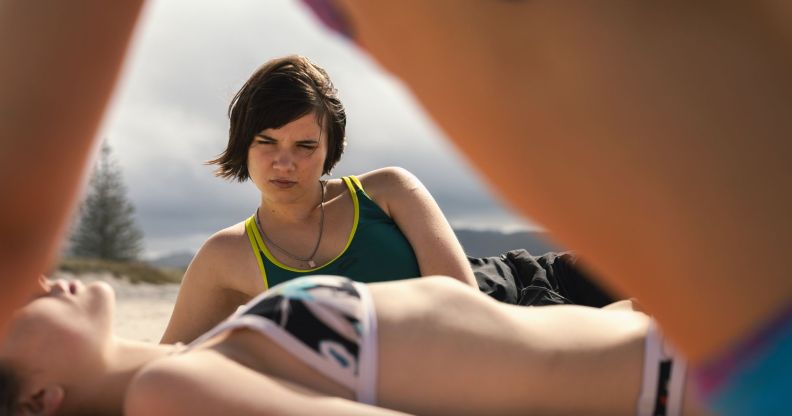
Big Girls Don’t Cry is playing at BFI Flare. (Blue Fox Entertainment)
Growing up as a pre-teen in rural New Zealand, filmmaker Paloma Schneideman found herself with “lots of boyfriends”. Or rather boys who, really, were just friends. “I always had so many boyfriends ‘cos we were just buddies, you know?” she recalls today, from home in Auckland.
As she broached her early teens though, her friendships became squeezed. “Pressure starts to occur,” she says. “There’s a lot of influence coming from the internet and TV. I just felt this massive disparity shift as all my friends were developing and and getting boyfriends and being sexualised, and I remember just being like, ‘F***, like, I am being left behind here.’”
By 14, a timer had been set: she fretted about earning her “stripes” or “no one’s going to like me anymore”. While she wanted her long, drawn out summer days to be spent playing The Sims or making silly dances with her friends, they were instead spent agonising over how to, and whether she should, start acting like an adult. “I don’t even know how that starts to happen.”
This is one of many liminal spaces Schneideman explores in her debut feature Big Girls Don’t Cry. There’s a murky territory between intimacy being something platonic or a symbol of familial affection, and it suddenly being expected of you by your peers in strange new ways. How do you survive that inexorably traumatic time between childhood and adolescence, when those peers appear to know who they are, while everything you thought you knew about yourself has crumbled?
The film, which will screen at this year’s London’s LGBTQ+ film festival BFI Flare on 26, 28 and 29 March, follows 14-year-old Sid (Ani Palmer in a startling acting debut), growing up, also in rural New Zealand. Over the course of a summer, Sid’s sexuality burgeons as she crushes intensely on her sister’s friend Freya (The Summer I Turned Pretty’s Rain Spencer, “funny as f*** and a dear friend,” Schneideman says).
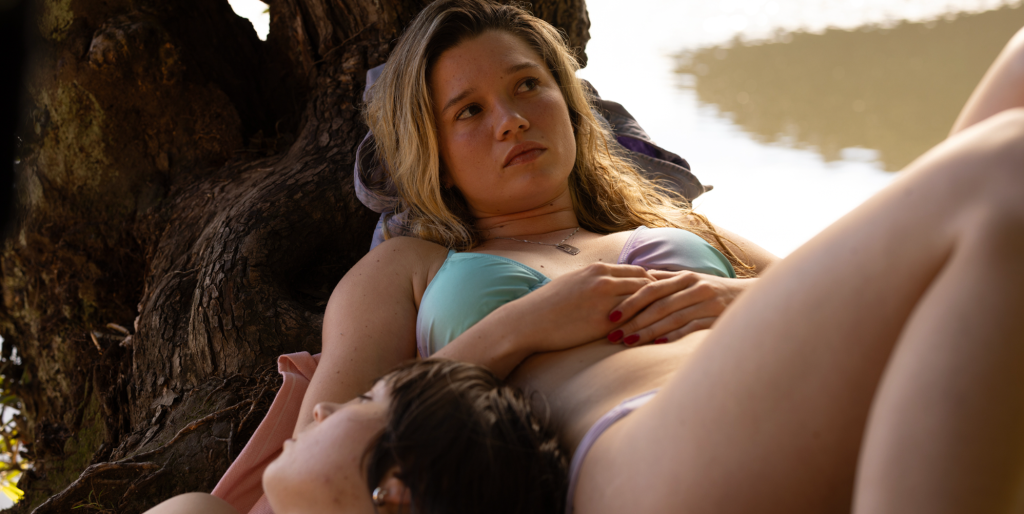
She drinks, smokes and pierces her own belly button as she aches to be welcomed in by the cooler, older clan. She is mocked and coerced by older boys and absorbs mixed messages from girls. She abandons her friends. She explodes at her father (Charlie and the Chocolate Factory’s “very f****** funny and very smart” Noah Taylor). This is a coming-of-age movie with all the warts.
“It’s the film for my inner child, for my younger self,” says Schneideman. “When you don’t have that language, you’re desperately looking for ways to understand yourself and film has always been that for me and I guess what I hope this film is for some people.”
Big Girls Don’t Cry is set in 2006, the year of the Fergie song of the same name. The year was a liminal space of sorts: the internet was upon us but social media was still in its infancy; we were between the brazen homophobia that powered the AIDS crisis and the insidious anti-LGBTQ+ vitriol that is ubiquitous today. Schneideman, now in her early 30s, came of age around 2006, and though her movie isn’t quite autobiographical, there are traces of her in there.
“It’s a hot mess,” she laughs of the brain-mangling experience of being a teen discovering for the first time that you’re queer, as Sid does. The waters between learning what being queer is, understanding that you are queer, and reaching some sort of self acceptance of the fact are muddy and unsettled. “I don’t think it’s that simple, you know? It’s just a thing [Sid’s] moving through,” Schneideman says. The ambiguity of discovering queerness isn’t something she’s seen much of on screen. “Just that kind of mess of: ‘Well, do I like you? Do I want to be like you? Are you my mother?” she laughs.
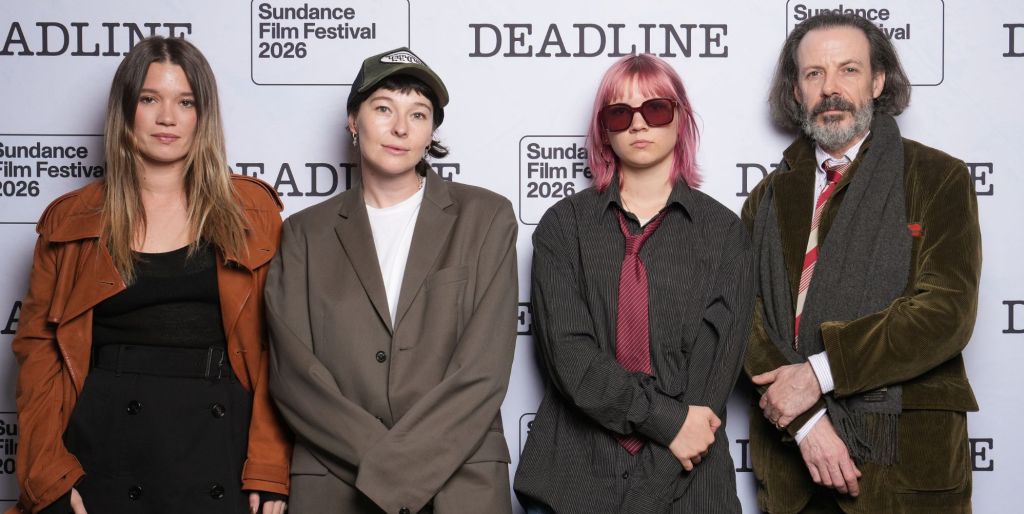
Schneiderman has been working in the entertainment industry for the past decade; she also makes (award-winning) music under the alias PollyHill. While her first short film Mine arrived in 2016, and she has found acclaim at film festivals with other short films since, it was with the help of the Oscar-winning The Power of the Dog director Jane Campion that she began making her first feature. In 2023, she was selected to be mentored by Campion via her ‘A Wave in the Ocean’ programme. Big Girls Don’t Cry began as a short under Campion’s meticulous eye, but she told Schneiderman that there was enough substance for a full-length movie.
“I just tried to move through directing my first feature with a ‘What would Jane do?’ mentality,” she says. “Any time if it got hairy or stressful, I would just try and channel back to that year of learning with her and from her.” Campion’s “amazing bull**** radar” helped Schneiderman cut the film into shape. If there was a scene or line that she hadn’t quite convinced herself was necessary, “Jane will be like, ‘So, why do you do that?’ Or ‘What do you mean by that?’ And you’re like, ‘F***!’”
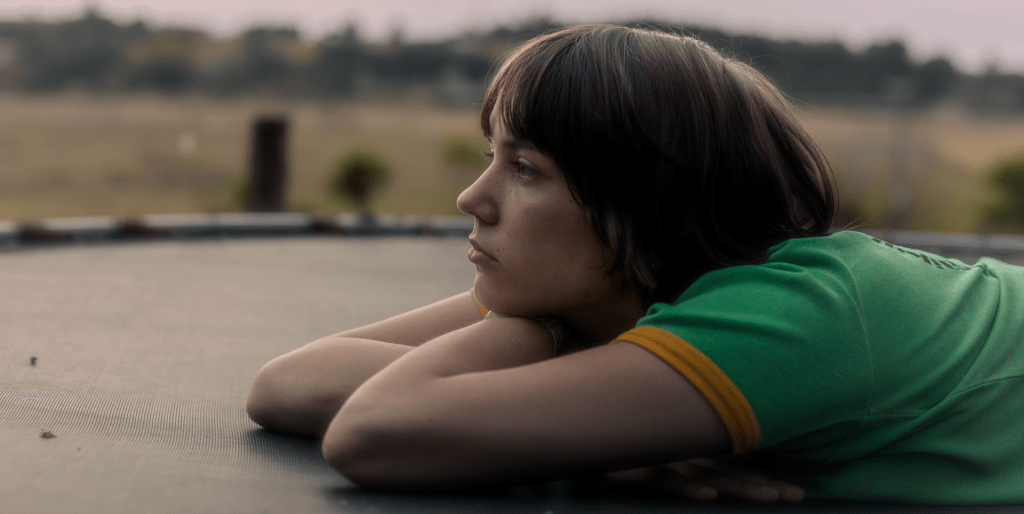
It was Campion who helped pinpoint Ani Palmer as a real talent. After Schneiderman sent her the tapes of those who had auditioned for Sid, Campion sent an email back. “This kid’s got chutzpah,” she wrote. “I could watch her fold the laundry and it would be compelling.” It’s true: despite it being her acting debut, Palmer breezes through the Herculean task of appearing in every scene, as the film’s “entire vessel,” as Schneiderman says. She is magnetic, capturing the anxiety and confusion of adolescence with the flicker of an eye or a furrowed brow.
During the audition process, Schneiderman asked the actors to relay a time when they’d felt shame, as Sid does. “Everyone’s shame story was something about, like, ‘A guy I tried to kiss rejected me’ or ‘My bikini top fell off at the beach’.” Those were valid, she says, but Palmer’s story “was about bringing, like, steamed buns to the friend hang out. She only had $5 to buy these steamed buns and then no one really ate them so she wanted to take the frozen steamed buns home with her.” The quiet pang of embarrassment resonated. “I don’t know why but it f****** broke me. I felt the shame.”
It’s a small, subtle moment of pain, but that’s sort of what Big Girls Don’t Cry prioritises. “I’m kind of obsessed with the tiny tragedies of day-to-day life,” Schneiderman says, a little impishly. When you’re a confused teen, getting caught lying about sex or not being invited to the cool party becomes “the greatest tragedy” in life. “What is happening to Sid is the most defining, tumultuous s*** of her life to date and yet life goes on and it just keeps moving. I didn’t want another trauma story.”
There’s no bow-tied ending, coming out scene or major catastrophe that Sid has to endure. She’s just another queer teen making her way in the world, one beautiful mistep at a time.
“Actually, we don’t need to bleed or scream to warrant a place on screen now,” Schneiderman says. “Our foremother and fathers have done all that work for us and what a privileged position to be in that we can tell these softer, nuanced, ambiguous queer stories without having to go there, you know?”
Big Girls Don’t Cry plays at BFI Flare: London LGBTIQ+ Film Festival on 26, 28 and 29 March. Tickets available now.
Share your thoughts! Let us know in the comments below, and remember to keep the conversation respectful.