
Former EHRC chair joins ‘gender-critical’ peers targeting abortion rights

Baroness Kishwer Falkner. (House of Lords)
The Equality and Human Rights Commission’s (EHRC’s) former chairwoman, Kishwer Falkner, has joined ‘gender-critical’ House of Lords peers in calling for an abortion scheme to be scrapped in the UK.
The 71-year-old life peer was among several to support an amendment to the Crime and Policing Bill which would scrap the ‘pills by post’ scheme.
Implemented during the COVID-19 pandemic, the postal scheme allows those who are less than 10 weeks pregnant to have abortion medication delivered to their homes. It was praised for improving access to medical abortions by alleviating the fears and social stigma of being spotted in a sexual health clinic.
However, House of Lords Conservative peer, Baroness Philippa Stroud, has requested the service be scrapped completely in amendments that members will vote on this week.
A similar amendment was brought by MPs in the House of Commons last year, but was struck down after failing to pass its first vote.
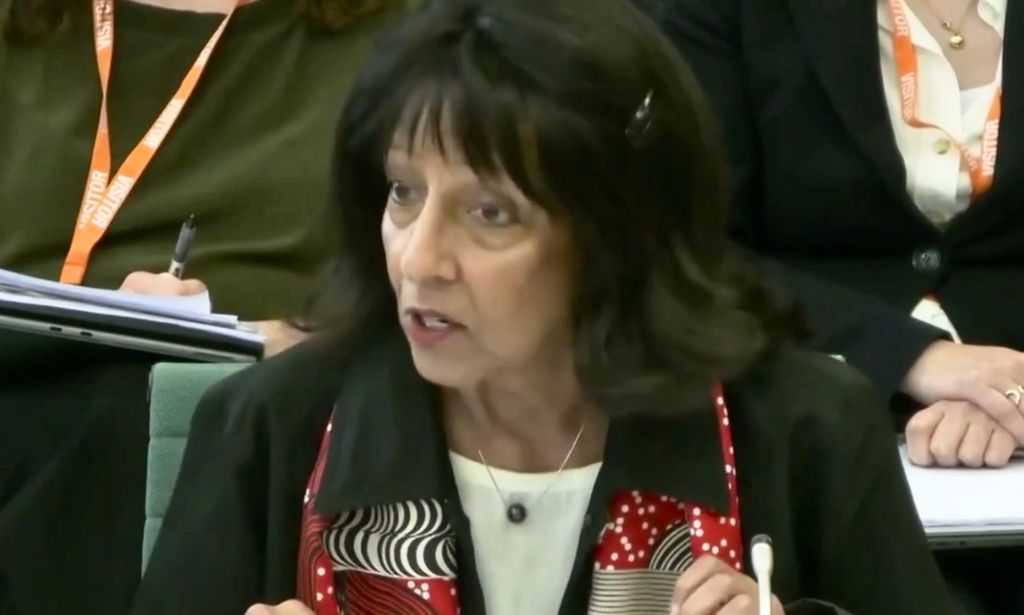
Baroness Falkner, whose five-year tenure as EHRC chair was defined by the human rights regulator’s anti-trans policies, was among the signatories supporting the amendments brought to the House of Lords earlier this week.
She joined House of Lords peer, former Olympic swimmer, and ‘gender-critical’ activist, Baroness Sharron Davies, who claimed the pills could “too easily fall into the hands of abusers coercing abortions, traffickers covering up abuse, or women whose pregnancies are approaching full term.”
Falkner left her position as EHRC chair in November 2025 after nearly five years heading the UK’s largest regulator of equality law.
During that time, the non-departmental public body became widely condemned for its sudden shift towards what many described as a “transphobic” and politically conservative approach to human rights law.
Most notable was its work last year updating a code of practice on single-sex services, which the government is currently using to consider legislation that many fear could result in a ban on trans people using public facilities such as toilets or changing rooms.
An interim update, published in April, just days after the Supreme Court ruled that the 2010 Equality Act’s definition of a woman refers to biology only, recommended that trans people be banned from single-sex spaces consistent with their gender identity and, in some cases, their birth sex too. It was eventually scrapped in October.
Since then, the EHRC’s new chair, Dr Mary-Ann Stephenson, is reportedly working with the Equalities Department to amend the unpublished code as part of what sources call a “constructive” review.
Baroness Falkner supports similar amendment
A separate amendment brought to the House of Lords this week would block an “up to birth” abortions bill from being passed.
Brought by Conservative life peer Baroness Catherine Meyer, the amendments would block the removal of women from criminal law related to abortion.
“I do not oppose abortion in all circumstances, but diluting the already limited protection for viable unborn babies is just a step too far,” Baroness Meyer said. “Without limits backed by meaningful legal deterrent, women may come under pressure to terminate pregnancy late in their terms, sometimes against their own wishes or consent.”
Baroness Falkner claimed during a debate on the amendment that family members may use the bill to “seek coercion.”
“If there is no sanction in law, what reason can one give a controlling partner who insists that it is perfectly permissible in law? Decriminalisation suggests that there is nothing to prevent the woman from aborting late-term through the convenience of pills by post, virtually no questions asked,” she said. “So you have the perverse effect that, alongside the certainty of greater autonomy for women, we may well see the risk of coercive control and deception.”
Share your story! Do you have an important, exciting or uplifting story to tell? Email us at [email protected]