
GOP SAVE Act rewrite ties voting restrictions to policies targeting trans people
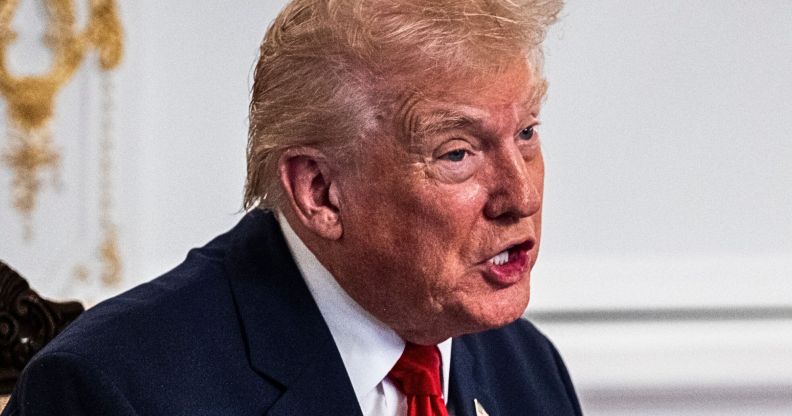
47th US President Donald Trump. (Getty)
Senate Republicans introduced a sweeping rewrite of the SAVE Act on Tuesday night that combines new federal voting restrictions with measures targeting transgender people after Donald Trump’s insistence on the bill’s passage with said provisions.
The proposal, obtained by Punchbowl News on Tuesday evening (17 March), would require documentary proof of US citizenship to register to vote in federal elections, mandate photo ID at the polls, and significantly limit mail-in voting by restricting absentee ballots to specific circumstances such as illness, disability, or verified travel.
It would also direct states to cross-check voter rolls with federal immigration databases and remove individuals identified as noncitizens, with federal agencies required to share data to support those efforts.
The amendment also includes provisions focused on transgender people. It would ban transgender women and girls from participating in school sports aligned with their gender identity by defining sex based solely on reproductive biology at birth.
Another section proposes federal criminal penalties for gender-affirming care for minors, using language that characterises such care as “genital and bodily mutilation of a minor” and “chemical castration of a minor.” The package reorganises the bill into sections covering elections, sports, and “protections for children.”
The proposal has drawn criticism from advocacy groups, including the Human Rights Campaign, which argued the bill combines voting restrictions with restrictions on the transgender community.
David Stacy, vice president of government affairs at the group told The Advocate: “This bill is a sad and dangerous attempt to cover up for the fact that Trump and Congressional Republicans have no plans to tackle rising costs or any of the priorities of the American people.”
Voting rights groups have also warned that proof-of-citizenship requirements could make it harder for eligible voters to register, particularly those with name discrepancies in official documents.
The amendment’s path forward remains uncertain, as it faces procedural hurdles in the Senate and would need House approval before reaching Donald Trump’s desk. Trump has stated he will not sign any other bills into law until the measure receives a vote and passes.
Share your thoughts! Let us know in the comments below, and remember to keep the conversation respectful.