
Heated Rivalry’s Jacob Tierney talks season two, stigma and happy endings: ‘Our stories don’t have to be traumatic’
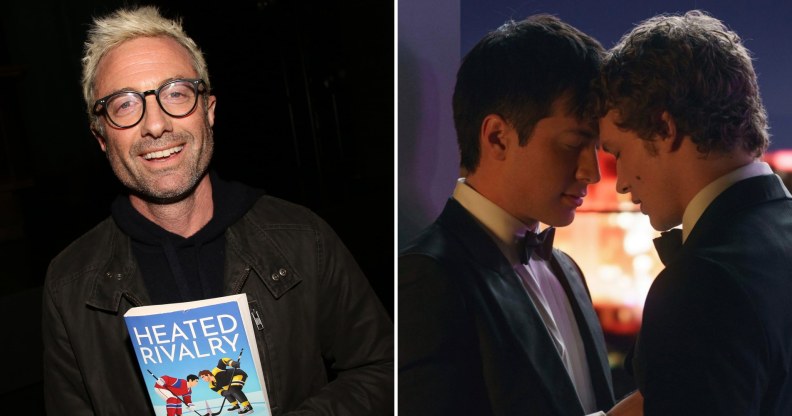
Jacob Tierney created the TV adaptation of Heated Rivalry (Bruce Glikas/WireImage | Crave)
The show still on everybody’s lips is Heated Rivalry – and for good reason. The gay hockey drama tackled hugely important topics, like hyper-masculinity and homophobia in sports, while also showing that not everything has to end in trauma.
The highly anticipated second season is in the works, with leaked casting calls appearing to confirm that plenty more characters from Rachel Reid’s Game Changers novel series are coming.
Speaking to international press, including journalist Anna-Lena Malter, showrunner Jacob Tierney talked what is to come, removing fan expectations and the importance of giving Shane and Ilya a happy ending.
Taking into account the fans’ reception of the first season, is there something you want to dive deeper into or explore more in the second season — things that fans seem especially excited about?
Jacob Tierney: If I’m being very honest, I’m trying to remove fan expectation from anything that I do for the next season. I’m going to continue to do what I did in the first place, which is follow Rachel’s books and let them guide me down the path that I think is right for the next few moments of Shane and Ilya’s lives together. I’m thrilled that people are so happy with what we’ve done so far, because that’s the road I would like to keep going down. But I will admit that the more noise there is around it, the more I want to kind of drown that out.
You wrote and directed the series yourself. What was the single hardest creative choice in adapting Rachel Reid’s story for TV, and what did you refuse to compromise on?
Tierney: I mean, I think the boldest thing that I did was to put Game Changer, the first book, into the middle of the show. I think that was a fairly structurally surprising thing to do for the adaptation, and it was not necessarily expected by the folks that I was making it with. But I’m glad I did. I think it worked out, and I’m very happy with that portion of the show.
And the thing that I wouldn’t compromise on, I would say there were two things. One was that the sex needed to be present and forward and front and centre. And two, that they were getting a happy ending. There was no way I was going to end the show on a cliffhanger. There was no way I was going to end this show on a moment of doubt about anything other than literally watching them drive off into the sunset. That’s everything that I wanted for those two characters.
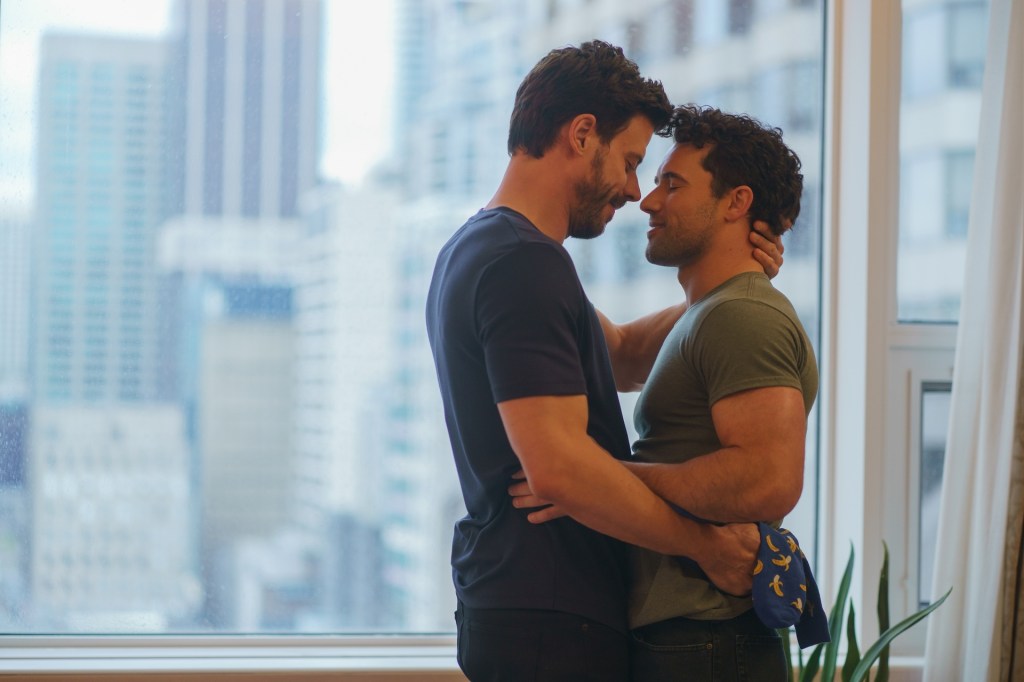
I was surprised how many people didn’t realise that Shane was autistic when first watching the show. I’m autistic myself, and it was immediately clear to me. What was important to you when writing an autistic character, and when working that out with Hudson?
Tierney: Honestly, I didn’t think a lot about it in those terms. I just wrote Shane, and that’s part of who Shane is. I don’t think we ever really labeled it that way. I mean, look, he’s autistic, there’s no doubt about it, but I think it was more about, this is the way Shane reacts to things, this is the way he processes information, this is the way he deals with situations.
I know a lot of people on the autism spectrum, and I know enough to understand that there are so many different ways autism can manifest, emotionally, psychologically, behaviourally, and there is no one “right” way to portray it. So the guiding principle was really just to stay true to Shane, and let that part of his personality come through naturally.
It was also important that Ilya treats him with empathy rather than judgment. I think that’s what allows those traits to feel endearing instead of frustrating or confusing, especially for viewers who are not neurodivergent. So for me, it was never about defining him through a label, it was just, this is Shane.
Your show is obviously a love story, but also about fear, shame, and emotions that these characters, in an ideal world, wouldn’t feel. While preparing Heated Rivalry, were you thinking about sending a message of support to locker rooms, not just in hockey, but in sports more broadly? Did you want to make a difference?
Tierney: I wish I could say yes, but I didn’t think we would reach those locker rooms. I didn’t think that was even possible, if I’m being perfectly honest. In a dream world, sure, that would be incredible. But I never approached it that way.
What I did know was that we were putting something out into the world that carried love and hope, and I think that’s powerful. But I didn’t anticipate the show having the reach that it has had. If I had thought about it in those terms, I probably would have told myself to get over it, that those audiences weren’t going to watch something like this.
One of the nicest things about what has happened is hearing from people about how meaningful the show has been to them, how moved they are, and in some cases how it has changed them. I’m incredibly grateful for that. But it wasn’t part of a master plan. I don’t think you can really plan for something like that.
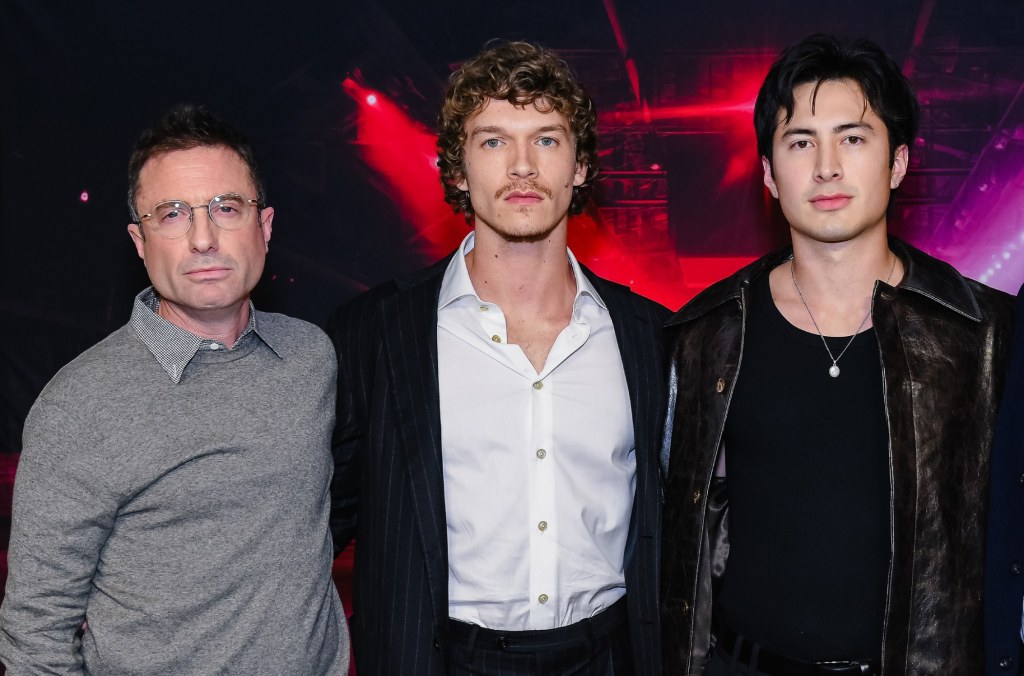
In Norway, the show has been praised within the ice hockey community. Do you hope it can create a change in attitudes within sports spaces?
Tierney: I hope so. I hope it can at least encourage a conversation that should probably be louder and more frequent, not just in hockey but across sports. Hockey is a particularly conservative environment in many ways, but it’s also international, and that diversity can be a strength.
The more voices you bring into a space, the more open it can become. I’m cautiously optimistic that the show is contributing something positive, or at the very least, not something negative. Seeing players speak publicly about supporting a gay teammate, for example, feels like a meaningful step.
I don’t want to overstate the show’s role in that, we’re not a massive change agent. At the end of the day, we’re telling a love story. But I do believe love stories can be powerful, and they can reach people in ways that other kinds of storytelling sometimes don’t.
How did making this series change the way you think about rivalry?
Tierney: It made it sexier. But more seriously, rivalry is just a great narrative device. It creates tension, humour, and emotional energy. It’s that feeling you have toward someone where you don’t quite understand what it is yet, so you misplace it, you think you dislike them, but in reality you’re just very focused on them.
It’s a fun thing to explore dramatically because it naturally drives conflict and connection at the same time. I don’t know if it fundamentally changed how I see rivalry in real life, but it definitely reinforced how useful and compelling it is as a storytelling tool.
Is there a scene that you are really excited to adapt for the screen for season two?
Tierney: I don’t have my full plan worked out yet. When Shane and Ilya get married, like by Hayden’s kids, it’s like the cutest thing I’ve ever seen where of course I’m going to do that. So there’s a thing I can commit to. I just don’t want to commit to… I want to wheel out a little room to manoeuvre. But that for sure will enter in. I mean, truly, the thing I’m looking forward to so much is writing Ilya and Hayden in season two because of how funny they are together and that endless antagonism that I think will be very, very charming.
Sports fiction has long been dominated by hyper-masculinity. What does it mean to you that a gay love story not only exists in that space, but thrives in it? And has the response changed how you think about where queer stories can exist?
Tierney: I’ll answer the second part first. Yes, I think it’s nice to see a successful queer show that is not tragedy-based and is not trauma-based. I think we’re so used to that as queer people. I’m in my 40s. I grew up watching gay people be comic relief or dead. Or non-sexual, right? It was one of three things. And so to be the hero of a story, to be allowed to exist as a sexual human being, to not live under the umbrella of AIDS and death every time we talk about our sexuality, and to be allowed to be happy is not a thing that I certainly grew up with. So rare. When we got to see queer stories at all.
So I hope there’s that bit of that liberation that our stories don’t have to be traumatic and which is not to, you know, say that that is a part of our history and it’s a part of our present. And I’m not pretending it’s not. I just also think that the stories we choose to tell can move us forward too. And I think that if we endlessly tell stories based in trauma, we will endlessly feel traumatised. So I think it’s nice to have a diversity of that out there. And as for being in a sports space, I mean, yeah. Feels great. I’m like, that’s so f****** cool because I’m thrilled to make all these jocks girlfriends tell them they love the gay hockey show. It’s amazing. So fun.
And I hope they watch too. But I never expected us to dominate this sport place, to have the commissioner of the NHL talk about our show. Bananas. Insane. Who knew? And it’s great. And I love watching them be a little bit uncomfortable too. I don’t mind that.
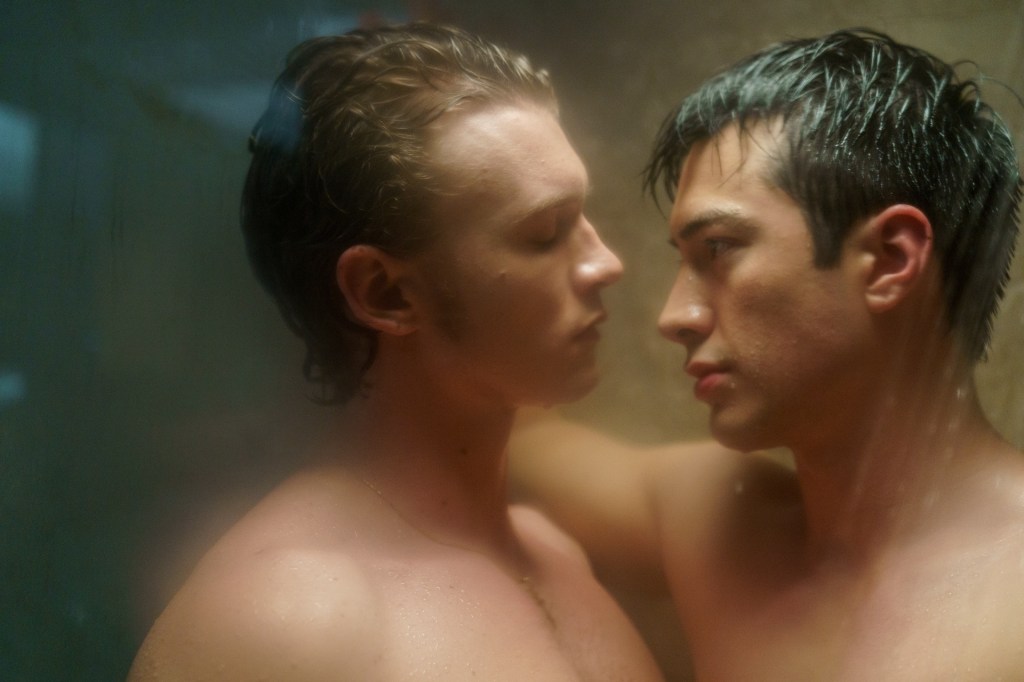
What do you think makes the show resonate so widely, even beyond queer audiences?
Tierney: I don’t think it’s that complicated. I think it’s about joy and about love. We took the relationship seriously, we gave it time to develop, and we didn’t rush it into a single film. That allows you to feel the longing between these characters in a deeper way.
I also think the happy ending plays a huge role. Viewers often expect something bad to happen, and when it doesn’t, it changes the way they experience the story. They can go back and watch it again without that sense of dread.
Ultimately, people respond to seeing love treated with sincerity. The show really wears its heart on its sleeve, it loves love, and I think audiences feel that.
How did you approach filming the sex scenes in terms of intimacy, consent, and choreography, so that they feel character-driven rather than purely provocative?
Tierney: We approached them very deliberately. They were scripted in detail, and then choreographed almost like dance sequences. Each scene has different intentions, different emotional beats, and different outcomes.
The idea is that once the actors know the choreography, they can stop thinking about the mechanics, where their hand goes, how they’re positioned for the camera, and instead focus on the emotional connection. That’s where the intimacy comes from.
We worked very closely with our intimacy coordinator, Chala Hunter, and had a lot of conversations in advance. For me, a set is a workplace. It’s not a place where people should feel uncomfortable or be asked to do something they’re not prepared for.
In the end, we were incredibly lucky to have actors who trust each other deeply and are fully committed to the material. That made all the difference.
Share your thoughts! Let us know in the comments below, and remember to keep the conversation respectful.