
Scientists discover rare intersex crab with male and female features
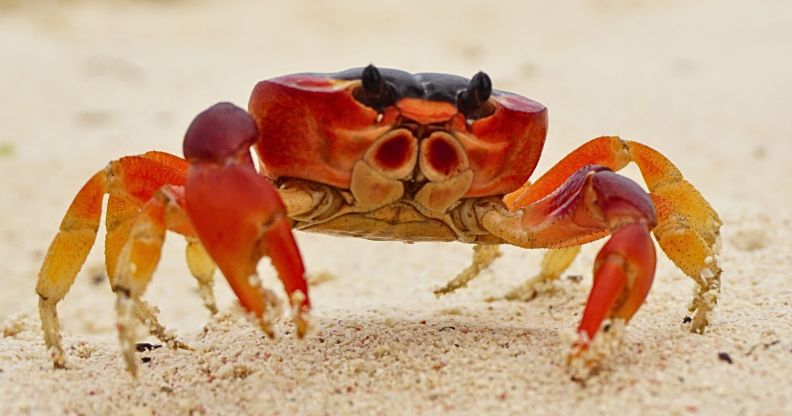
Crabs can be intersex too (stock image). (Getty)
Indian Scientists have discovered a rare intersex crab in the Western Ghats mountain range, The Hindu reports.
The freshwater crab species Vela carli was found in the forests of the Silent Valley National Park in Kerala and exhibited both male and female features. Out of a sample group of 120 crabs, which were observed in tree holes, three were found to have the condition.
Humans born with both male and female features are described as intersex, but the condition is referred to as gynandromorphy within the animal kingdom. The biological phenomenon is rare but has been previously documented in insects, crustaceans and birds.
The three Vela carli observed in the study were the first documented instances of gynandromorphy in the species, according to researchers.
K.S. Anoop Das and K.T. Fahis from the Centre for Conservation Ecology at MES Mampad College carried out the study in collaboration with crab scientist Sameer K. Pati and the Zoological Survey of India’s Purnima Kumari.
“The bodies of the crabs displayed male reproductive structures, while other parts showcased female features, including gonopores,” Das said of the crabs.
Das also believes the cause of the condition in the crabs is down to development processes as opposed to external environmental pollution.
“The crab’s habitat was free from environmental pollutants,” he explained. “So we think that the reason for the phenomenon could be related to survival tactics. This makes it possible for the crab to procreate in the absence of male or female members.”
As with animals, intersex humans are very rare. Amnesty International estimates that 1.7 percent of the world’s population is born with intersex traits, a figure comparable to the number of people born with red hair.
Share your thoughts! Let us know in the comments below, and remember to keep the conversation respectful.