Sarvat Hussain on new novel Strange Girls, complicated friendships and the pull of nostalgia
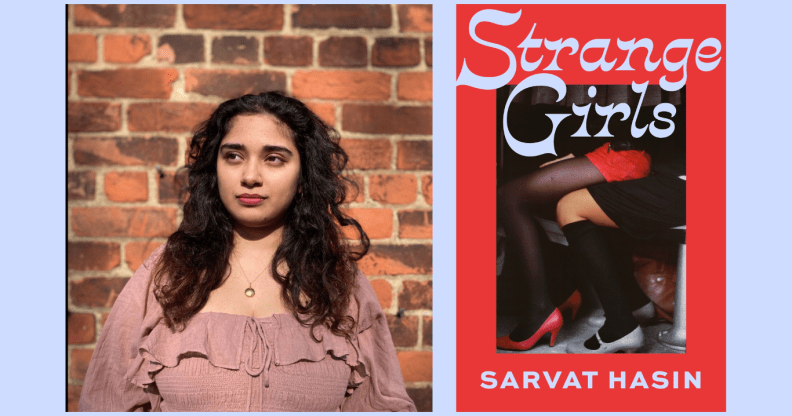
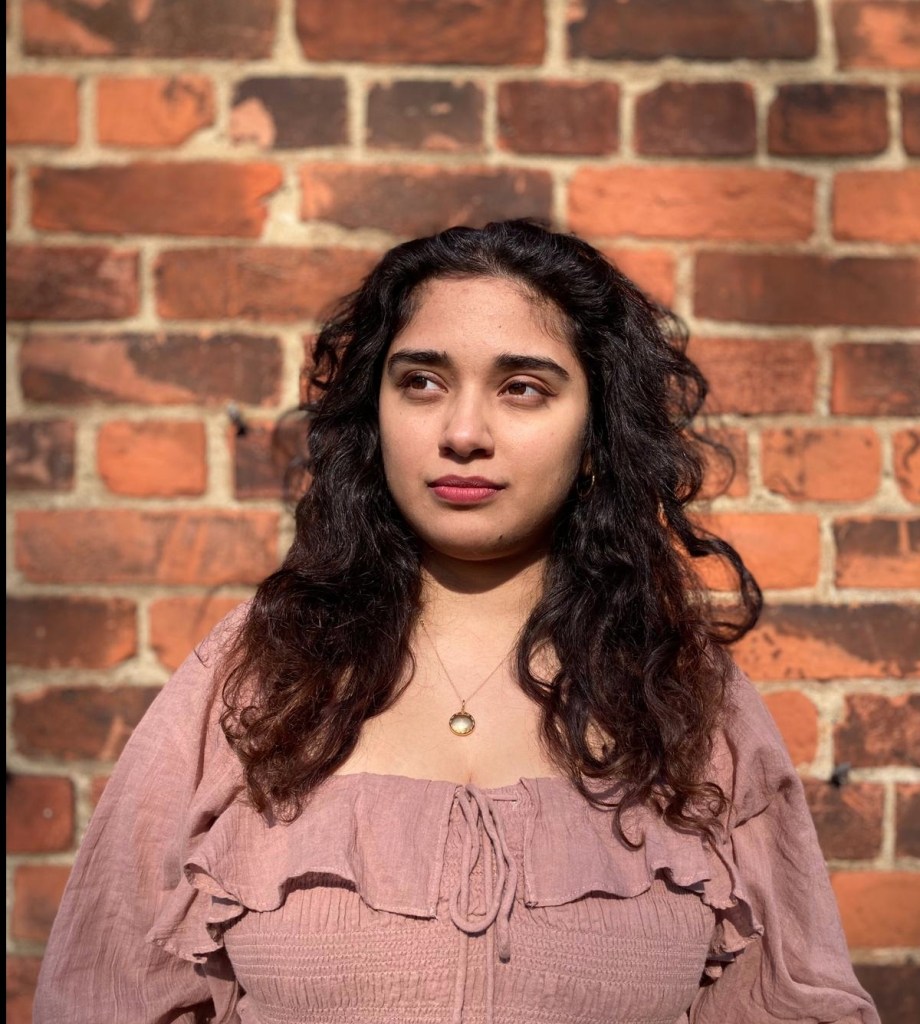
Sarvat Hussain (Dialogue Books)
If there’s one thing Strange Girls understands, it’s how all consuming a friendship can be, and how devastating it is when it fractures.
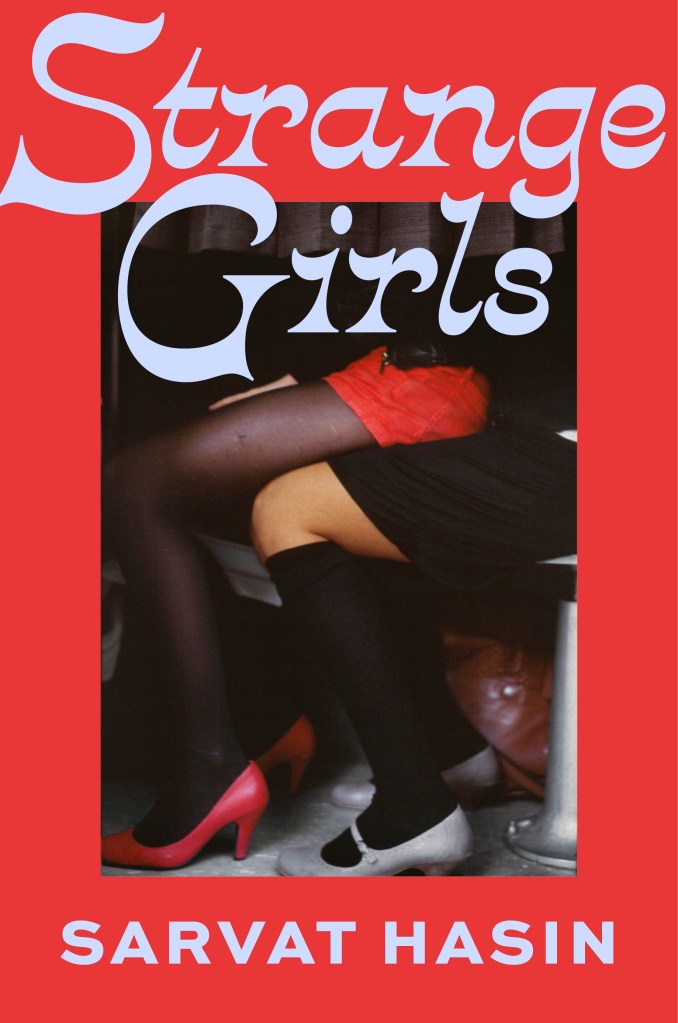
Strange Girls follows Aliya and Ava, two young women who meet at university and become entangled in a relationship that is as intoxicating as it is unsustainable. Years later, at a hen party, they’re forced to confront the story of their fallout.
PinkNews sat down with the author to talk about the book, which is available to buy now.
How would you describe Strange Girls in one or two sentences?
Aliya and Ava meet at university and become wrapped up in each other in a way that is consuming but cannot sustain itself: inevitably, it falls apart. Years later, at a mutual friend’s hen party, they must confront why their friendship broke up – and whose right it is to tell that story.
The novel explores how intensely our younger selves shape our adult lives. When did you realise this would be the emotional centre of the book?
I think our friends and peers are the clearest barometers of who we used to be as people. Every decision we make after leaving university, brings us new friends and new possibilities and they mark our journey through life.
Aliyah and Ava carry very particular cultural fantasies, ranging from Emily Brontë to the cinematic worlds of Richard Curtis. What interested you in this collision between imagined England and the reality of England?
I see my characters being at a point where they are seeking new versions of themselves. Their romanticism around England is because they’ve both been unhappy at school and felt lonely and misunderstood by their peers. They feel they can reverse this by being a new version of themselves in England. They read these novels and imagine themselves into them. I was interested in how that shatters when they arrive – it is difficult for a place to hold its mysticism when you’re in it, living it, walking through its rain, using its amenities.
I was also interested in writing about what it feels particularly for Aliya to be a young Muslim person arriving in England in the early 2010s and the alienation of that. Not only is she confronting the reality of a place that she’s romanticised but also learning the stories that England has told about people like her. In her imagination, this has always been a one way relationship. Now, she’s learning what England feels about her.
How do literature and the art of storytelling shape their understanding of themselves and each other?
They are very much using stories as a way to become themselves. These are two young girls who haven’t had a lot of paths shown to them that feel appealing. They’re not satisfied with the conventional ideas of what a life should look like so are trying to find something new.
I have a Lucille Clifton poem above my writing desk where she says “what did I see to be except myself?/I made it up”. In the process of making it up, Ava and Aliya are trying on these characters for size. Their early writings are about imagining these futures and how they would feel.
I really got a sense that, at first, they were trying to write themselves into a story. Was this something that you consciously wanted to explore?
I really love this reading. Yes, I was drawn to the idea of early writing as a kind of psychic exploration.
There is a seed here also about the novel that Aliya will eventually write chronicling their friendship.
Aliyah and Ava’s relationship reads like a shared authorship. It’s like they’re writing their identity together. What drew you to portray their friendship as something that’s co-created, like a text?
Shared authorship is such a good way to describe it. Like building their identities and their own mythos on the page and hoping real life will follow and mirror it.
There is also so much between them that is unsaid that it feels like they are using stories to say it. Aliya is hurt when she reads a character Ava has written who she believes is based on her – a character who makes “the easy choice” to follow a path that is expected of her.
Their relationship resists labels. It’s emotional, possessive, intellectual, romantic even. (I know, I just gave it labels when I said it resists them.) Did you deliberately keep that ambiguity intact?
Yes, the ambiguity is sort of the point, the thing that keeps the story going. I was interested in what ambiguity can do to a relationship. What happens if you live a life in that space between things? It leaves so much room for misunderstanding. The further they get away from labels, the less language they have to explain what they want from each other and why it hurts when expectations aren’t met.
This isn’t just about a breakup but about what happens when a breakup occurs in the margins of your life. There is no script for what they are to each other so there is no script for a breakup.
What made you want to write about the intensity of friendships formed at such a particular age?
Being 18 is a very fraught time. You’re trying to decide who you want to be, possibly for the rest of your life. Everything in your life is dialled up. I wanted to write about the vulnerability of that time – when a missed text message can feel like a heart attack.
How did you navigate the shifts in power, longing and resentment that grew as they grow older?
University can be a great flattening. So many of our differences with our friends become imperceptible because the shape of our days is the same. The moment we leave that bubble, the real world floods in and those differences become very present. About class and race and culture and religion.
It becomes much harder for Aliya and Ava to maintain the pretence that they were born when they met each other in the halls of their campus. Everything else that is a part of them begins pulsing and pulling them in different directions. Those stories they’ve told about who they are and who they’re going to be together start to feel just like stories.
How did the distance between the characters allow you to examine their friendship?
The letters that Aliya and Ava write while they are away during the Christmas and summer holidays are a narrative gift. Like many avoidant people, they are able to express themselves more fully and openly.
It was interesting to see how they both maintained their relationship differently as they aged. Were you interested in how we ‘edit’ our personal history over time?
Yes, definitely. Aliya and Ava’s relationship has become a big part of their identity. As adults, they both look back on it as a turning point and throughout the book we experience how it continues to affect who they are now.
On a similar note, how does Strange Girls approach nostalgia and the dangers of it?
I think nostalgia can be very useful for art and very harmful for living. I would say of the two of them, Aliya’s managed to channel her nostalgia into a book and Ava’s is holding her back.
How did you balance the shift between past and present in the novel? And how does it reflect the characters’ push and pull?
What I really wanted from the past and present was for the two perspectives to be locked from each other. We never really know how Ava feels about things in the university narrative. Everything we know of her is filtered through Aliya. In the present, it’s the reverse. I wanted the push and pull to be in whose version of the story is true. Each is like a love story where the narrator is the lover and the subject the beloved.
If Strange Girls leaves readers with one lingering question about their own past, what do you hope that question is?
How would you rewrite your ending with the person you lost?
I think what Aliya and Ava both struggle with is the sense of inevitability that pulled them apart. In the last few chapters of the past timeline it becomes clear they are both unhappy and raging against each other but unable to name or resolve it. So things blow up. But is there something… anything they could have done to prevent it?
Finally (and I’m sorry, this question always stumps authors but that’s why I love asking it!) could you describe the novel’s aftertaste in three words?
I love this question! I hope the novel feels like a full meal and the aftertaste is…..something sharp, bitter and sweet. Like drinking an espresso slowly after your dessert.
Strange Girls is available to buy now.