
Wes Streeting: ‘Every trans person deserves safety and respect – that’s not up for debate’
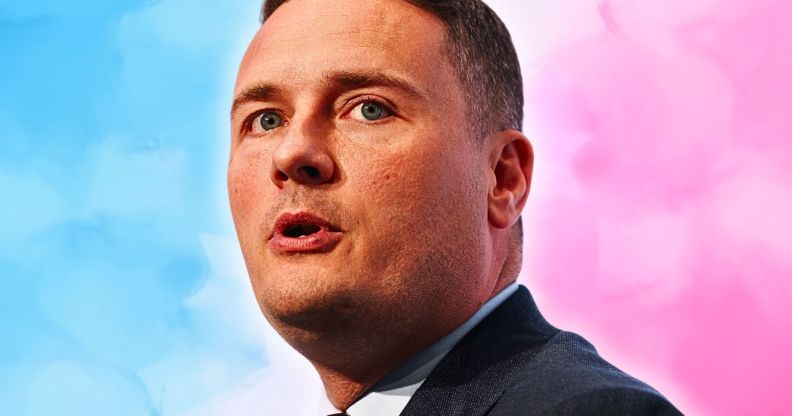
West Streeting (Getty/Canva)
Writing for PinkNews, Wes Streeting, Secretary of State for Health and Social Care, says he hears the concerns of LGBTQ+ people, and wants to reassure trans youngsters that they have not been forgotten.
If you are a young person questioning your gender, or a parent watching your child struggle with who they are, this moment of reassessing how NHS gender services are accessed and deployed may feel frightening.
You might be worried about what comes next. You might feel uncertain, unheard, or invisible in a debate that too often talks about you, rather than to you.
So let me begin here: you matter. Your feelings are real. And you deserve care, dignity and understanding.
Few areas of healthcare are as personal as this.
Behind every headline is a young person trying to make sense of themselves, and a family doing their best to support them.
These are not abstract arguments.
They are lived experiences: often complex, sometimes painful, always deeply human.
I know, from my own life, how powerful and sometimes overwhelming questions of identity can be.
Growing up gay, I remember what it felt like to wonder if I would be accepted, whether I would be safe, and whether the world would make space for me as I was.
That sense of uncertainty is something no young person should have to carry alone.
I was lucky, I had the love, acceptance and support of my amazing family and friends to get me through life’s challenges, but that is by no means everyone’s experience.
At the heart of everything we are doing is one simple principle: every young person deserves to feel heard, respected and supported, especially at their most vulnerable.
I understand why recent developments have caused anxiety.
When decisions are made about services or treatments, it can feel like the ground is shifting beneath your feet.
For some, it may feel like support is being taken away, or that doors are closing.
You may have heard the PATHWAYS clinical trial on puberty blockers has been paused while the regulator reviews aspects of its design and safety.
At the same time, there is a proposal to stop routinely offering puberty blockers and hormone treatments to under-18s while more evidence is gathered about long-term effects.
For those receiving care, treatment continues, but for others, these changes have understandably created uncertainty and fear about what support will look like in the future.
I want to be clear: this is not about turning anyone away.
We have a collective responsibility to make sure care is safe, compassionate and truly in your best interests, both now and in the years ahead.
That means asking difficult questions, taking time, and making sure care is grounded in the strongest possible clinical understanding of long-term outcomes.
But safety must never come at the cost of compassion.
For those of you waiting, worrying, or feeling stuck in limbo: you are not forgotten.
Support is not on hold.
Young people referred to services are being seen by mental health and paediatric teams, with help available while you wait for specialist care.
More support for families, communities and peer groups is being developed, because no one should have to navigate this journey alone.
And to those who feel isolated or afraid about the future: you are not alone, even if it feels that way.
We know many young people in this space are also dealing with other challenges, including anxiety, depression, neurodiversity.
This is about surrounding you with people who listen without judgement, who take your experiences seriously, and who want to help you feel safe in yourself.
I also want to speak to the wider LGBTQ+ community, and to anyone questioning the government’s commitment.
I hear those concerns. I understand why trust feels fragile right now.
But let me say this clearly: every trans person, every child deserves to feel safe, respected, and included in our society and in the health system that serves them. That is not up for debate.
There will be disagreements of course. This is a deeply complex area, and people come to it with different perspectives and experiences.
But even in disagreement, we must remember that these are young lives, still forming, still hoping, still needing reassurance they are seen and valued.
To every young person reading this who feels uncertain or afraid: you are not a problem to be solved. You are a person to be supported to thrive.
And that is what must guide us: now, and always.
Share your thoughts! Let us know in the comments below, and remember to keep the conversation respectful.