
Most asexual people feel less accepted than other LGBTQ+ folk over past year

A new study has given some worrying data about asexual people (Stock image via Getty Images)
A new study has found that a majority of asexual people have felt less accepted over the past year.
The Human Rights Campaign looked at the 2025 Annual LGBTQ+ Community Survey (ALCS), and found that among those who identified as asexual, 50.9% reported there was less acceptance, while 63.7% found there was less visibility. In comparison, those figures were 29.7% and 51.1% for LGBTQ+ adults overall, respectively.
Of those surveyed, 4.7% recorded asexual as part of their sexual orientation or identity. Of those, 16.9% identified only as asexual, while 83.1% also included one or more other identities, such as aromantic, demisexual or panromantic. Meanwhile, 58% also said they were transgender or gender-expansive.
Of the people who recorded themself as asexual only, 71.7% felt there was worse acceptance, whereas 46.1% of people who said they were asexual and one or more other identities felt the same.
Those who are asexual and one or more other identity felt they were less open (60.9%) compared to those who just identified as asexual (48%).
Similarly, they said they felt less visible (66.7%) to those who identified only as asexual (57.5%).
‘Asexual people are retreating backward again’
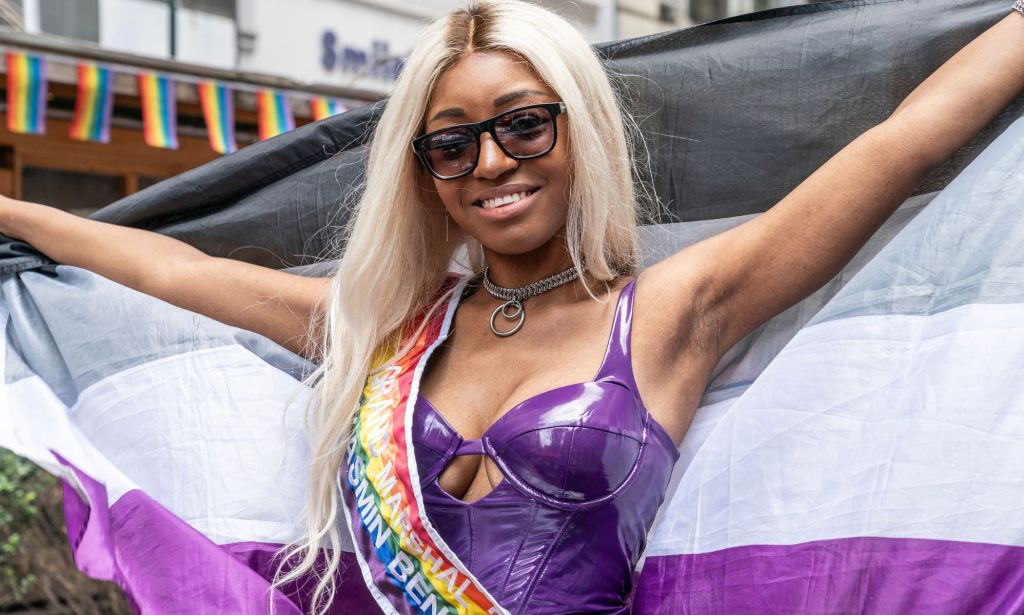
Asexual activist Yasmin Benoit, who partnered with the Human Rights Campaign on the analysis, said: “The asexual community has long been regarded as one of the least visible groups within the wider LGBTQIA+ community. While we have begun to see improvements over the past few years, we are still one of the communities least likely to come out, to be represented, to have legislative recognition, or to receive support from LGBTQ+ groups and organisations, all while facing many of the same issues as the rest of the LGBTQ+ community.
“In an increasingly hostile environment, and with lower levels of community support, asexual people who were gradually approaching the point of feeling safe enough to be open are retreating backward again or deeming it necessary to stay in the background. The significant overlap between the trans community and the ace community means that the impact of these rollbacks is felt even more.”
Diversity among asexual people
The study found that 58% of those who identified as asexual also recorded they were transgender or gender-expansive.
The data from those respondents showed a much more negative outcome than those who are cisgender.
The asexual and trans or gender-expansive respondents felt less visible than they were a year ago (71.4%) compared to the 45.9% of cis respondents.
It suggests that the decline in visibility of asexual people is affected by the difficult experiences trans and gender-expansive people are having to live through right now.
Share your thoughts! Let us know in the comments below, and remember to keep the conversation respectful.