
‘We write in the world we want to live’: What Heated Rivalry tells us about queer people’s relationship with sport
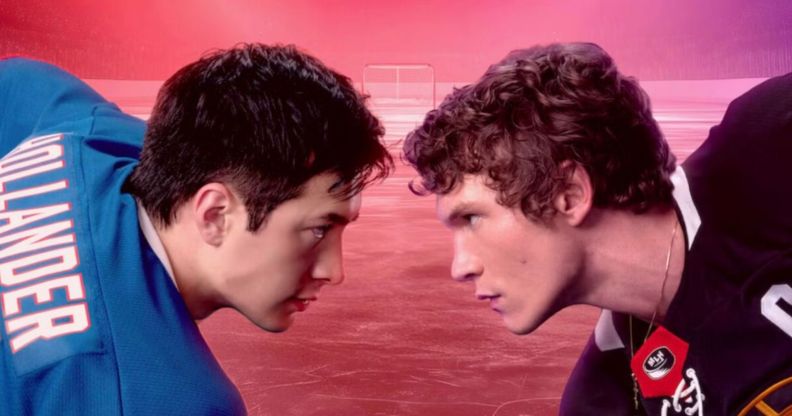
Heated Rivalry and the boom in queer sports media tells us a lot about the community’s relationship with playing. (HBO)
Heated Rivalry and the boom in queer sports media tells us a lot about the community's relationship with playing. (HBO)
In 2016, Rhys Chapman’s short film Wonderkid appeared to break new ground. Featuring a young Chris Mason, now a star of Dune: Prophecy, it followed a football prodigy gradually coming to terms with his sexuality.
“It really shone the light, I think for the first time, [on] all the various pressures that a closeted, gay, professional athlete might face, particularly in men’s sports,” recalls Jon Holmes, the editor of LGBTQ+ sports publication, OutSports. Wonderkid was shown on Sky Sports, championed by the Football Association (FA), and used as a tool by Kick It Out, the game’s leading anti-discrimination organisation.
Finally, Holmes says, there was “a gateway into wider conversations” about how football could become “a potentially safer and more welcoming place for gay men”.
From then, queers became increasingly visible in sports media. After Wonderkid came In From The Side and Nicholas Galitzine’s Handsome Devil, both about queer men in rugby, followed by Alison Brie’s wrestling series, Glow. But ten years on, and the community’s presence in sports stories has gone supernova.
Of course, there’s Heated Rivalry, the buzzy gay ice hockey romance so sizzling hot it’s a wonder there’s any ice left for players to tussle on. But queer people have also appeared front and centre in tennis (Challengers), swimming (Olympo; Nyad), bodybuilding (Love Lies Bleeding), soccer (Ted Lasso; Yellowjackets) boxing (Christy) and wrestling (Cassandro). This year, we’ll get Slo Pitch; it’s the second major lesbian baseball show in four years, after Prime Video’s A League of Their Own.
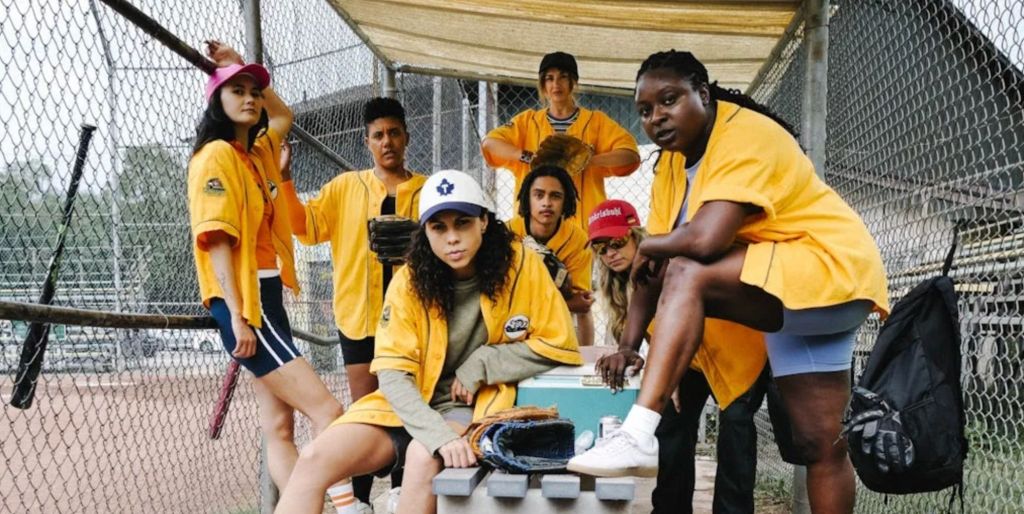
Clearly, mixing the sometimes steamy, sometimes suppressed experience of same-sex attraction with the sweaty dramatics of sport makes for a heady viewing experience. Or a reading one: Heated Rivalry is based on Rachel Reid’s raunchy Game Changers novel series, while Puckboys, another MLM (men loving men) novel series, features gay hockey, with chiseled men in various states of undress adorning each cover.
Eden Finley and Saxon James began writing queer hockey stories with their college-age CU series in 2020. Each of the series’ five books “did, like, fairly well,” recalls Finley from her home in Brisbane. In 2022, they released the first in their Puckboys series, featuring adult gay players and an extra sprinkle of smut. Sales “exploded to ultimate levels that we never thought possible”. The second book in the series hit number 15 on Amazon’s best-sellers list. Two following books have broken the top 10. “We look at the sales for Puckboys and then our [other] sales and we’re like, ‘What is in these books?’” she laughs. “Even us as authors don’t know what is in the books that just makes it so big.” A tenth Puckboys book is out in April.
In the real world, hockey pitches are free from puckboys. The National Hockey League (NHL) is the only major pro sports league to never have had an out gay current or former player.
“We’re in this age now where sports have to rapidly try and catch up with the rest of society because they haven’t had that kind of representation, certainly on the men’s side of sports,” says Holmes. While LGBTQ+ folk are increasingly visible in select sports – the 2024 Olympics were the queerest on record, while queer women are common in women’s pro rugby and football – there remains a glaring dearth of sportspeople who feel able to be open with their sexuality, particularly men participating in typically masculine sports like football.
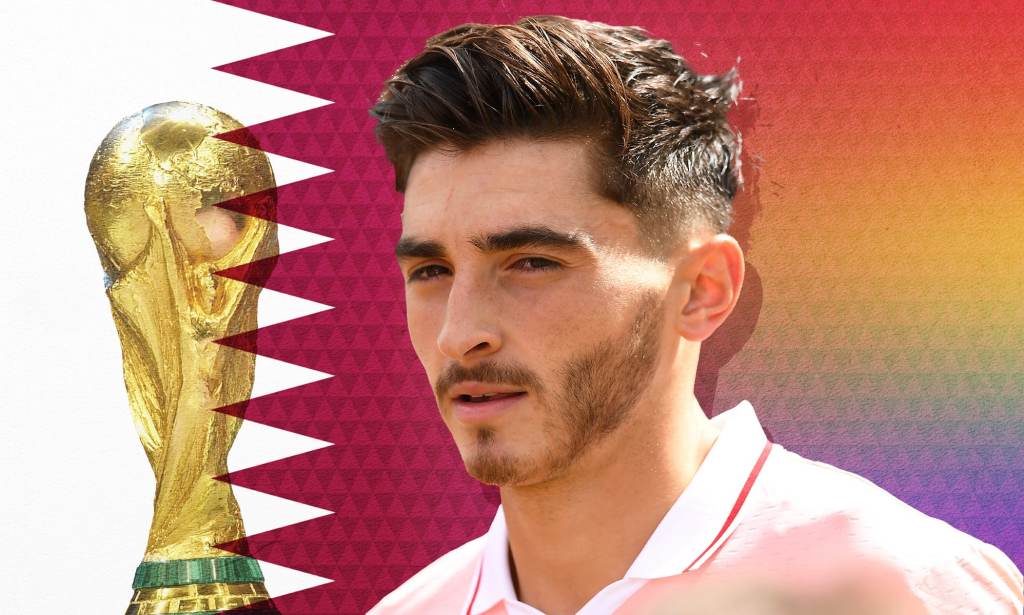
It’s evident that at a professional sporting level, queerness is still contentious. Last week, former Adelaide United player Josh Cavallo, one of just five out gay pro footballers in the world, accused the club of homophobia, claiming it had blocked opportunities “because of who I choose to love” (the club refuted the accusation).
In 2023, the NHL implemented – though later rescinded – a ban on players wearing Pride-themed jerseys. At this year’s FIFA World Cup, Egypt and Iran have been allocated to play a Pride Match, despite both countries criminalising homosexuality (and calling for the match to be cancelled). The 2034 World Cup? To be held in Saudi Arabia, where being LGBTQ+ is punishable by death.
Bigotry is thriving in non-pro sports, too. This week, LGBTQ+ charity Stonewall relaunched its Rainbow Laces campaign, aimed at encouraging inclusion in sports, with research that revealed queer people are three times more likely to experience discrimination while exercising than cisgender, heterosexual people.
When the real world isn’t inclusive, there’s a pull to create and watch fictional worlds which are. “Sexton and I always say that we write in the world that we want to live in, not necessarily the world that we do,” says Finley. “A lot of MM romance books have that theme of ultimate acceptance, and that’s what we want to see in the world.”
In a similar vein, Casey McQuiston’s BookTok smash and its film adaptation Red, White & Royal Blue depicts the illicit romance between a British prince and a US president’s son. If a member of the royal family or US first family were to come out as queer today, it would still be deemed controversial. McQuiston’s story, and to a degree Heated Rivalry, are a queering of the star-crossed lovers trope seen in romantic classics like Romeo & Juliet.
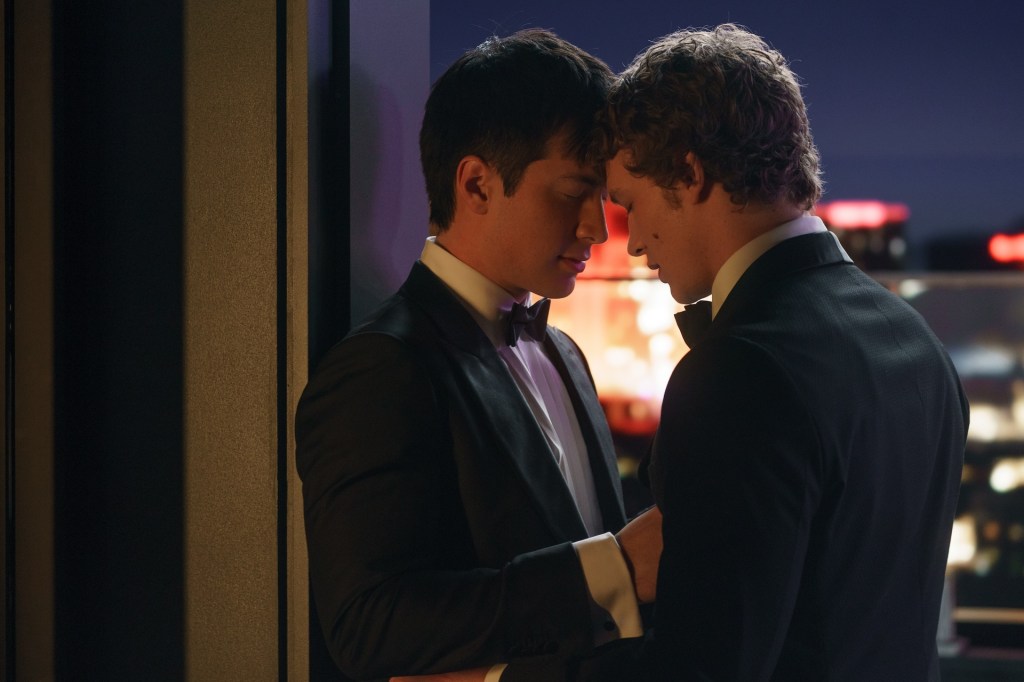
The “internal conflict” queer people endure while in an intolerant environment can create “powerful and relatable” stories such as Shane and Ilya’s in Heated Rivalry, suggests Zachary Zane, Grindr’s sex and relationships expert. “Many queer people can relate to the common trope of feeling out of place in overtly masculine environments, such as a sports locker room. This often creates the tension of feeling compelled to hide or alter one’s identity in order to fit in,” he explains. Such “tension”, he adds, makes queer sports media more engaging for queer audiences.
There are other, more simple reasons why queer sports stories might be on the rise, and resonating. “It’s been a long time coming,” says Finley, plainly. “You’ve actually got areas of film and TV that haven’t really been plowed before by others,” agrees Holmes. Challengers is the first blockbuster about tennis players in a steamy queer love triangle, that’s for sure. “Perhaps [filmmakers] have got a lot of free rein there to create something new.”
In the case of Heated Rivalry, it could be a simple case of stars aligning. “I wonder whether it would have been made if it was in the US, whether anybody would’ve backed it?” Holmes questions. Indeed, showrunner Jacob Tierney has said that some Hollywood executives wanted no sex until season two, and so he returned to Canadian streaming service Crave. Ice hockey might be major in Canada, but it “isn’t the biggest sport in the US by any stretch of imagination,” Holmes adds. Whether it would have exploded in popularity if it focussed on a different sport, perhaps one with more rabid, dogmatic US fans, no one can know.
Regardless, the real-world impact of Heated Rivalry is becoming clearer by the day. The day after I spoke to Holmes, hockey player Jesse Kortuem came out as gay, citing Heated Rivalry as inspiration.
NHL boss Gary Bettman has – tentatively, some have argued – praised the show. Hudson Williams and Connor Storrie, the show’s leads, were this week announced as torch bearers for the 2026 Winter Olympics. Holmes is hopeful that even the toughest sports to crack when it comes to queer representation, like football, will be inspired by the show. “There’s absolutely no doubt of course that the Heated Rivalry part of this will come into that dialogue,” he says. “People will be asking, ‘What would the scenario maybe look like for a gay footballer?’”
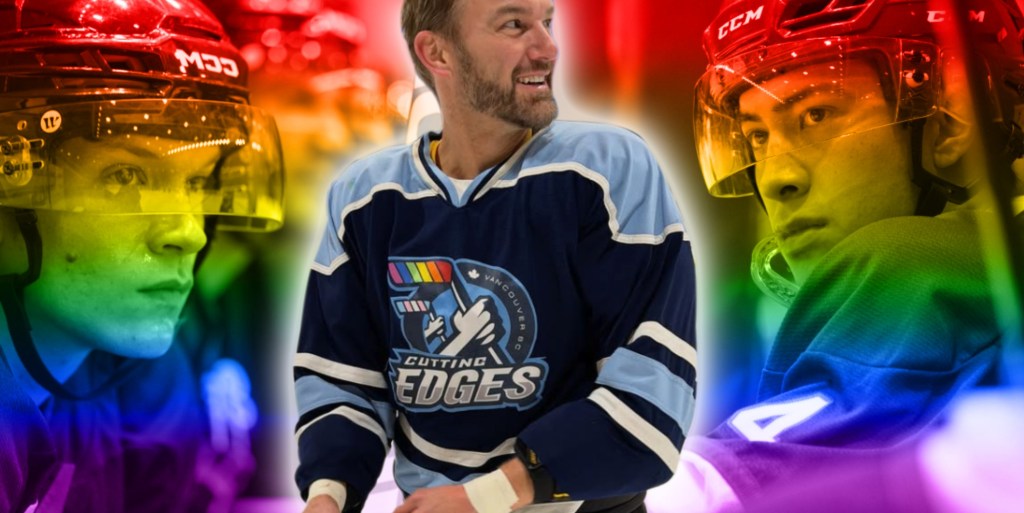
“Representation makes a real difference,” a spokesperson for Stonewall told me. “LGBTQ+ communities seeing themselves reflected on TV, in drama as well as in sports teams, competitions and grassroots organisations, should help everyone to feel more accepted and able to participate in sport, exercise and movement.”
Finley knows first-hand the power of these stories. Reading queer fiction, with “all that self-acceptance and acceptance from loved ones,” made her finally accept her own sexuality. In high school, she had an unrequited crush on a female friend. After marrying her husband aged 20, she assumed the crush meant nothing. “But these books have shown that you don’t have to have been with 100 people of the same sex to actually be bisexual,” she says. “I just like building on that world. Homophobia is a part of society, but we can create these communities where everybody is accepted for who they are.”
Share your thoughts! Let us know in the comments below, and remember to keep the conversation respectful.