
100 days of failure: How the legal system has repeatedly beaten back Trump’s anti-LGBTQ+ agenda
Trump’s attacks on the LGBTQ+ community keep getting blocked by federal judges (Getty/Canva/PinkNews)
To mark the grim news that Donald Trump has now been in office for 100 days, rather than listing all of his (many) attacks on LGBTQ+ rights, we’re choosing to list the times judges stopped him in his tracks.
America’s judicial system exists to uphold the Constitution – which codifies the rights of all US citizens – and to ensure the fair, consistent application of the law. It’s a source of hope in these increasingly worrying times that many of Trump’s attempts to strip rights from LGBTQ+ people and other vulnerable groups have been blocked.
Just a few days ago, for example, Trump’s anti-trans passport policy faced a major setback after a US court blocked a ban on trans people legally changing gender on their passports.
District judge Julia Kobick issued a partial preliminary injunction on an executive order signed by president Donald Trump that aimed to prevent transgender men and women changing the gender marker on the documents.
The president signed the directive in January but it was opposed by the American Civil Liberties Union (ACLU). Kobick issued her ruling on Saturday (19 April).
Here are some other notable Trump administration failures from the last 100 days.
Trump repeatedly blocked from banning transgender service members
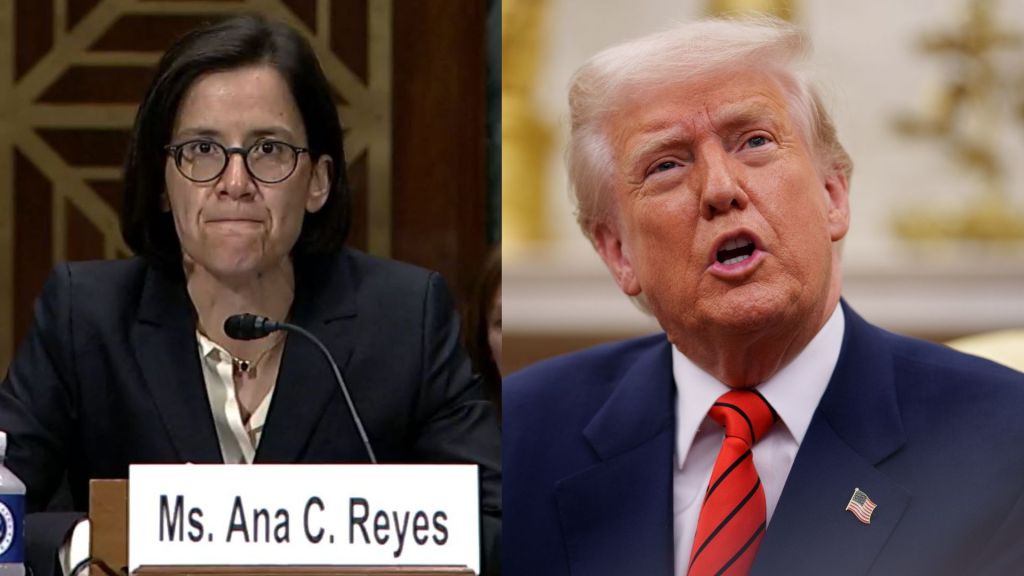
One of the first anti-LGBTQ+ executive orders that Trump signed after taking office on 20 January laid the ground for reinstating a ban on trans people serving in the military, declaring the armed forces have been “afflicted with radical gender ideology”.
On 28 March, in a 65-page ruling, Judge Benjamin Hale Settle of the US District Court for the Western District of Washington poured cold water on the order, saying that the Trump administration had offered no evidence to support removing transgender service members, who served without issue under the Biden administration, from the military, The Hill reports.
This followed an earlier ruling by Ana Reyes, the first out LGBTQ+ person to serve as a district court judge in Washington DC, who ruled on Tuesday 18 March that the ban probably violates the service personnel’s constitutional rights.
Reyes, who has previously ripped into Trump’s “ridiculous” anti-LGBTQ+ executive orders, said the “cruel irony” was that “thousands of trans service members have sacrificed – some risking their lives – to ensure for others the very equal protection rights the military ban seeks to deny them”. The ban was “insulting”, she added.
Also, on 25 March, judge Christine O’Hearn issued a temporary order preventing the military from firing two trans Air Force members who sued in response to the ban.
O’Hearn said in her ruling that the Trump administration has “not demonstrated any compelling justification whatsoever for immediate implementation of the Orders, particularly since transgender persons have been openly serving in the military for a number of years,” noted LGBTQ+ Nation.
Federal judge blocks Trump’s nationwide ban on gender-affirming care

Shortly after signing his executive order aimed at banning trans people from serving in the military, Trump issued another – titled “Protecting Children From Chemical And Surgical Mutilation” – to restrict gender-affirming care for trans youth under 19.
US Maryland judge Brendan Hurson issued a ruling on 13 February halting the enforcement of that proposed ban. The ruling came in the wake of a lawsuit filed by Lambda Lega, PFLAG, and the American Civil Liberties Union (ASCLU) of Maryland challenging the order and saying it is unconstitutional.
“Good and decent parents of transgender kids should never be in the frightening position of having their child’s prescribed, medically necessary care canceled at the whim and threat of a politician,” Brian Bond, CEO of PFLAG National, said in a statement.
“But that’s what president Trump’s executive order did to PFLAG families with trans youth and young adults nationwide. Today’s decision rights a grievous wrong to our nation’s families and children, and PFLAG families will be vigilant to ensure our transgender loved ones receive the healthcare they need – as this legal ruling demands.”
Trump’s anti-DEI executive orders: blocked

Another of Trump’s divisive moves aimed to eliminate diversity, equity and inclusion (DEI) programmes across the government and in the armed services.
In two separate executive orders, Trump gutted DEI from both the federal government and armed forces.
The first order, also signed on 20 January and entitled Ending Radical And Wasteful Government DEI Programmes and Preferencing, claims the previous Democratic administration “forced illegal and immoral discrimination programmes… into virtually all aspects of the federal government”.
It goes on to describe equity action plans as an “immense public waste and shameful discrimination”, adding: “Americans deserve a government committed to serving every person with equal dignity and respect, and to expending precious taxpayer resources only on making America great.”
The order stipulated that all DEI committees, policies and programmes would be terminated, and related jobs scrapped. Meanwhile, the order regarding the military “’Restoring America’s Fighting Force”, claims DEI is akin to sex and racial discrimination and inadvertently “undermines leadership, merit and unit cohesion, thereby eroding lethality and force readiness”.
However, in February, A federal judge in Maryland issued a preliminary injunction blocking key provisions of Trump’s executive orders to dismantle DEI initiatives, ruling that they likely violate constitutional protections, the Advocate reported at the time.
In his ruling, the judge said: “The challenged provisions are impermissibly vague and threaten to chill constitutionally protected speech and activity.”
Trump blocked from sending transgender women to men’s prisons
Another anti-LGBTQ+ executive order that Trump signed almost immediately after being sworn-in for a second term, was a policy that the US government recognised only two sexes, effectively preventing trans people accessing spaces consistent with their gender identity.
In response, a trans woman held in a federal jail sued Trump over the policy, which requires her to be housed in a male prison.
The legal complaint challenged the executive order, saying the plaintiff had been told she was being transferred from a women’s prison, where she has been since her arrest, to a men’s facility. She has been held in solitary confinement since then and told the reason was “because of the Executive Order.”
“Executive Order 14166 began causing harm to (plaintiff) almost immediately. As a result of the order, she has already suffered significant distress. The order also raises serious concerns for her safety and well-being going forward,” the legal complaint added.
Other trans prisoners also filed lawsuits. On February 4, a federal judge blocked Trump‘s administration from moving transgender women to men’s prisons and ending their gender-affirming care.
US District Judge Royce Lamberth in Washington found that three transgender inmates who sued would likely succeed in arguing the policy was unconstitutional, Reuters reports.
Lamberth’s order applies to all 16 transgender women currently housed in federal women’s prisons.
It’s worth noting that these are just a few examples of specifically LGBTQ+ lawsuits that haven’t gone Trump’s way; its estimated that around 220 others are currently working their way through the courts in an attempt to counter his brutal agenda. ABC reports that in the time since he took office 100 days ago, Trump and his administration have faced more than two lawsuits per day, challenging his policies at every turn.
Trump is set to give a speech today to mark 100 days in office, no doubt he’ll sing his own praises, as usual, despite his low approval rating. However, the long shadow of all of these lawsuits can’t be far from his mind.