
Top reason trans ‘detransition’ is transphobia, largest ever trans survey finds

Gender affirming care is live saving and detransition is a result of transphobia, research finds (Canva)
New research from the largest ever survey into the health of trans Americans has shown what trans folks have long said – that transphobia is the main reason behind ‘detransition’.
More than 84,000 trans, non-binary and gender nonconforming people over the age of 18 took part in the 2022 US Trans Survey between 19 October to 5 December 2022, which was run by trans nonprofit Advocates for Trans Equality (A4TE).
Results from this survey were used to produce a comprehensive report into trans health and wellbeing, entitled ‘Health and Wellbeing: Findings from the 2022 US Trans Survey‘.
The report found that 98 per cent of respondents that had socially and/or medically transitioned had significantly higher levels of happiness and satisfaction. Whilst nearly all respondents receiving gender affirming hormone therapy (98 per cent) or gender-affirming surgery (97 per cent) reported increased life satisfaction.
“Social and medical transition were profound sources of life satisfaction among USTS respondents,” the researchers state in the report.
“Our results show that over half of respondents (59 per cent) had accessed some form of medical transition; 56 per cent had received gender-affirming hormone therapy (GAHT), and 90 per cent of those were still taking hormones,” the report reads.
“Nearly all respondents who were on GAHT (98 per cent) or had received surgery (97 per cent) were more satisfied with their lives after GAHT or surgery.”
The report continued: “Further, respondents who reported social or medical transition consistently reported higher happiness, thriving, and satisfaction.
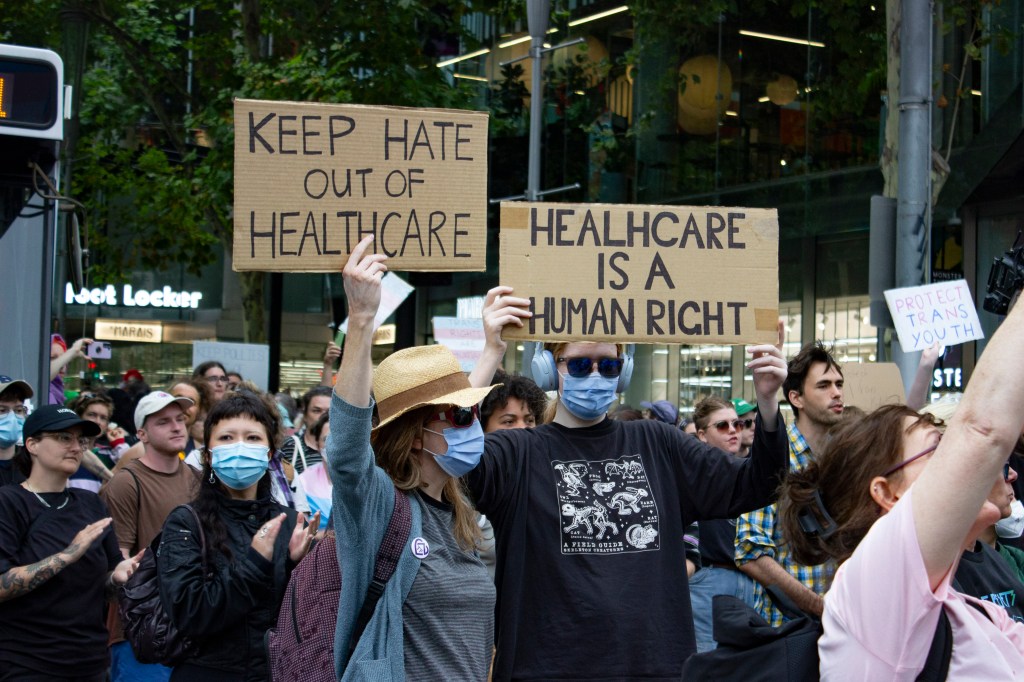
“Those who reported social transition more often reported they were “very to pretty happy” (71 per cent vs. 52 per cent), “thriving” (36 per cent vs. 18 per cent), and satisfied with their lives (43 per cent vs. 24 per cent) compared to those who have not socially transitioned.
“We found similar results for medical transition and happiness (72 per cent vs. 55 per cent), reports of thriving (37 per cent vs. 19 per cent), and life satisfaction (43 per cent vs. 27 per cent).”
On the whole, trans folks reported worse overall health compared to the general population, with just over a third (66 per cent) rating their health as “excellent,” “very good,” or “good,” compared to four-fifths in the general population (81 per cent).
One respondent quoted by the report, named only as Taylor, said obtaining hormone therapy “definitely changed my life for the better”.
“It certainly didn’t fix all of my problems instantly, but it fixed a lot of problems that my dysphoria caused,” they said.
“Now that I’ve been on HRT and had surgery, I can live my day to day life without pain, dissociation, and misery.”
The results from the report also showed that out of all the respondents, just nine per cent had “gone back to living as their sex assigned at birth at least for a little while at some point in their lives”.
The researchers found reasons for detransition were due predominantly to transphobia and “challenges related to social acceptance”, such as not being accepted by friends or family for being trans.
“Social and structural explanations dominated the reasons why respondents reported going back to living in their sex assigned at birth at some point,” the report read.
“Only four per cent of people who went back to living in their sex assigned at birth for a while cited that their reason was because they realized that gender transition was not for them. When considering all respondents who had transitioned, this number equates to only 0.36 per cent.”
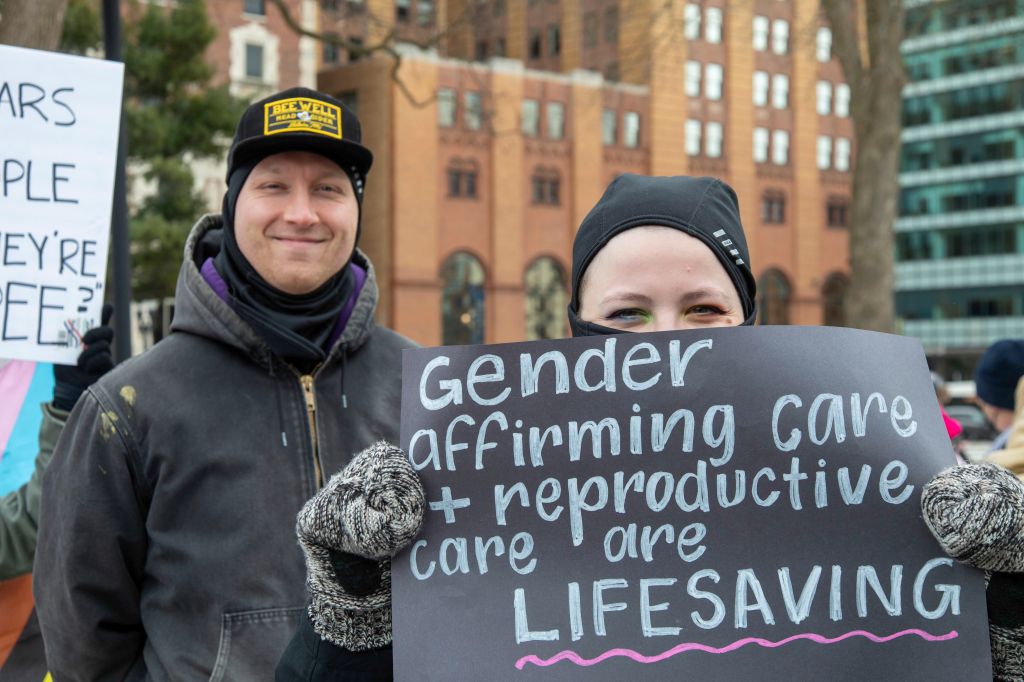
Trans folks who have support of family and friends have better health outcomes overall, the report found, whilst those who face discrimination and harassment have worse.
Family support was linked to better health with 69 per cent of those with supportive families reporting good or better health than compared to 56 per cent of those who reported unsupportive families.
“For example, the lifetime prevalence of suicidality among 2022 USTS respondents was striking – 78% reported lifetime suicidal thoughts and 40% reported lifetime attempts,” the report outlines.
“But those with supportive families reported less suicidality compared to those with unsupportive families—78% of respondents with supportive families reported suicidal thoughts compared to 88% of those with unsupportive families.”
The report adds: “Moreover, state-level discriminatory laws and policies, as well as stigma and hostile sociopolitical climates, may have contributed to the disproportionately high prevalence of suicidality.”
Another respondent, named Amanda, said: “My whole life has been affected by the fact that my family was very accepting of me.
“I’m not exactly sure why, but both of my parents always supported my gender and sexual expression even before it was popular to do so.
“They would intervene at school and in the neighborhood, so I never had the problems that most people had growing up. As I get older (I’m over 50), I realize how important this was.
The report comes amid and increasing crackdown on the rights and dignities of trans people in the US, with the Trump administration taking steps to bar trans people from many aspects of public life.
Since returning to the White House for his second term, Trump has invoked a litany of anti-trans policies including proclaiming that the official policy of the US is that there are “only two sexes”, banning transgender people from serving in the military, barring trans women from female sport and restricting gender-affirming healthcare for trans youngsters under the age 19.
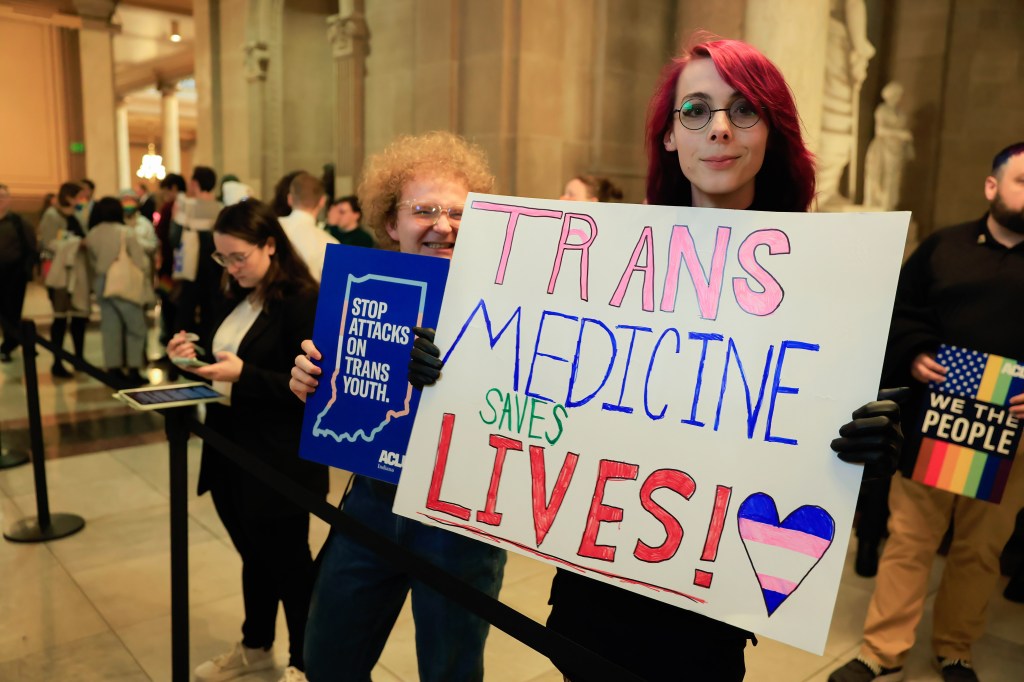
“From 2015 to 2022, state-level policy environments became more protective in some ways for trans people; however, in 2022 alone, when the USTS was administered, 315 anti-LGBTQ bills were introduced across the country, many of which harm trans and nonbinary people’s access to healthcare, participation in sports, access to public facilities, or other facets of public life,” the report notes, adding the political environment has “only worsened” since the 2022 survey was carried out.
“At the time of writing, data on trans and nonbinary people has been erased from federal health surveys. As funding for LGBTQ research is stripped away, the USTS has become an ever more critical resource on the lived experiences of trans and nonbinary people.”
In a press briefing, Olivia Hunt, A4TE’s Director of Federal Policy, said: “Having real concrete and rigorous data about the realities of trans people’s day-to-day lives is also a vital part of dispelling all of those assumptions and stereotypes that plague the public discourse about our community.”