
Who is the new EHRC chair Mary-Ann Stephenson and what has she said about trans rights?
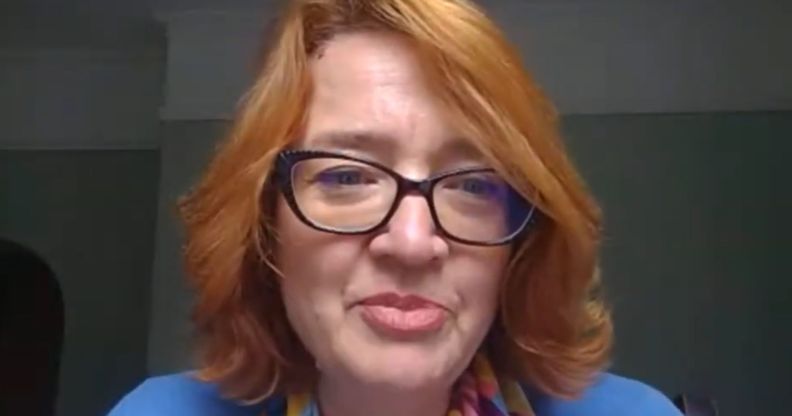
Dr Mary-Ann Stephenson will begin the role in December. (YouTube/Screenshot)
The UK’s equality watchdog EHRC has appointed its new chair, but who exactly is Dr Mary-Ann Stephenson, and what has she said about trans rights in the past?
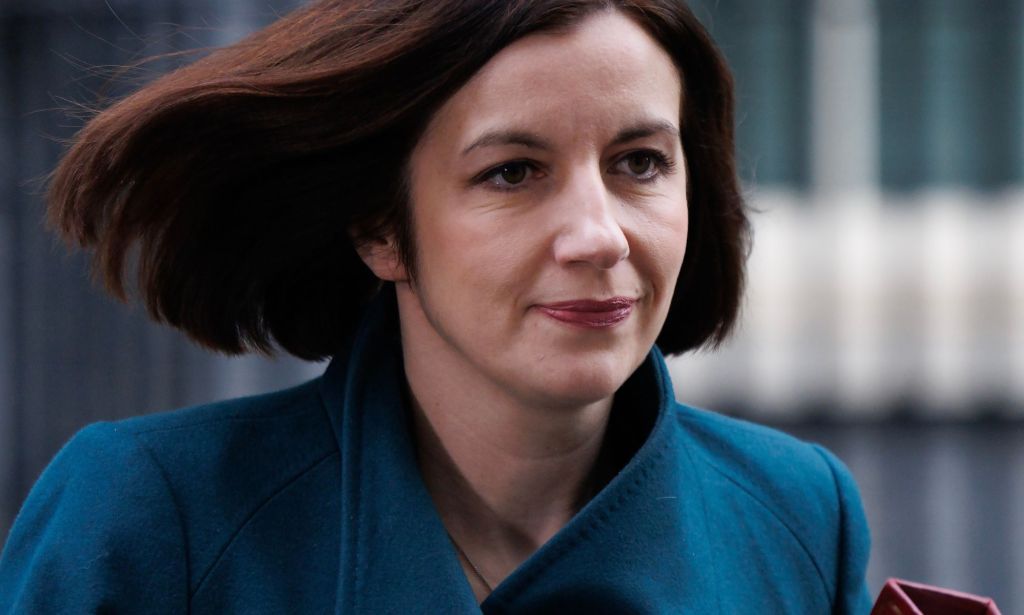
Women and equalities minister Bridget Philipson confirmed Dr Stephenson’s appointment as chair of the Equality and Human Rights Commission (EHRC) on Thursday (31 July).
The government confirmed she would begin her role in December after the current EHRC chair, Kishwer Falkner, finishes her extended term.
In a statement, Dr Stephenson said the appointment is a “great honour,” vowing to lead the regulator with “compassion, honesty, and dedication.”
“I look forward to working with the Government and all stakeholders alongside my new colleagues at the EHRC to uphold equality and human rights and ensure that everyone is treated with respect and dignity,” she continued.
Her appointment was confirmed despite objections from both the Joint Committee on Human Rights and the Women and Equalities Committee, who expressed concerns over “rebuilding trust” in a joint letter to Philipson.
“The EHRC is facing challenges on many fronts and in the current circumstances requires a chair with proven skills of running a large organisation, of being able to withstand intense scrutiny and to be able to advocate effectively on behalf of all protected groups, including some of the most vulnerable in society.”
The independent regulator of human rights has come under intense criticism over the past few years for its trans policies and guidance, particularly in the wake of the FWS v Scottish Ministers Supreme Court ruling.
In April, the EHRC issued interim guidance on single-sex service provision, which recommended trans people be banned from spaces exclusive to their identity and, in some cases, their birth sex too.
Dr Mary-Ann Stephenson’s ties to ‘gender-critical’ groups
Dr Mary-Ann Stephenson first gained prominence in 2017 after she was appointed as the Women’s Budget Group’s first director – a title she still holds.
Holding a PhD in law from the University of Warwick, she has worked in equality and human rights for over thirty years, having published her first piece of research in 1996.
She has also worked as the director of the Fawcett Society and as a freelance consultant for women’s equality and human rights for a variety of groups, and is a trustee of the Coventry Rape and Sexual Abuse Centre.
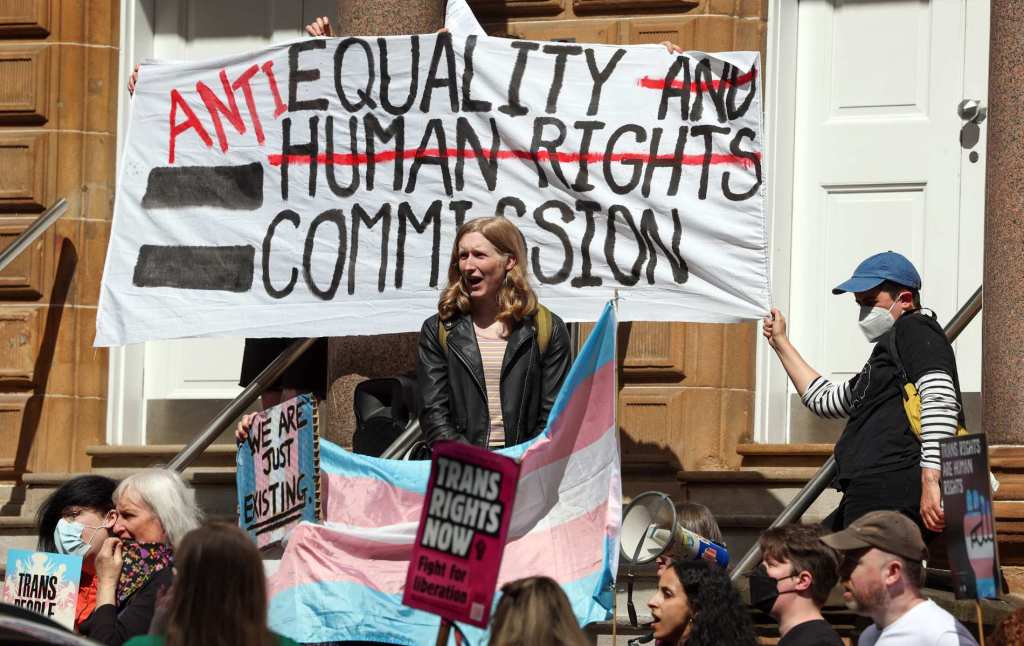
The equality law expert has a history of aligning herself with ‘gender-critical’ campaigners and groups.
While speaking with MPs prior to her appointment, she admitted to donating to LGB Alliance founder Allison Bailey’s legal fund, saying she was “upset at seeing women being harassed or sacked from their jobs for peaceful expression of legally protected beliefs.”
In 2022, Bailey, a lesbian barrister and co-founder of the anti-trans lobby group LGB Alliance, sued LGBTQ+ rights charity Stonewall and Garden Court Chambers. Bailey claimed that “Garden Court took action” against her by launching an investigation and and withholding work from her over her gender-critical social media posts and her involvement with LGB Alliance.
Stephenson has also reportedly vowed to meet with groups such as For Woman Scotland, the ‘gender-critical’ group which brought the FWS v Scottish Minister case, saying she believes “it’s important to be clear that the law is the law and it’s very important that people understand and are able to follow the law.” She also stated her intention to meet with trans rights groups.
In 2017, she signed an open letter linking the actions of “transgender activists” to a subsequent attack on a women’s right campaigner. In 2018, she signed another letter claiming that those opposing reform of the Gender Recognition Act should be protected from “harassment and intimidation”.
Speaking at a Joint Committee on Human Rights and House of Commons Women and Equalities Committee hearing on 1 July, Dr Stephenson emphasised her belief that “attempts to close down debate in any area is generally a mistake,” adding that she feels it is “really important” to have a “better dialogue” on gender issues.
“It is obvious that a lot of trans people have been alarmed and distressed since the Supreme Court ruling,” she said. “I think it’s also clear that there have been a lot of women who have been very alarmed and distressed by being denied access to single-sex spaces when they have needed them, survivors of domestic or sexual violence or so on.”
Update 05/08/2025: An earlier version of this article stated that Mary-Ann Stephenson had more than 20 years of experience in equality law and her first research was published in 2010. This has been updated to reflect that Ms Stephenson has more than 30 years of experience in equality and human rights and her first research was published in 1996. Updates have also been added to clarify that an open letter she signed in 2017 linked the actions of trans activists with a single attack on a women’s rights campaigner and not multiple campaigners, and an open letter she signed in 2018 called for those opposing reform of the Gender Recognition Act to be protected from “harassment and intimidation”.