
Bridget Phillipson ‘leads race’ to be Labour deputy leader – but what is her LGBTQ+ record?
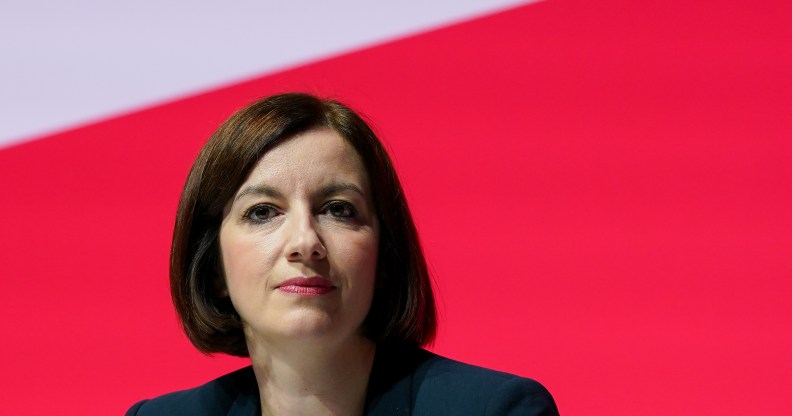
Bridget Phillipson is running for deputy leader (Ian Forsyth/Getty Images)
Equalities minister Bridget Phillipson has emerged as an early front runner in the race to be deputy leader of the Labour Party.
The role became available Angela Rayner stepped down on Friday (5 September) after she was found to have breached the ministerial code.
Rayner came under increasing pressure to resign after admitting she underpaid £40,000 ($54,000) in stamp duty on a £800,000 ($1.08 million) flat she bought in May. She told Sky News that she made a mistake after legal experts she had consulted did not accurately “take account” of her circumstances. Last week, she referred herself to the independent adviser on ministers’ interests, Sir Laurie Magnus.
He shared his findings in a letter to the prime minister, in which he said that while Rayner, who was also the housing secretary before resigning that role too, sought advice on her tax affairs, this was not “expert” advice so she “cannot be considered to have met the highest possible standards of proper conduct”.
Magnus said it was “deeply regrettable” that Rayner had not sought the advice but believed she had acted “with integrity and with a dedicated and exemplary commitment to public service”.
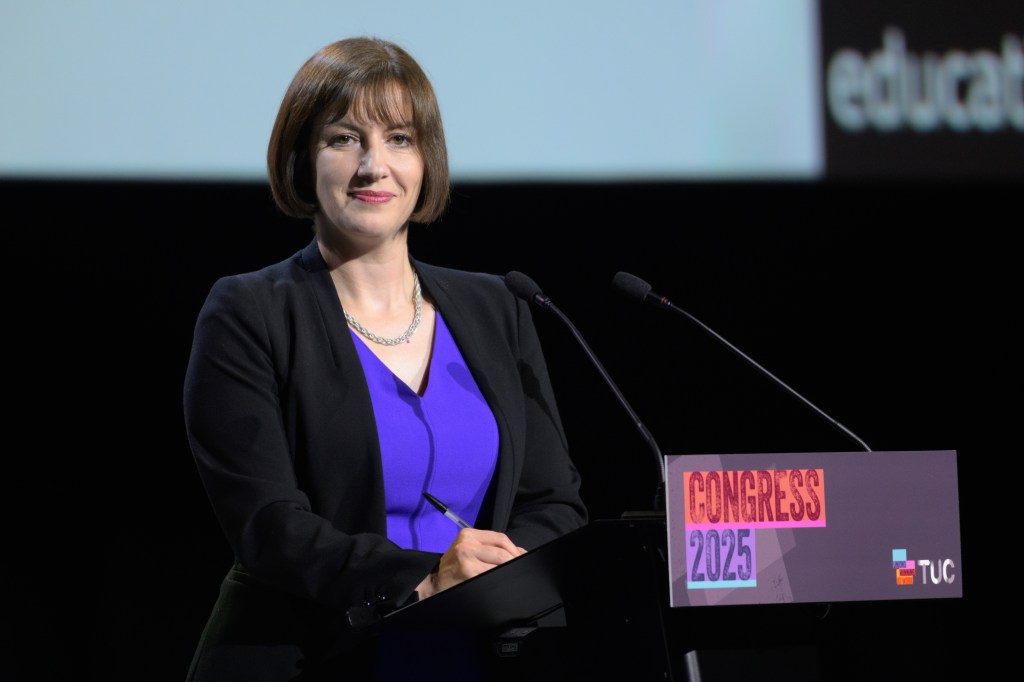
In addition to Phillipson, by Tuesday afternoon (9 September), five other MPs had entered the race to replace Rayner: Emily Thornberry, Lucy Powell, Bell Ribeiro-Addy, Alison McGovern and Paula Barker.
Phillipson was quickly installed as the frontrunner, after a poll of Labour members by LabourList put her top with 39 per cent, followed by former shadow foreign secretary Thornberry on 20 per cent, among the 1,308 respondents.
What has Phillipson’s said LGBTQ+ rights?
Phillipson has a mixed record on LGBTQ+ rights, and has faced criticism for her support of the Supreme Court ruling which decided the legal definition of “sex” in the 2010 Equality Act did not include trans people.
Elected as an MP in for Houghton and Sunderland South in 2010, Phillipson’s voting record shows she backed marriage equality for England and Wales and in Northern Ireland, as well as voting for that right to be extended to armed forces personnel outside the UK.
As a member of the Home Office Select Committee in 2011, she opposed the appointment of Dr Hans-Christian Raabe to the Advisory Committee on the Misuse of Drugs because of his anti-LGBTQ+ views.
“It is an absolute outrage that Theresa May has appointed someone with such horrific opinions to this senior role advising the Tory-led government,” Phillipson said at the time.
Prior to Labour’s victory in last year’s general election, after which Phillipson was appointed education secretary as well as minister for women and equalities, she was criticised for refusing to answer a question about which toilets trans women should use.
“I believe single-sex spaces are important,” she told LBC listeners. “My background before I became a politician was managing a women’s refuge, so I understand how important it is that women have access to single-sex spaces, have that safety, that dignity, that opportunity to speak openly about traumatic events in their lives.”
There was a need for “common sense solutions” and “being practical”, she added. “I wouldn’t want that person to feel at risk. Equally, I wouldn’t want biological women to feel intimidated.”
Following the Supreme Court ruling in April, Phillipson said the verdict brought “clarity and confidence” and that “single-sex spaces must be protected”.
She went on to say: “This government will continue as before, working to protect single-sex spaces based on biological sex, now with the added clarity of this ruling, and we will continue our wider work with commitment and compassion to protect all those who need it, right across society.
“This is a government [that] will support the rights of women and trans people, now and always. This is a government [that] will support the rights of all people with protected characteristics, now and always.
“This is a government [that] will support the rights of our most vulnerable, now and always. On that, there is no change to announce: dignity and respect for all, now and always.
The Supreme Court ruling seemed to make Phillipson more inclined to give a firm opinion on single-sex spaces and she subsequently said trans women should use the toilets that matched their “biological sex”.
Discussing the topic on Radio 4’s Today programme, she said the “ruling made it clear” that provisions and services, including toilets, should now be accessed “on the basis of biological sex”.
Under Phillipson, updated relationships, sex and health education (RSHE) guidance, was published by the Department of Education, with schools being told to be “mindful” that there was “significant debate” about transgender identities.
While the word “transgender” did not appear anywhere in the document other than in a sub-heading referring to “gay, lesbian, bisexual and transgender content”, the guidance called on schools to be “mindful” that “beyond the facts and the law about biological sex and gender reassignment, there is significant debate” and staff “should be careful not to endorse any particular view or teach it as fact”.
The guidance went on to say schools should not “teach as fact that all people have a gender identity”.
Last month, Phillipson said trans and non-binary teachers can ask to referred to as “Mx’”by pupils rather than other gendered titles, but other people should be able to “exercise their views” on the topic.
A spokesperson later told LBC: “While teachers can make such requests, the education secretary was clear it’s not something that they can insist on.”
Nominations for the post of deputy leader close at 5pm on Thursday (11 September), by which time candidates must have the support of at least 80 MPs. To proceed to the final ballot, they must then secure the backing of five per cent of local parties or three Labour-affiliated groups, according to the BBC.
Members and affiliated groups have between 8 and 23 October to vote, with the result due on 25 October. The deputy leader of the party does not automatically become deputy prime minister, although Rayner did hold that position and again was forced to stand down.
Share your thoughts! Let us know in the comments below, and remember to keep the conversation respectful.