
EHRC accused of drafting controversial trans guidance in less than a day, court hears
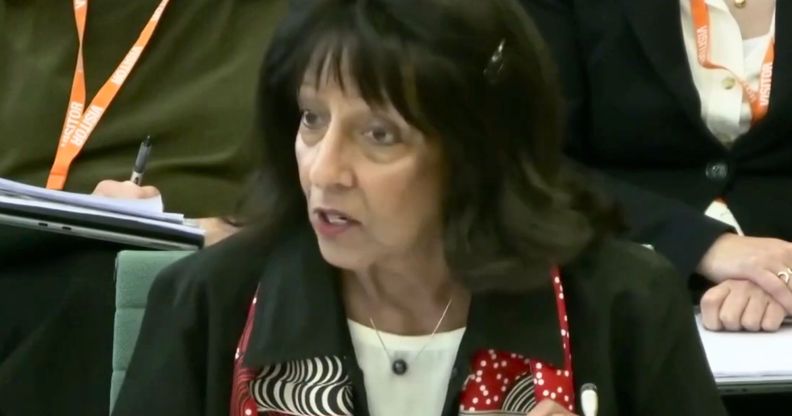
EHRC chair Kishwer Falkner. (UK Government)
The Equality and Human Rights Commission (EHRC) took less than a day to draft its interim guidance banning trans people from public spaces, a court document has alleged.
The UK’s top human rights regulator is accused of taking less than 24 hours to write up recommendations banning trans people from all gendered spaces, including those associated with their sex assigned at birth.
Documents published by the Good Law Project, a legal group suing the EHRC, claim officials held a special board meeting on 24 April 2025, nine days after a Supreme Court ruling dictated the 2010 Equality Act’s definition of a woman related exclusively to “biological sex.”
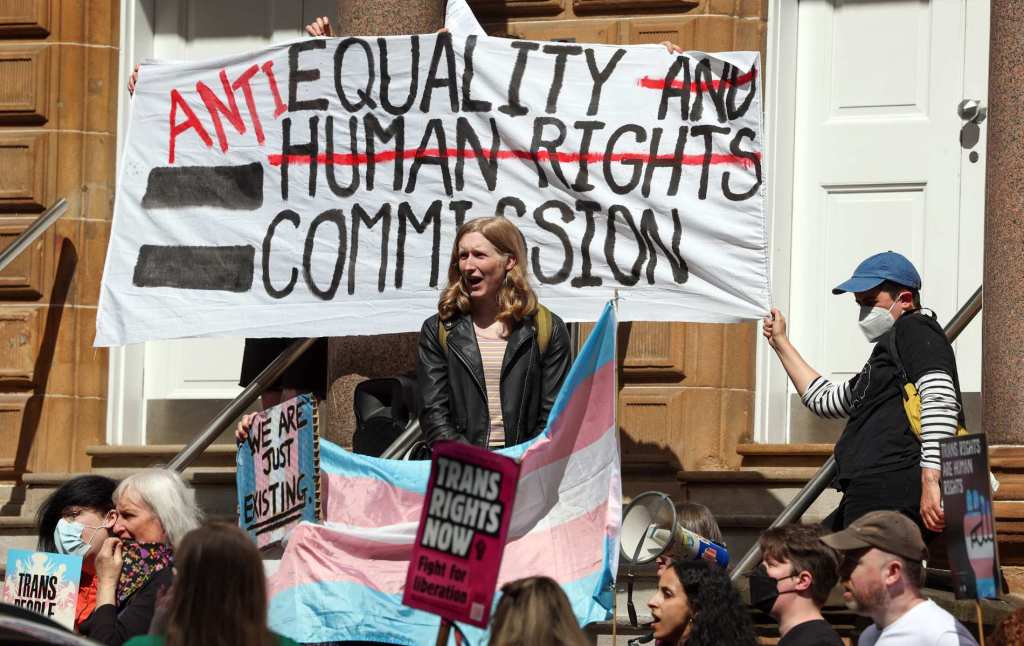
During the meeting, which concluded at 4:20pm BST on 24 April, the Commission reportedly dictated it was under a “duty to act, and act quickly, to provide guidance on the practical implications of the law.” It published the interim guidance in the early hours of 25 April.
Who drafted it, how long staff had been preparing material beforehand, and whether draft text existed before the 24 April meeting are matters of internal process, which the Good Law Project will seek to prove in court.
The much-criticised interim guidance recommended that trans women be barred from women’s facilities, such as toilets or changing rooms, and trans men from men’s facilities. In some cases, the EHRC said it was permissible to also ban trans people from services that align with their biological sex, as the Supreme Court also found that it might be proportionate to exclude a trans man from a women’s single-sex service.
The interim guidance was later scrapped in October.
Similar recommendations were proposed as part of a consultation on the regulator’s code of practice for gendered service provision. A final draft of those updates, which have yet to be made public, was sent to equalities minister Bridget Phillipson in September for consideration.
Should Phillipson approve the final draft, it will be laid before Parliament and (absent disapproval) become law on the date set. Insiders suggest the recommendations include clauses that could result in what amounts to a trans bathroom ban.
EHRC sued over trans bathroom guidance
Earlier this week, the Good Law Project announced its intention to take legal action against the EHRC for its proposals banning trans people from toilets consistent with their gender identity.
The legal group said it was working with Leigh Day on behalf of three individual claimants who say their lives have been “upended” by the guidance, which they argue was “rushed, legally flawed, and overly simplistic.”
Jolyon Maugham, executive director of Good Law Project, urged the High Court to recognise the “disastrous” impact the guidance has had on trans and gender non-conforming people.
“Our case is that the EHRC both acted irresponsibly and got the law wrong in rushing out a statement that obliged service providers to exclude trans people from single-sex spaces,” he said. “We think it needs to return to its really important job of protecting human rights and abandon what trans people experience as its ideologically motivated crusade.”
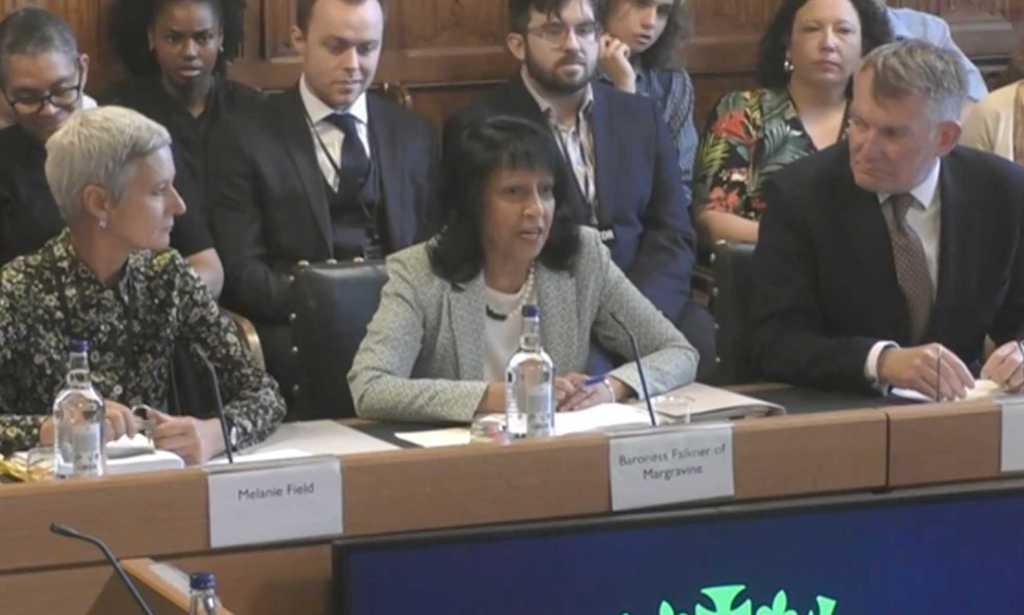
Several organisations have called on the UN’s regulator of National Human Rights Institutions (NHRIs) to downgrade the EHRC over its frequently exclusionary policies against trans people.
Genocide prevention group, the Lemkin Institute, petitioned the Global Alliance of National Human Rights Institutions (GANHRI) to revoke the public body’s ‘A-status‘, claiming it had breached the Paris Principles – a set of minimum standards NHRIs must meet to be considered internationally credible.
A month later in October, a coalition of human rights groups in the UK made a similar call to GANHRI, arguing the EHRC’s “obsessive campaign to strip trans people of our basic rights” had degraded any credibility it has.
It came in response to EHRC chair Kishwer Falkner’s comments urging the government to pass its code of practice into law “at speed.”
Responding, Bridget Phillipson said it was “disappointing” to see the EHRC commenting on governmental decisionmaking, urging them to refrain from stoking “public debate.“
PinkNews has contacted the EHRC for comment.
Share your thoughts! Let us know in the comments below, and remember to keep the conversation respectful.