
Genocide prevention group calls on UN to downgrade EHRC over trans policies

EHRC chair, Kishwer Falkner. (Screenshot/YouTube/Norman Lamb)
A genocide prevention organisation is calling on the UN to revoke the UK’s Equality and Human Rights Commission’s (EHRC) top-grade status because of what they see as an attempt to ‘erase’ trans people.
The Lemkin Institute for Genocide Prevention, a multi-national non-governmental organisation, accused the EHRC of playing a key role in what it called a “transparent attempt to eradicate transgender and intersex people from British life”.
In a statement to the Global Alliance of National Human Rights Institutions (GANHRI), the UN’s regulator of national human rights institutions (NHRI), on Friday (5 September), the organisation called for the EHRC to be stripped of its “A status” accreditation for breaching the Paris Principles, which set the minimum standard NHRIs must meet to be considered credible by the UN.
The key pillars of the principles, laid down in 1993, are “pluralism, independence and effectiveness”.
A spokesperson for the Lemkin Institute claimed: “The EHRC has undergone an institutional takeover and has been captured by transphobic and inter-phobic people and agendas. The continued accreditation of [the] EHRC as a human rights body, despite being a key player in this attempt of identity erasure, is a disgrace.”
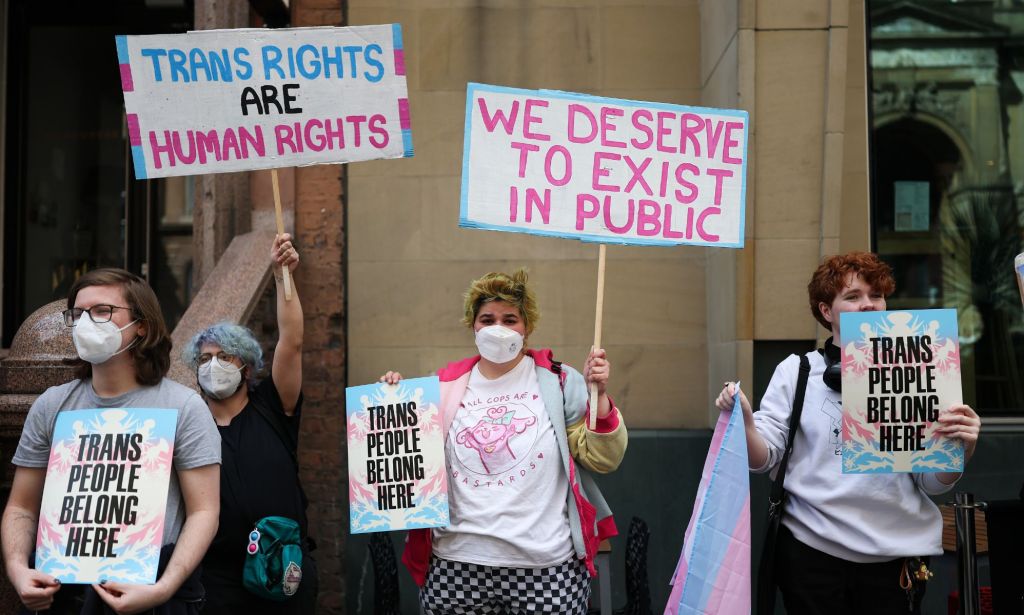
GANHRI chose to uphold the EHRC’s status last year after several not-for-profit groups demanded a review of the body.
In a report published in June 2024, the regulator’s sub committee on accreditation said the EHRC must follow its recommendations to keep its A status, which included ensuring “pluralism and diversity” in its membership and staff, and engaging with civil society organisations such as trans rights groups.
The Lemkin Institute has now claimed the EHRC had failed to do so, accusing it instead of erasing “decades of established practice protecting transgender and intersex people”.
‘The EHRC will have undemocratically stripped trans people of fundamental rights’
The statement was published hours after the EHRC announced it had finalised updates to its Code of Practice on services, public functions and associations, and sent them to equalities minister Bridget Phillipson.
A consultation on the changes was launched soon after the Supreme Court ruled in April that the 2010 Equality Act’s definition of a woman referred to “biological woman”, a decision which looks set to force trans people to take ID into “single-sex” facilities such as toilets and changing rooms.
Criticising the consultation, the Lemkin Institute spokesman said the new guidance probably won’t be seen until after it has been approved by the government, and won’t even “be given time for debate in parliament before going into effect”.

The spokesperson went on to say: “If this is the case, the EHRC will have succeeded in undemocratically stripping transgender and intersex people in the United Kingdom of fundamental human rights and dignity.”
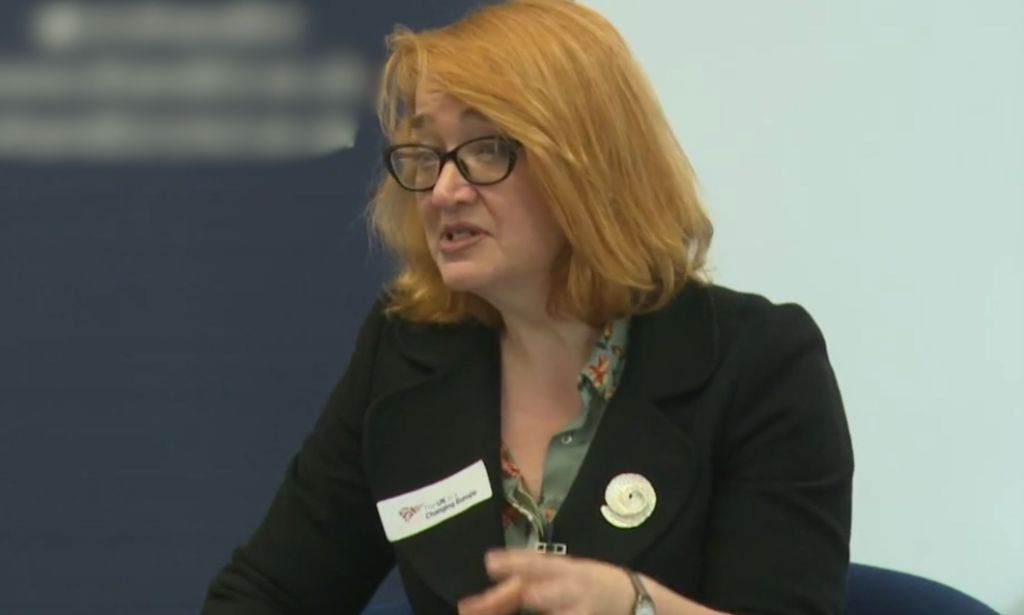
The choice of Dr Mary-Ann Stephenson as the new chairwoman of EHRC, despite opposition from the Women and Equalities and Joint Human Rights committees, has also come in for criticism.
Appointed last month, Dr Stephenson’s association with “gender-critical” groups such as the LGB Alliance has caused concern among LGBTQ+ rights groups, several of whom have vowed not to work with the regulator.
EHRC losing status would be a ‘global embarrassment’
In an Instagram post, barrister and non-binary influencer Oscar Davies suggested that the EHRC’s downgrade would mean the UK “would no longer have a fully recognised national human rights institution in the UN,” which, they said, would be a global embarrassment.
“Holding ‘A status’ accreditation enables an institution to speak at UN human rights forums, including the Human Rights Council, and lends credibility to its domestic work,” Davies said. “Losing that status would not only undercut the EHRC’s moral authority but could also weaken its ability to hold the UK government to account and to shape human rights enforcement in the country.”
This wouldn’t be an unprecedented move, they added. GANHRI has previously recommended downgrading Egypt’s National Council for Human Rights and Iraq’s High Commission for Human Rights.
While any downgrade of the EHRC wouldn’t prevent the guidance becoming law, it would “undermine the perceived impartiality of the EHRC and the authority of its documents.”
Davies went on to say: “If GANHRI signals that the EHRC no longer fully complies with the Paris Principles, especially around independence and trans rights, it could shift how courts, policymakers and the public interpret or accept guidance produced by the EHRC, including the proposed code of practice.”
A spokesperson for the EHRC told PinkNews that the organisation remained “wholeheartedly committed” to protecting “equality and human rights,” adding: “We remain fully compliant with the Paris Principles, which provide the benchmark for high-performing, independent National Human Rights Institutions. This was most recently confirmed by the Global Alliance of National Human Rights Institutions’ sub committee on accreditation in May 2024, when we retained our ‘A’ status.
“As Britain’s impartial and expert equality regulator, we take great pride in our independence from government and from civil society organisations.
“Our response to the Supreme Court’s judgement on the definition of “sex” in the Equality Act has been, and will continue to be, firmly grounded in the law. We are obliged to interpret and explain it clearly for those who must comply with the law.
“It’s our job to provide accurate, expert advice on the Equality Act and how to put the law into practice. Last week, we shared our updated services code of practice with the minister for women and equalities, for approval. The UK government is responsible for laying the guidance before parliament.”