
Man tells of horror experiencing shock therapy to ‘cure’ homosexuality: ‘It’s in the past, but my body remembers it’

Jeremy Gavins experienced electric shock aversion therapy as a teenager. (BBC)
A man who was subjected to Electric Shock Aversion Therapy (ESAT) in an attempt to “cure” his homosexuality has spoken out about the horrific, long-term physical and emotional impact.
Jeremy Gavins, now 72, was just 18 when he was told by a headmaster at a Catholic school in Bradford that he would need to decide between being expelled, or enduring ESAT, a form of conversion therapy. As a legal adult, no parental consent was required, and he was not made aware at the time, but the treatment would involve being strapped to a bed naked, and administered with electric shocks.
Jeremy had confided in a priest at his school that he was depressed after his secret boyfriend Stephen had suggested that they separate after taking their exams. “I talked to a priest and the worst three words I ever said in my whole life was ‘I’m in love’ followed by ‘with Stephen,’” he tells PinkNews, as his experiences are shared as part of new BBC documentary, Shock Treatment.
Jeremy recalls being taken into the headmaster’s office, where he says he was told: “We don’t have homosexuals in this school, you’re going to be expelled. And when you’re expelled, everybody will get to know what you’re like and your parents will be ashamed of you.”
“I didn’t want to be cured. I was quite happy,” Jeremy says, but adds that he “couldn’t get expelled” and didn’t feel he could refuse.
He was told to go to his GP, who referred him to a mental health hospital. There, he took part in a short interview with a psychiatrist, and was told his treatment would commence the following week. “In less than an hour’s interview, he ruined the rest of my life.”
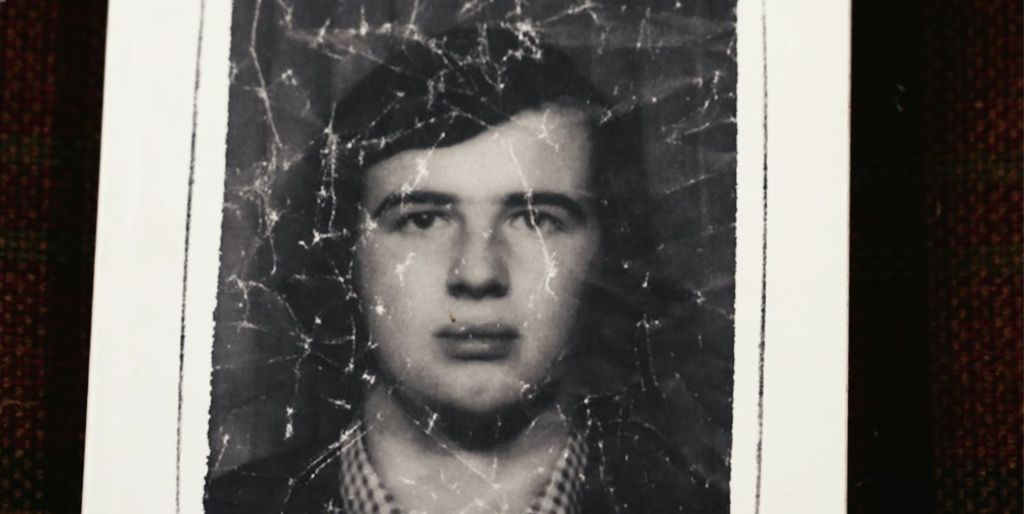
Jeremy’s first session coincided with the start of his A Level exams. “On the same day as I took three other of my A Level exams, I also sat for an hour and a half naked in a mental hospital getting electric shocks,” he recalls. “How the hell I was supposed to do anything, I’ve no idea.”
He had hoped to go to the University of Exeter to study mining, but did not pass his exams. “They ruined my education,” he says today. “They all wanted me ‘curing’ more than they wanted me to have a good life.”
As uncovered by a new BBC investigation, more than 250 LGBTQ+ people were subjected to ESAT in NHS hospitals between 1965 and 1973, with experts theorising that there could be hundreds more survivors across the UK.
“The therapy started with me sitting in the chair and they showed me pictures of men and gave me an electric shock. Then they showed me a picture of a woman and I didn’t get an electric shock,” Jeremy explains. “That’s supposed to make me rush out and have sex with a woman.” The aim of ESAT was to shock people into associating same-sex attraction with pain. “It’s a load of rubbish,” Jeremy scoffs.
Jeremy experienced the shock therapy weekly, including during school holidays, for six months. Towards the end of the sessions, he says, the method changed: he was told to imagine being with Stephen. Then, they shocked him. “That’s why I invented Stephen’s death.”
The retired drystone waller recalls the pain of the shocks being “so bad” that he dissociated from his body and mentally went “into a different realm,” during which his brain imagined that Stephen had died.
“When I was away, I was away with my boyfriend. I was imagining I was with him, rather than getting an electric shock. My mind at some point decided that the best thing to stop the pain would be to imagine I saw Stephen die, which I did,” he says. The shocks rendered him unconscious, and when he awoke, he thought he had watched his boyfriend die – something he believed for 40 years.
“In 1998, when I was getting therapy off the NHS, I had 40 sessions,” he says. “You can’t believe this, but [half the sessions were] bereavement counselling for seeing my boyfriend die. That’s how strong the thought was in my head.”
It was only during therapy in 2011 that he realised his boyfriend hadn’t died. “Everything that I’ve suffered for 50 years was related to the aversion therapy. But for 40 years, I thought it wasn’t.”
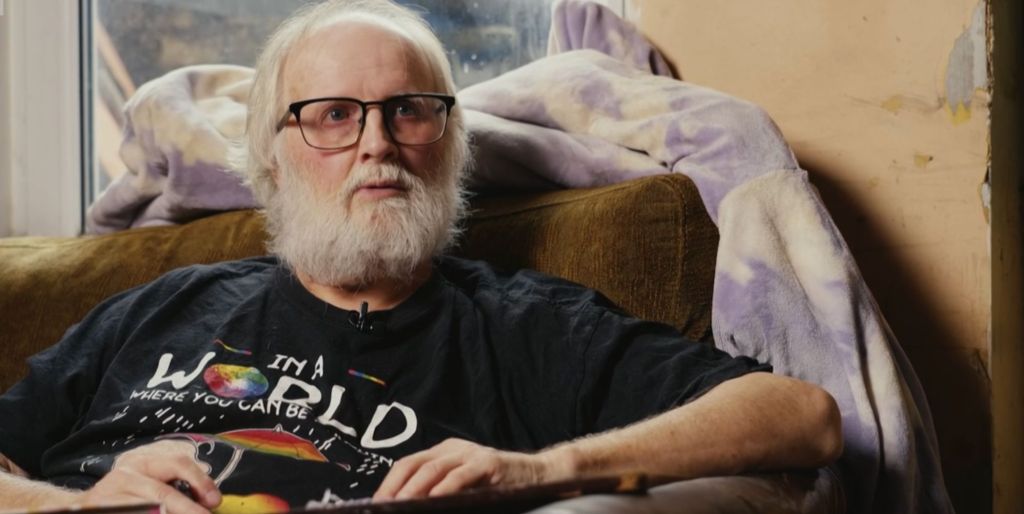
Jeremy has struggled with his mental health ever since his first shock more than 50 years ago, and was diagnosed with PTSD in 1998 – though he wasn’t told this until 2015.
“People [have] said, ‘Oh, I should forget, it’s all in the past,’ but it’s not in the past for me, because they tied my arms down to a wooden chair or a bed. From that experience, I can’t wear tight clothes. I can’t wear a watch.” At the hospital, Jeremy also had to change into slippers and a dressing gown; he has not been able to wear either since.
He also experiences “body memories” whereby he physically remembers the pain he endured, despite disassociating during the sessions. When he lies down in bed or has to go to hospital, “my body will think it’s in a mental hospital getting electric shocks,” he explains.
“When I’m lying on my back, I start shaking and my arms start shaking and I get, if you can imagine, an electric shock going through your stomach.” When he talks about it, too, he shakes.
In 2017, following an interview with Jeremy for Buzzfeed, The Royal College of Psychiatrists issued an apology for the historic use of ESAT. The organisation and NHS England pledged to stop the use of all conversion therapy that same year.
In 2018, the then Conservative government announced that it would be working towards a full ban on conversion therapy in all settings. Seven years, a new party in power and five Prime Ministers later, and the ban is yet to come to fruition.
“Although we often think of conversion practices as something of the past, the shocking fact is that these harmful practices are still taking place in 21st century Britain,” Simon Blake, the chief executive of Stonewall, wrote in a statement to PinkNews.
“The Trevor Project (2024) found that nearly 1 in 6 LGBTQ+ young people in the UK reported being threatened with or subjected to conversion practices,” he added. “We continue to urge the Government to honour its commitment, and introduce a fully inclusive ban, without loopholes, that will protect all LGBTQ+ communities, before the end of this parliament.”
In a statement to the BBC, Minister for Equalities Olivia Bailey said that the government is “committed to bringing forward a full, trans-inclusive ban on conversion practices” in due course.
For Jeremy, his goal all along has been to see conversion therapy banned. His 2018 book, “Is it about that Boy?: The Shocking Trauma of Aversion Therapy“, came months before the government promised its ban. The BBC’s Shock Treatment has prompted the government to investigate the NHS’s historical usage of ESAT.

“One, it doesn’t work,” Jeremy says on why a ban is essential. “It isn’t a disease, so how can you cure something that doesn’t exist?”
Yet he is adamant that any ban must apply to all religious settings, where most conversion therapy occurs. “They shamed me into agreeing to do what they wanted me to do. Nowadays, they don’t use the electric shock, but they still use the shame, and they’ll still put the people in the same position that I was in,” he says.
Jeremy wrote to his old school, and received an apology on behalf of it from the Roman Catholic Diocese of Leeds, one which today he dubs “crap”. He wants a more explicit acknowledgement that what happened to him, at the instruction of his headmaster, was wrong.
“People that will say this today: ‘It’s all in the past.’ Well, it is all in the past, but my body keeps bloody well remembering.”
Shock Treatment is available to watch on BBC iPlayer now.
Jeremy Gavin’s book “Is it about that Boy?”: The Shocking Trauma of Aversion Therapy is available to buy now.
Share your thoughts! Let us know in the comments below, and remember to keep the conversation respectful.