
How Scary Movie 6’s they/them joke normalises non-binary inclusion in film
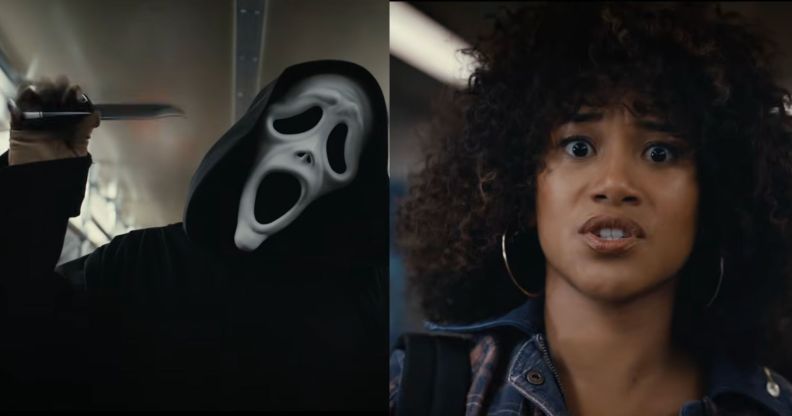
The Scary Movie 6 trailer features a joke about they/them pronouns. (Paramount Pictures)
Pronouns are a sensitive subject. They shouldn’t be, given how we use them daily, yet their mere mention triggers a deluge of remarks from both within and outside the LGBTQIA+ community. Look no further than the swift backlash Scary Movie 6’s trailer has received as evidence of that.
At the centre of the unrest is a simple, albeit unoriginal, pronouns joke. In the opening moments, we see a Black character being stabbed by Scream villain Ghostface. Upon witnessing this, an onlooker cries: “He stabbed her!” to which the wounded character responds: “Not her! My pronouns are they/them! He stabbed them.”
I laughed. The absurdity of the moment – that bombastic, over-the-top way in which the Wayans poke fun at all – was funny. Refreshing, even. It takes an interaction that every non-binary person has had, granted, not while being stabbed, and makes fun of the way in which we’re forced to defend our pronouns. It’s ridiculous, but that’s precisely the point.
Yet, upon venturing to Reddit, I was shocked to see many reacting in a wholly different way. “Transphobic, reactionary trash” and “low hanging fruit” concisely summarise how infuriated some individuals are. While I don’t deny that the joke is best past its sell-by date, I believe our reaction to the joke is the bigger issue than the punchline itself.
The non-binary and trans community is typically either avoided or held at arm’s length, with our existence akin to handling a bomb, if society were to be believed. We must be handled with care lest we explode or break. Mass media, by and large, greatly misunderstands our identity because it has a very specific opinion of us.
Often, in its bid to be quote-unquote respectful, much representation feeds into a particular narrative of the non-binary community. One that has a troubling habit of depicting us as agonistic, ashamed, confused, and isolated. We’re rarely shown as a normal part of society, as people who can laugh at ourselves just like everyone else.
At a time when the film industry feels “too nervous to champion queer stories”, this inclusion in Scary Movie 6, while not an obvious act of advocacy, has given us a place in one of the biggest parody franchises. We’re not included for tokenism; we’re part of the comedy because every community is called out for its quirks and idiosyncrasies. Moreover, the joke feels like a commentary on how society views us rather than how we see ourselves. But let’s suppose that it is poking fun at our pronouns – is that a cruel portrayal?
The Wayans Brothers haven’t said their joke with vitriol. Their tongue-in-cheek humour is designed for a quick laugh, a trait that they’re renowned for and have built their reputation on. Moreover, the fact that Marlon Wayans has a trans son speaks volumes about how this joke is meant to be received. If the same joke had been told by Ricky Gervais, a man who has a whole timeline of controversial comments about the trans community, I’d be more concerned. Who’s making the joke is important here.
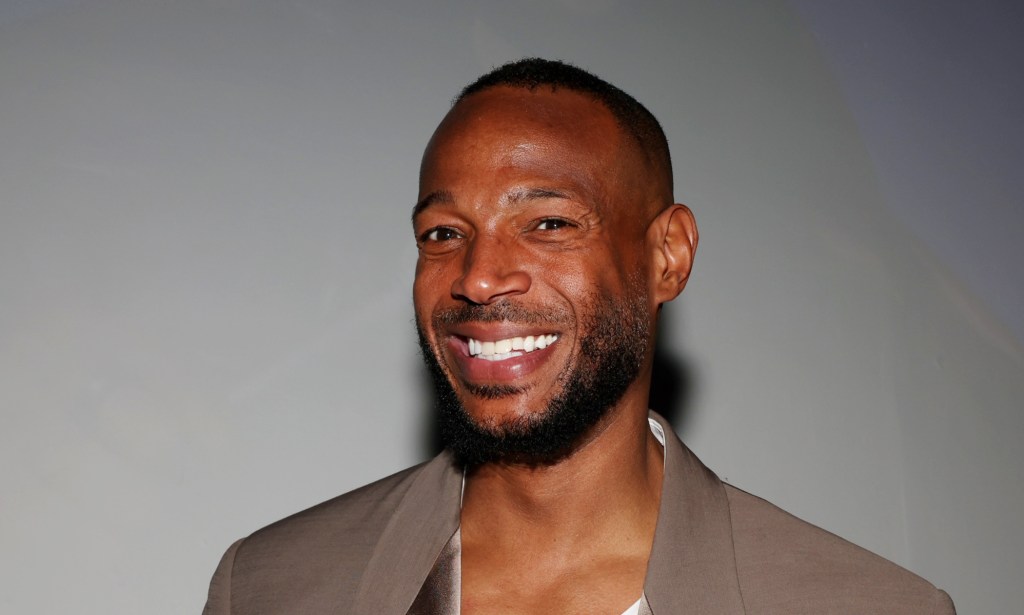
Wayans isn’t someone uninvolved with the queer community, but an individual closely associated with it through his ongoing support of his son. And yes, both comedians are cisgender; nonetheless, Wayans has insight into gender identities that Gervais neither has nor cares to have. He has no intention of trying to educate himself, whereas Wayans has.
Having moved from an initial place of denial, Wayans accepts his son for who he is. This isn’t to say allies can’t be ignorant – they can be, even if unintentionally so. Still, I highly doubt that’s Wayans’ intention. Not only does the joke show an understanding of our community that only comes through actually engaging with it, but it also proves that the Wayans Brothers accept everyone through the vehicle of comedy.
I’m not alone in my opinion. Trans activist and author Dee Whitnell shared a post on their Instagram about being “gagged to see a they/them joke”. When I reached out to them to discuss the backlash in more depth, Dee had this to say: “I love the inclusion of the they/them joke in the Scary Movie 6 trailer, and yes, it may be an old joke, it may also be ‘low-ball’ – but that’s the beauty of this franchise and this joke.
“I would feel differently if Marlon Wayans wasn’t a huge ally for the LGBTQIA+ community, but the fact that he is actually highlights how much he understands and cares for the community by including this joke. The Scary Movie franchise takes hits at every social group in a high camp and parody manner, and I’m grateful to be included.”
Having referred to themselves as “equal opportunity offenders” in an interview with Entertainment Weekly, the Wayans don’t shy away from the fact that their comedy targets all. Consequently, I feel it would be more concerning if they treated non-binary identities as off-limits.
We’ve become so accustomed to being excluded and/or misrepresented, forever searching for basic respect, so we’re naturally on the defensive to protect ourselves. Our once soft edges have been sharpened by society’s treatment of us. In our quest for respect and tolerance, we’ve started to become steeped in a rigid seriousness that stands in the way of our joy.
Similar to how we handle mental illness, in a bid to be taken seriously, we’re afraid to find comedy within these challenging moments. We chastise those who refer to themselves as “crazy” or “insane”, yet for some of us living with these struggles, dark humour is a salve that helps us heal. When I quip about rocking backwards and forwards in a corner because of my severe anxiety, it’s my way of accepting the reality of my disorder, which oftentimes is suffocatingly overwhelming.
Scary Movie 6’s joke is doing similar for non-binary representation in film: it’s normalising our place there. In being included, we’re accepted alongside everybody else. Like it or not, it’s inclusive, though perhaps not in the way some had envisioned.
When we take a step back from believing every element of comedy needs to be thought-provoking and challenging, we permit ourselves to engage with our lives through a more forgiving and joyful lens. If we continue to forget this, the recognition we strive for will come at the cost of losing our humour. But more alarmingly, we’ll also stand in the way of our own progress. If we take ourselves too seriously, are we not part of the problem as well? Are we not at risk of feeding into the very unfair narrative we’re trying to fight against?
Even though the adversity we overcome needs to be shared on the big screen, so too do our lighthearted experiences; all are equally deserving of a moment in the spotlight. We’re allowed to enjoy comedy that pokes fun at us because we are funny. There’s no harm in admitting that.
Share your thoughts! Let us know in the comments below, and remember to keep the conversation respectful.