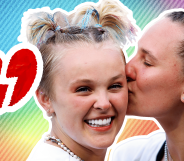
International Rebel Dykes Day is for all those lesbians who ‘feel like outsiders’
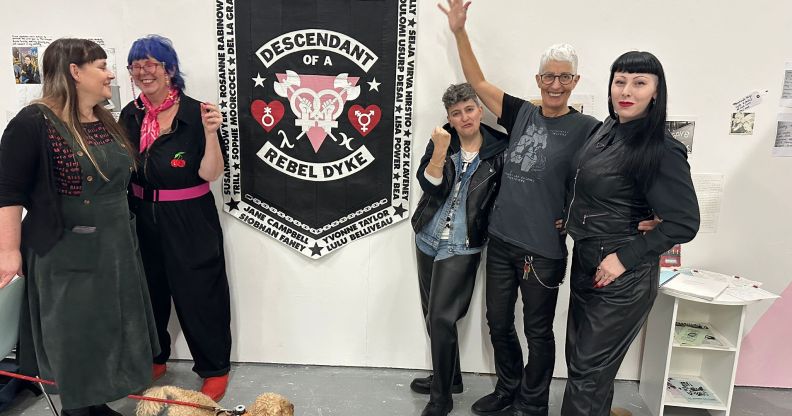
International Rebel Dykes Day will celebrate Rebel Dykes all over the world (Supplied)
A new international day celebrating dyke culture for everyone who has ever felt like an outsider in the lesbian community is launching this month.
The first ever International Rebel Dykes Day is set to take place on 29 January and will honour the history of dykes and Rebel Dykes all over the world.
‘Rebel Dykes’ is a retrospective term to describe a raucous, unapologetic community of activist, sex-positive lesbians who lived on the very fringes of society in 1980s London – many of them squatting in areas such as Brixton and Peckham – and who ran riot through both the decade and city. The group’s origins can be traced back to the Greenham Common Women’s Peace Camp of the early 1980s, which itself was a liberating feminist space and a place to explore sapphic sexuality.
Characterised by their gender non-confirming aesthetic and anti-capitalist, anti-establishment ideals, the trans-inclusive collective of “pervs, punks, sex workers, artists, activists, organisers and troublemakers” embraced leather, kink and polyamory at a time when the so-called anti-pornography ‘sex wars’ dominated feminist discourse. Fuelled by anti-Thatcher resistance, solidarity with AIDS activism and other social causes like workers’ rights and nuclear disarmament, they protested as hard as they partied and found themselves on the front pages of the national press on several occasions – most notably after invading the BBC and abseiling into the House of Lords to fight the much reviled Section 28.
“It’s very hard to pin it down,” producer of the Rebel Dykes documentary film Siobhan Fahey – not that Siobhan Fahey from Bananarama – said told PinkNews of the word ‘dyke’. “It’s words like punks, activists and outsiders, perhaps people who don’t always spend their time within lesbian communities, perhaps more in the straight world and they’re the dyke within the straight world. You know, the lass at the festival who drives the lorry.”
“It’s great that being a lesbian has become much more accepted,” she continued, “and the world is very different, but it seems to be always that the version of – and it’s the same with gay men as well – lesbians that [straight people] accept are the ones that are most socially acceptable: the ones that look just like them.”
“A lot of us just don’t fit in, we don’t fit into that queer stereotype,” Fahey noted.
“So I would call on women who feel like outsiders in whatever way they want to be to have this day.”
Fahey said, since the film about the Rebel Dykes came out, things have really “taken off” in terms of interest in this all-too-often forgotten period of queer British history, with countless groups and organisations reaching out for ways to commemorate the Rebel Dykes and Chain Reaction.
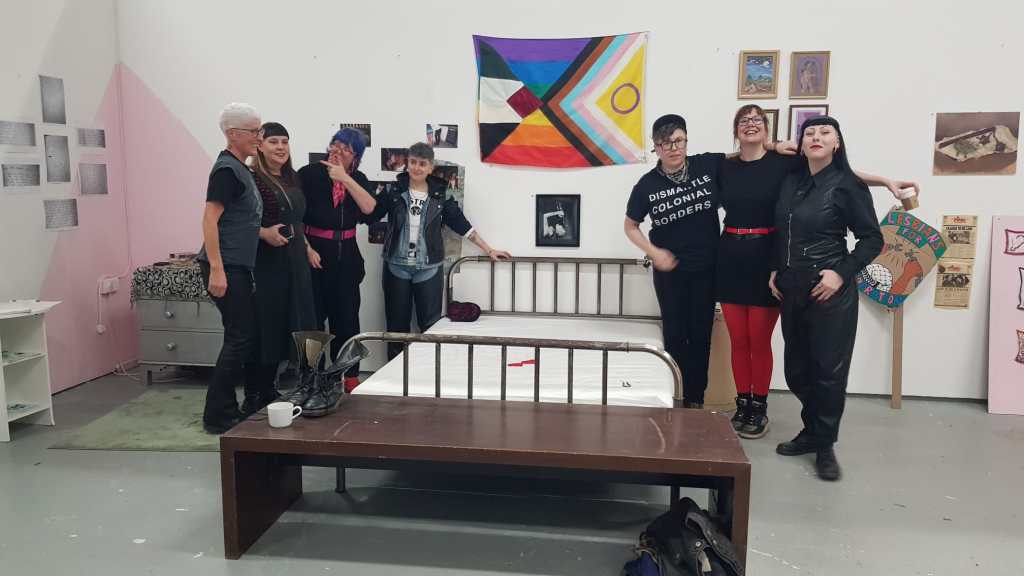
Alongside this, following the release of the documentary, several in-person exhibitions have taken place around the country using material from the Rebel Dykes Archive at the Bishopsgate Institute and response work by contemporary artists, including beds with notches carved in the wood, leather jackets, diaries and music made by women during the period. After the most recent exhibition – at Homotopia in Liverpool – concluded, Fahey recalled: “We were all saying, this needs to happen more. We need to celebrate the outsider lesbian art and culture a lot more”.
Enter: International Rebel Dykes Day
“I do think there’s a gap for all of the queer women, all the non binary and trans bikers, punks, musicians, actors, all of those who don’t fit into the word lesbian,” Fahey said of creating International Rebel Dykes Day.
“I just think we need a day.”
The date of the International Rebel Dykes Day, 29 January, coincides with the anniversary of the opening of legendary lesbian S&M club night, Chain Reaction.
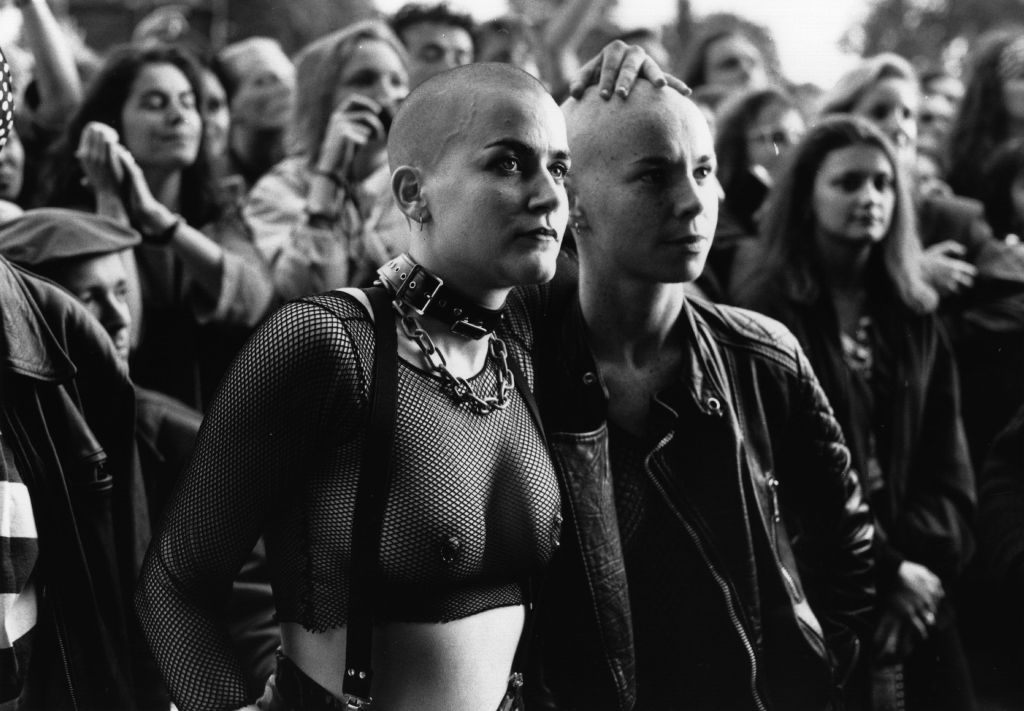
Launched on 29 January 1987, Chain Reaction was a fetish lesbian club night at the Market Tavern, a gay men’s bar in Vauxhall, which took place every other Thursday. From erotic leather and strip performances to live sex shows, the club left a hedonistic and radical legacy on those that attend with many lifelong friendships still intact – and outrageous stories to boot.
“There was always a sexy cabaret. There was a pool room next door with all the butches and femmes and there was sex in the toilets and drugs. I think we could still smoke in those days – so it was smoky as f***,” Fahey, who performed as a stripper on the opening night, recalled fondly.
“We even bought a motorbike up one time and some girl got f***** on the back of it. So yeah, it was this wild club that we had that really changed things a lot.
“It gave us a gang, a place.”
Not everyone agreed with the sex-positivity and kinky entertainment of Chain Reaction though, with other groups of lesbians and feminists fiercely opposing the club night on the basis that tools of patriarchal oppression are not just social and economic but sexual. These protests against Chain Reaction took place amid what was known as the ‘feminist sex wars’, a period of ideological clash in the feminist movement in the 1970s and 80s that came at the crux of the second and third waves.
On one side, radical feminists viewed pornography, sex work and sexual practices like BDSM as normalising and reinforcing the exploitation and subordination of women in society. Feminists in this camp felt sadomasochistic play is not simply a fantasy but a direct representation of gender inequality, with women unable to provide adequate consent due to the structural power imbalance between men and women. Writing in 2021, journalist Julie Bindel – who is well-known for her gender critical activism – outlined how she took part in the protests at the time.
In the opposite camp, sex-positive feminists asserted sex could be both a site of pleasure and of political resistance, with lesbian BDSM and kink a form of empowerment that upends patriarchal control over women and reorientates cultural perceptions around power and autonomy. They felt anti-porn feminists were seeking to censor and control sexual expression in much the same way religious conservatives did, arguing that sexual freedom was – in fact – as much a part of the fight for true social, economic and political liberation as anything else.
Fahey went on to say of the legacy of Chain Reaction: “I always think that one of the most important things in queer culture is actual in real-life spaces. But, all sorts of spaces where we can make our art and be together and create community.
“So although in 1987 all of these different types of dykes existed in London, until then we didn’t have a place to go, a place to become a gang.”
Do you want to get involved in International Rebel Dykes Day? Well, there is no wrong way to do it, Fahey said, adding there is already an archive day in London, a dyke club night in Dublin and an exhibition in Edinburgh – but no celebration of this history is too small.
“International Rebel Dykes Day is a bit of a leap into the unknown,” she said.
“We don’t know if it will work but dyke culture has always been built that way. This is an opportunity for DIY Dyke community to come together to create memories, joy, and make space together.”