
A brief history on how The Sims became an LGBTQ+ cult classic
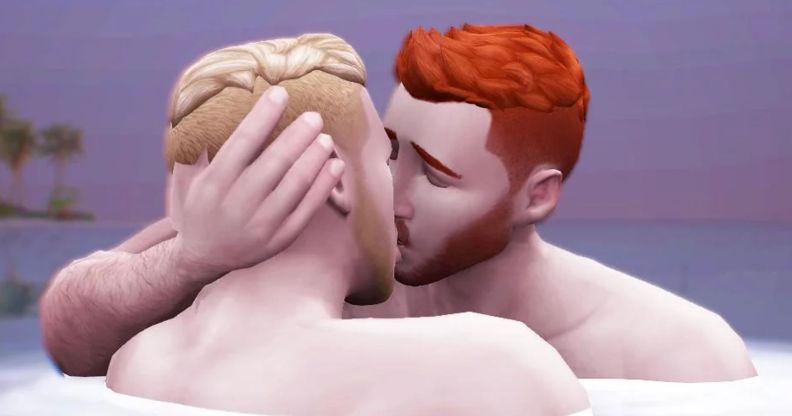
The Sims is for the queers. (Electronic Arts)
Whichever way you cut it, The Sims is for the queers, and its development history is no different.
Much like the world it aims to simulate, LGBTQ+ life has always been a core part of the video game series, which is a large reason why it has a huge queer fan base.
From the moment the series’ creator Will Wright convinced development studio Maxis’ initially reluctant board members that the idea was worth pursuing, mechanics representing LGBTQ+ relationships became a fundamental part of the life-simulation’s gameplay.
From there, it has flourished into a game choc-full of queer life, from Pride decorations to inclusive gender and sexuality options for your Sims.
But where did this all begin, and how did The Sims turn into one of the LGBTQ+ gaming community’s most beloved series?
The Sims and the same-sex kiss that changed gaming
Released in February 2000, The Sims was, for over four years, the best-selling and one of the highest-rated video games of all time. To this day, it remains one of the best-selling games in history.
It’s actually possible to pinpoint not just the first-ever same-sex kiss in The Sims, but the moment the developers became aware that same-sex attraction was a mechanic worth pursuing in the series.
During the 1999 Electronic Entertainment Expo (E3) – a tumultuous make-or-break moment for the development team, who said it would decide whether The Sims would be a cultural hit or another cancelled dream – Maxis shared a demo of the project to members of the press. During the showcase, two of the female Sims began passionately kissing, much to the surprise of several of the game’s producers.
Prior to the showcase, the decision whether to include same-sex relationships plagued The Sims’ protracted development. Patrick J Barrett III, one of the game’s programmers, recalled to the New Yorker that the executives at Electronic Arts were initially reluctant to include queer intimacy, and the decision was eventually made to leave same-sex relationships out of the game.
However, Barrett, who is gay, said he wasn’t aware of this decision after joining the team and included same-sex relationships in the E3 demo he was asked to create.
Thankfully, the moment cemented The Sims as one of the key talking points of the gaming conference that year and set the stage for it to become a cultural pillar in gaming.
“You might say that they stole the show,” Barrett joked. “I guess straight guys that make sports games loved the idea of controlling two lesbians.”
Sims are too gay, apparently
The team immediately went back to discuss how same-sex relationships could be further developed upon. One of the key problems with the game, developers recalled, was that intimacy between Sims was based purely on proximity, meaning that roommates would constantly shack up.
“If you created a household with two same-sex Sims, they would always become gay just from the fact they were around each other the most,” Barrett recalled. “That’s when I came up with the system that determined a Sim’s sexuality through user-directed actions.”
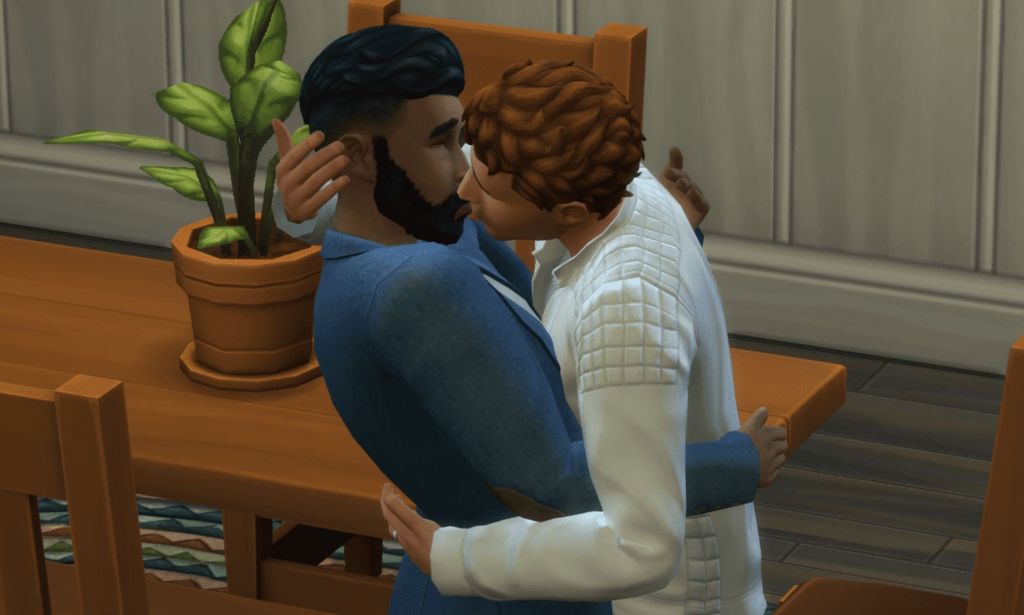
The trick was to separate automated features, such as a Sim going to grab a drink or having a conversation, with explicitly romantic ones, such as flirting or kissing. A romance meter was created to ensure Sims didn’t just immediately WooHoo after having three or four polite chats, and a more complex formula was created to ensure romance options weren’t so common.
Same-sex attraction and opposite-sex attraction also became two separate mechanics, not just to give the same-sex mechanics more nuance, but also to allow for bisexual Sims.
Programmer Don Hopkins, who helped create the design documents for these mechanics, wrote in one such document that team members offended by the addition of same-sex attraction should “grow up and get a life, and hopefully our game will help them in that quest”.
“Anyone who is afraid that it might offend the sensibilities of other people (but of course not themselves) is clearly homophobic by proxy but doesn’t realise it since they’re projecting their homophobia onto other people,” he wrote.
How did The Sims become an LGBTQ+ cult classic?
The Sims was huge. Incomprehensibly huge at a time when PC gaming was far from a mainstream hobby. The game received universal acclaim from reviewers, who called it a revolutionary development in the art and technology of gaming as a whole.
It’s difficult to pinpoint exactly when The Sims was dubbed an LGBTQ+ cult classic, but somewhere down the series’ eclectic lifespan, it became the game that the queers loved to love.
One study from 2006 hypothesized that the game allows people to project their personality, values, and life goals onto the games. This, in turn, allows LGBTQ+ people, particularly those who are closeted, to either consciously or subconsciously apply their romantic or sexual feelings to the game.
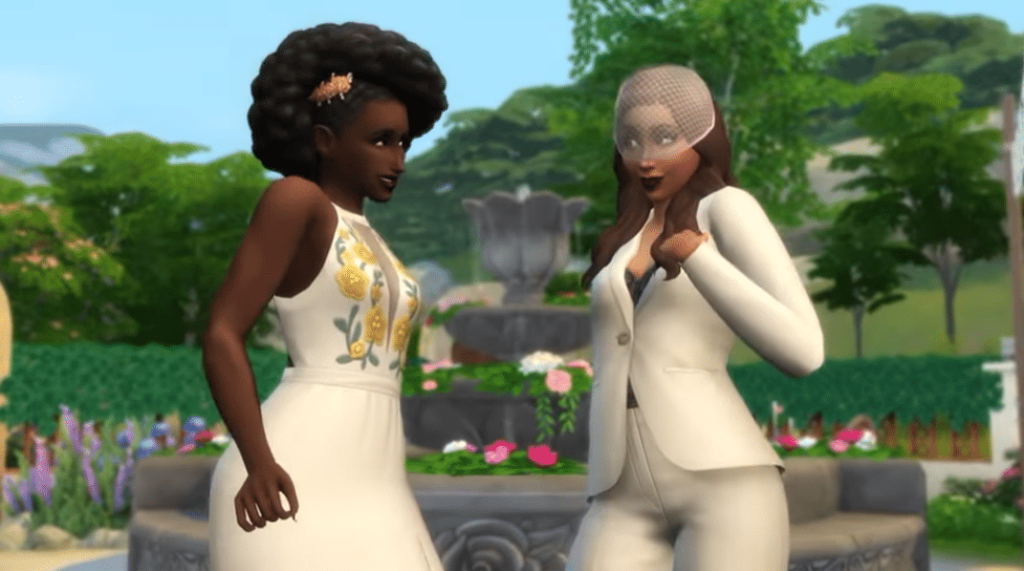
In a column for Bricks Magazine, journalist Megan Elliott recalled her own relationship with the game, saying that before she came out, she used The Sims as a way to escape reality, and that unknowingly included experimenting with their sexuality.
“The Sims has given countless people, including myself, the space to play out queer identities and desires before they are comfortable or safe to do so in real-life,” Elliot writes. “Around the world, some people never reach the point where they can live openly … so The Sims continues to provide an escape, and the opportunity to imagine a different world.”
The Sims 4 and the future of the series
While same-sex attraction remained a core part of the games’ sequels and spin-offs, LGBTQ+ representation wouldn’t be hugely expanded upon until The Sims 4.
Arguably one of the more controversial titles in the series largely due to surprisingly restrictive design decisions, The Sims 4 made several strides in ensuring everyone, including LGBTQ+ people, feel represented in the virtual world.
The first major update to include more options for queer Sims came in 2016 with the Get To Work expansion pack that removed gender-based restrictions for clothing and hair styles.
In 2021, developers added the option to choose your Sims’ pronouns following a viral petition. That mechanic was further expanded upon in 2022 to include non-binary pronouns.
Further updates massively expanded upon gender customisation options, including options on whether a Sim can get pregnant or can use the toilet standing up, as well as character options like tucking underwear and top surgery scars.
In 2024, it introduced options for polyamory in the new Lovestruck expansion, allowing Sims to date multiple other characters.
It’s difficult to know where the series could go from here, becoming one of the most inclusive games in modern gaming. Recent leaks suggest The Sims 5 may be on its way soon, and chances are developers won’t stop making the game more inclusive any time soon.