
From Heartstopper to Heated Rivalry: Why queer shows are still defined by their sex scenes
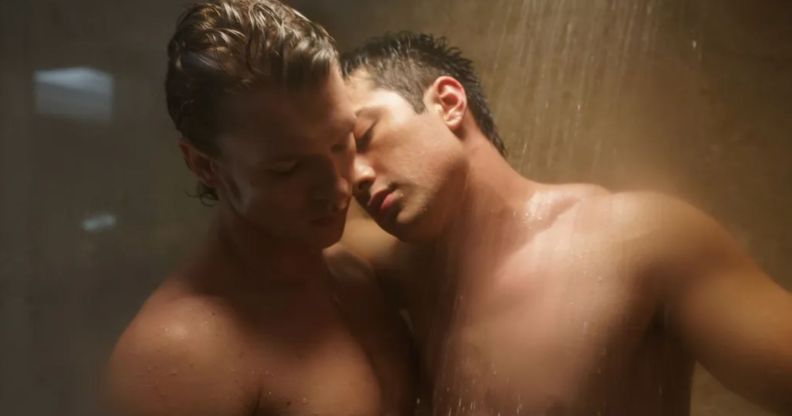
Heated Rivalry’s frequent sex scenes have become fixation for audiences. (HBO)
We all know what Heated Rivalry is by now. Ostensibly, it’s about two ice hockey rivals turned illicit lovers, their romance stunted by the hypermasculine hang-ups of professional hockey. It’s also a beautiful tapestry of beautiful gay sex featuring impossibly beautiful bottoms. Both points are true, yet one has received considerably more focus than the other.
Some criticism of the show’s zesty sex scenes has been predictably whatever. The Orthodox Russian Christians have denounced them? Eye-roll, shrug. Other commentary has been stranger to see. The scenes are unrealistic, some have said. Others, queer and straight, think there’s too many.
In a middling, three-star review, one publication bemoaned the show’s three-an-episode sex scenes as “undeniably tedious” (the same publication offered a similarly lukewarm review to Bridgerton season two for having less of the “unusually explicit” sex scenes of season one). The stars themselves have been forced to offer a defence. “There are no d***s in the show. There’s just a lot of butt,” co-lead Hudson Williams recently told Andy Cohen. “If that were straight intimate scenes, it wouldn’t be talked about in the way it is.”
Robbie Taylor Hunt, an intimacy coordinator specialising in queer media with credits on Pillion and Heartstopper Forever, says that the historical dearth of queer intimacy on screen means that any such content “ends up under the microscope a lot more” than similar, heterosexual scenes. “From straight audiences, they are more shocked or interested in it as this strange, different thing,” he says.
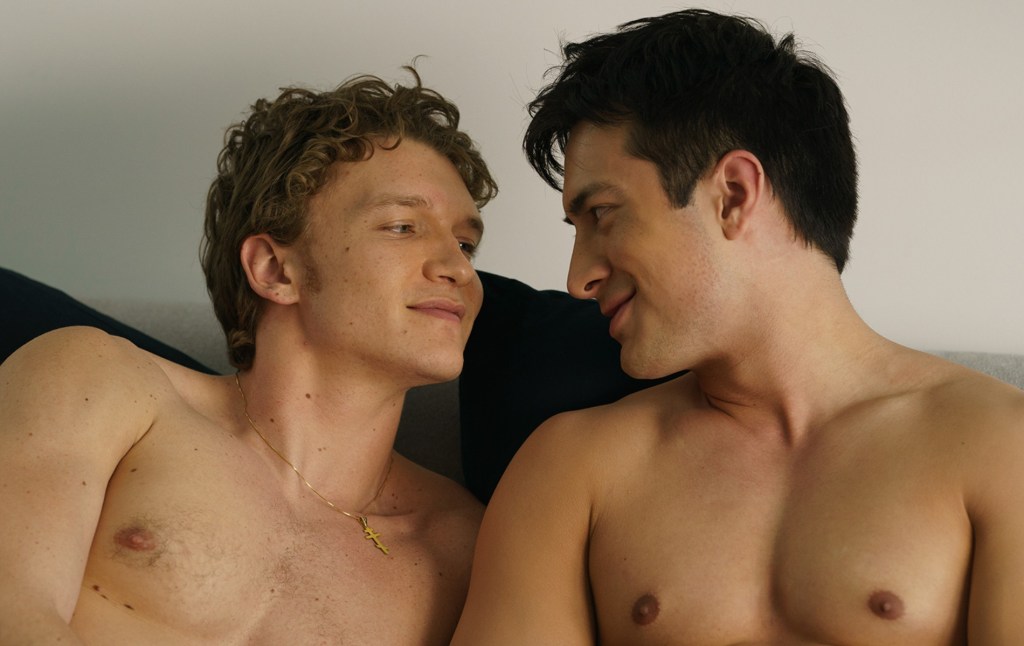
This can stem from general curiosity, or from deep-set or subconscious beliefs about queer people’s sex lives. Many straight people “still have a fixation with gay people having sex”, says Zachary Zane, the sex and relationship expert at Grindr. “Some struggle with separating our identities from the sex component, and often reduce our identities to just sex.” Queer sex scenes therefore come under a “different level of scrutiny” than those depicted in Bridgerton, or the BBC’s steamy finance drama Industry.
The criticism can also be more pernicious and linked to “ingrained tropes around queerness as deviant”, suggests David Opie, the founder of queer film and TV publication Cruising Cinema. “It also brings to mind for me [the] Disney films example: people don’t want to see a gay kiss because they see it as sexual, but then we have Disney films, with children [aged] three, four years old seeing straight kisses, and there’s never an issue.”
Queer people themselves may take issue with excessive intimacy as “they worry that it’s a one-sided portrayal of queerness, that we’re only known for sex”, Opie adds. “In doing so, they feed into straight ideals of queerness and queer sex, which is to me internalised homophobia.”
As far as Heated Rivalry is concerned, the sex isn’t superfluous. It’s one of the main drivers of Game Changers by Rachel Reid, the frothy novel series that the show is based on. “If [characters Shane and Ilya] entered the hotel room in episode one and then it cuts to them the next morning, you would be like, ‘What happened?’ These are huge moments for these characters,” says Taylor Hunt. “It’d be wild not to show them. Character and story wise, it matters when we’re shying away from it.”
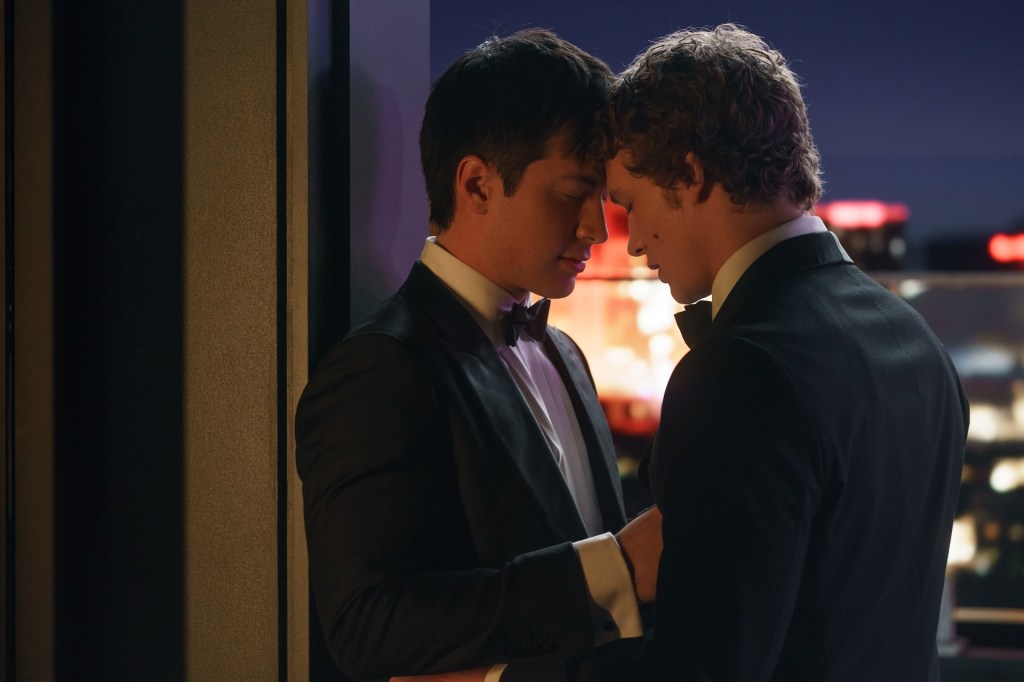
Heated Rivalry is saying the quiet part out loud: men can enjoy sex with each other. The TV industry still seems reluctant to recognise this fact, with the show’s creator Jacob Tierney recently revealing that one TV exec wanted the characters to hold off on having sex until season two. “Historically we have shied away from showing queer sex on screen because filmmakers are worried about how it will read for a straight audience or that it’ll alienate them,” Taylor Hunt adds. “There’s a sort of desexualising of it.”
Arguably, “the sex was initially responsible” for the original buzz around the show, Opie notes, yet some viewers have gone as far to suggest that the show’s appeal is linked exclusively to its explicitness. Other Heated Rivalry fans have been keen to stress that the show is about more than just sex, as the scenes have become something of an uneasy fixation.
Earlier this month, Abbott Elementary actress Janelle James was praised for rebutting an interview question about whether she had Heated Rivalry’s smut on the mind while standing next to its other co-lead, Connor Storrie. “That’s not what I’m thinking about,” she said. “I’m thinking about his characterisation.” Even queer shows that aren’t explicitly about sex seem to be pulled back towards it. Who remembers that slightly disconcerting time when Heartstopper – a show about school-age teens – was pillorised by some for lacking raunch?
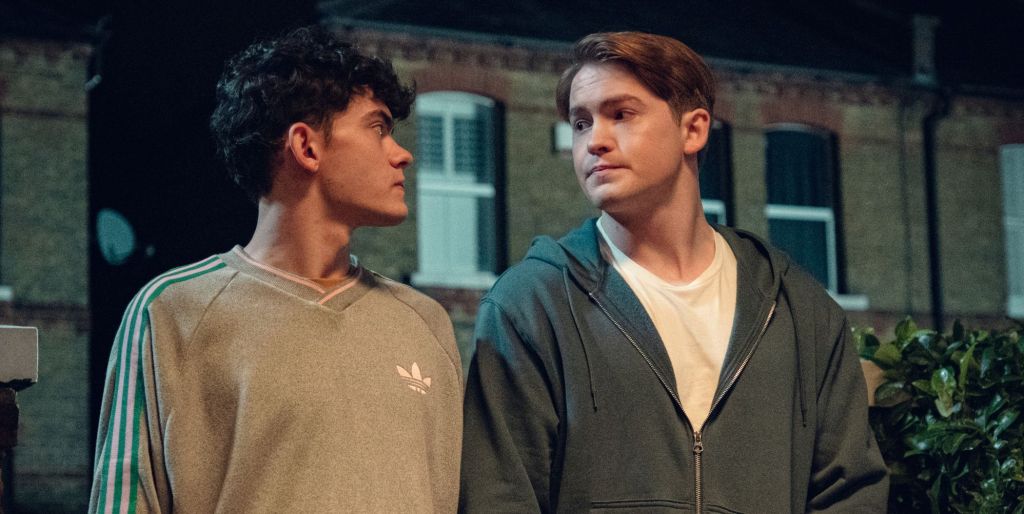
Queer people may fixate on brazen sex scenes as they see it as a “triumph” after “our stories have been actively suppressed,” Opie says. “For queer audiences,” Taylor Hunt agrees, “we’ve been starved of it for so long that we’re really excited to see it and really want it, and then sometimes we can maybe overanalyse it or understandably feel we want more.” Perhaps that explains the criticism that Heartstopper – frequently adulated as the pinnacle of LGBTQ+ representation – is too sanitised.
Occasionally, the fascination with queer sex portrayals can detract from the stories being told. Twinless, which navigates a man’s grief, rage and hunger for connection following the death of his twin, has become known primarily for its fleeting sex scene between leads Dylan O’Brien and James Sweeney. After the film premiered at Sundance Film Festival last year, the scene leaked online, and it was pulled from the festival’s streaming platform and pirated heavily, impacting its box office. Meanwhile Oliver Hermanus, the director of queer historical romance The History of Sound, has had to explain the film’s lack of explicit sex and why he favoured meditations on love and loss.
It might be a risk for deep stories to feature queer sex, for fear they got lost in the fervent reaction, but, “I also think it’s a risk worth taking,” Opie says. “Straight, gay, however you identify it, we are drawn to sex and sex sells… I guess the key is that the storytelling backs it up.”
There’s other reasons why queer sex on screen might still be polarising. More than a quarter of Gen Z adults in the US identify as queer, making it the queerest generation yet and thus the largest looking for representation. Yet almost half of Gen Z-ers want less sex on screen overall, according to one study. Millennial and older queers meanwhile are just pleased to see what they never had. “I was born in the 80s,” Opie says, “so for me this was not existent on screen when I was growing up, pretty much. For me it’s only a cause of celebration.”
Scenes of queer intimacy, especially as vivid and unflinching as in Heated Rivalry, are new and “anything that’s new that we haven’t seen before, people want to talk about a lot,” Taylor Hunt says. “That’s exciting in a way. We’re going into new waters.” Even heterosexual sex scenes were once considered salacious: in the early noughties, ABC police drama NYPD was protested for showing a nude woman as part of a straight sex scene.
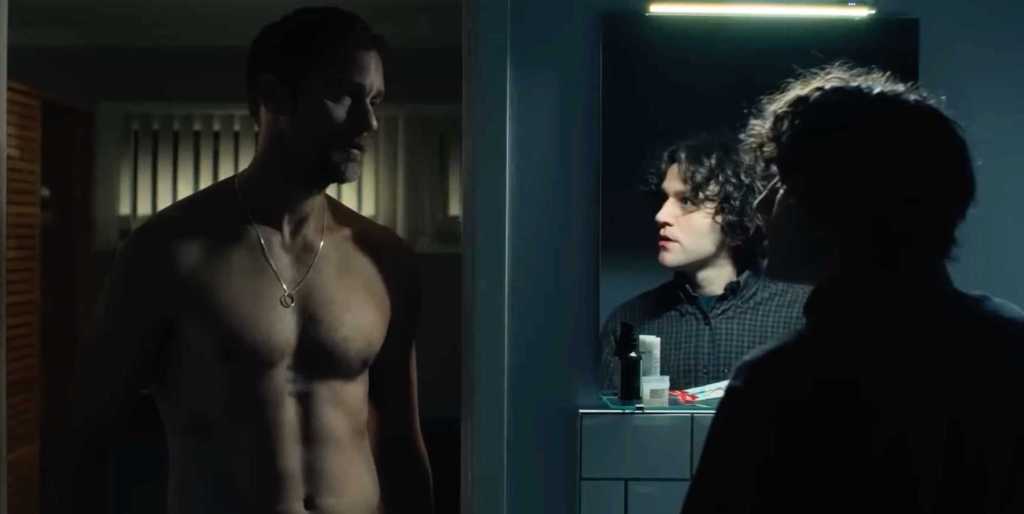
Queer storytelling that is both intimate and commercially successful is still in its nascent phase, but the future looks promising. In the past few years, Taylor Hunt has worked on the “sweet, romantic” intimacy of Red, White & Royal Blue, and on the “queer kink subculture that you see in Pillion, that a few years ago producers and audiences may have felt was too much of a stretch to show on screen”. The more queer content on screen, “the more different perspectives on queer sex and queer intimacy we’ll see,” he continues. “We should get the Heated Rivalry version of intimacy and queer sex, and then we should get the Heartstopper version. We deserve everything, right?”
Of course, Pillion, Heartstopper, Red, White & Royal Blue, and Heated Rivalry all have something in common: their leads are largely white, cisgender men. While shows like Mr Loverman, Sex Education and last year’s The Hunting Wives have centred people of colour, trans people and queer women, the bulk of stories focus on one type of queerness. “That’s just the beginning,” Taylor Hunt says, “but there’s a whole queer world [and] we want to see more sex and intimacy between these people done really respectfully.”
Until then, queer sex on screen might always be a hot button topic. “There’s so much pressure when the mainstream examples of queer storytelling are so few,” says Opie. “I would love to see a lot more breadth of types of storytelling and how sex is portrayed within that, and I think Heated Rivalry is definitely going to help.”
Heated Rivalry is streaming now on HBO Max (US), Crave (Canada) and Sky/NOW (UK).
Share your thoughts! Let us know in the comments below, and remember to keep the conversation respectful.