
Almost one in five UK men say they haven’t cried in 10 years
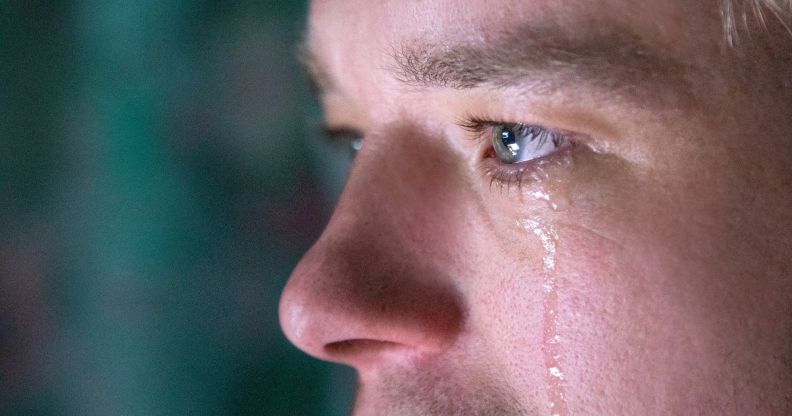
Men are far less likely to regularly cry than women. (Getty)
Nearly 20 per cent of men in the UK say they haven’t cried in almost a decade, an eye-opening survey reports.
Warning: This article references suicide and domestic violence. Reader discretion is advised.
The poll, published on Thursday (5 February) by YouGov, asked over 4,000 UK adults when they last cried.
Half of Britons said they cried at least once within the month leading up to the survey. However, this included just 30 per cent of men.
Twenty-nine per cent of men said they had cried within the past year and, shockingly, nearly 20 per cent said they had only cried once within the last decade.

Seven per cent of men said they hadn’t cried for over 10 years, while one per cent said they had never cried in their entire adult life.
Comparatively, 71 per cent of women say they have cried in the last month, while just five per cent say they haven’t cried in 10 years. Virtually no women said they have never cried.
Millennial men are far more likely to cry regularly than any other generation, according to the poll. Fifteen per cent of men aged 25-49 say they cried in the week leading up to the survey, while just 13 per cent of men aged 18-24 could say the same.
Interestingly, British men are less likely to cry than American men. Sixteen per cent of Britons said they cried in the past week, compared to 26 per cent of Americans.
Conversely, 19 per cent of Brits say they had cried within the past 10 years – six per cent more than the 13 per cent of Americans who answered similarly.
Emotional repression fueling suicide rates among men
The societal expectation that men should suppress their emotions has, on numerous occasions, been cited as a driver in the prevalence of both male suicide rates and male-perpetrated domestic violence.
Laura Voith, Applied Social Sciences associate professor at Case Western Reserve University, argues that toxic stress – excessive activation of the bodies’ emotional stress response – is particularly common among men who don’t open up about their emotions or trauma.
A 2020 study published in the Family Process journal found that, in nearly one-third of male domestic violence perpetrators in intervention programs have clinical levels of post-traumatic stress disorder (PTSD).
Union Street Journal staff writer Rue Minar noted that suicide rates among men are infamously higher than women, arguing that emotional repression is a major factor. Research estimates that at least six million men are living with undiagnosed depression.
This issue is only exacerbated by “Alpha” culture rhetoric spread by right-wing “manosphere” groups who purport that emotional repression is a core part of masculinity.
A review published in 2025 linked social deprivation, loneliness, and emotional repression to right-wing radicalisation and extremism.
This, in turn, fuels the rise in xenophobic, homophobic, transphobic, racist, and anti-feminist attitudes, according to Goethe University Frankfurt professor Alexander Langenkamp.
Suicide is preventable. Readers who are affected by the issues raised in this story are encouraged to contact the Samaritans on 116 123 (www.samaritans.org), or Mind on 0300 123 3393 (www.mind.org.uk). Readers in the US are encouraged to contact the National Suicide Prevention Line on 1-800-273-8255.