
No, a trans politician didn’t say porn is ‘educational’, here’s what she actually said
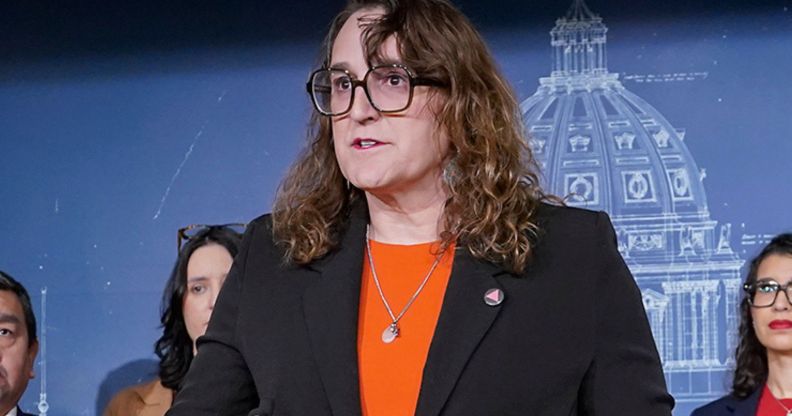
Minnesota Democrat Leigh Finke. (Minnesota Gov)
Sorry, right-wingers, the claim that a trans lawmaker said pornography can be educational for LGBTQ+ young people simply isn’t true – here’s what she actually said.
Minnesota Democrat Leigh Finke has been the subject of a misinformation campaign by right-wing media outlets after she publicly expressed her opposition to an age verification bill last Thursday.
HF1434 would require internet service providers that host content considered “harmful to minors” to implement age verification checks. Initially brought last year, the law was re-tabled by Republican Ben Bakeberg during a House committee meeting last week.
During the debate, Finke, 44, expressed concerns that the bill could be used by the GOP to unlawfully censor content on a plethora of subjects, including LGBTQ+ rights and sex education.
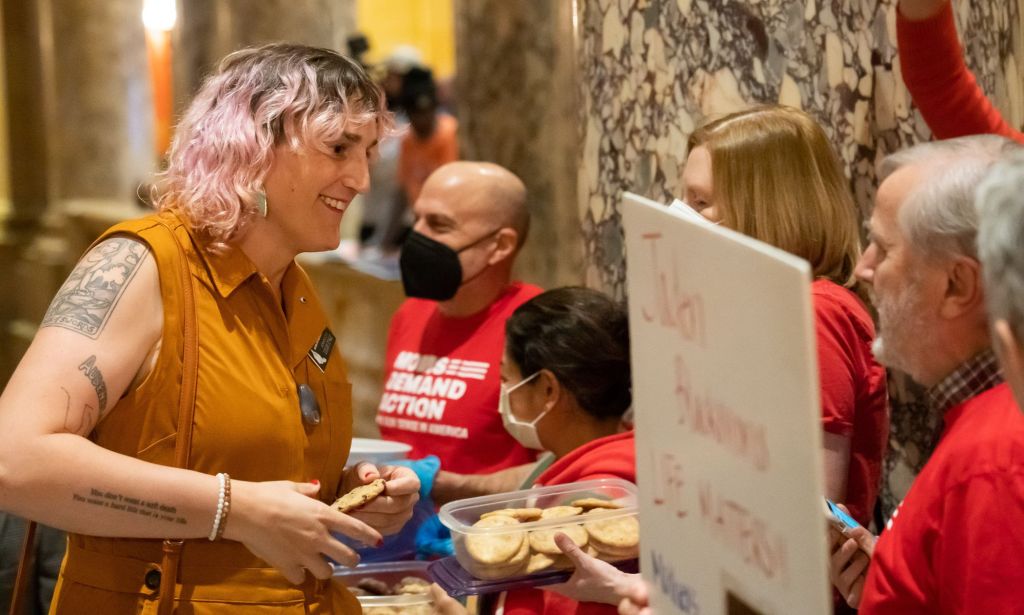
She added that, while she supported the idea of protecting minors from explicit and otherwise harmful content on the internet, the bill must not prohibit “content that is designed for people under 18 to educate them about themselves, their lives, their community”, arguing that some might define “the very existence of transgender kids” as overtly prurient.
Using similar bills passed in other states as an example, Finke said lawmakers seemed “almost jubilant” about weaponising age verification laws to ban young people from “accessing content that could be educational if they are queer”.
Several right-wing outlets, including the Daily Caller, immediately took this to mean that Finke was suggesting pornography is educational, which she was not.
Finke later deplored these claims in a series of online posts, accusing the “national right-wing lie machine” of contorting her words to fit a certain narrative.
To prove her point, she used prompts from the Elon Musk owned AI chatbot, Grok – which many have claimed is the only ‘anti-woke’ AI chatbot on the internet – to prove that the claims were false.
In one of the screenshots, Grok writes that Finke did “not directly defend pornography as an ‘educational tool'”. Another noted her specific concerns that the law could be weaponised as with other states.
Online age verification has become a huge talking point over the past few years over concerns regarding the potential harms that social media is having on young people.
The UK government enacted amendments to the Online Safety Act last year, forcing service providers to implement third-party ID checks or face scans.
Several of these third party age verification tools have since faced criticism in part over online privacy concerns. In October, online chat app Discord’s ID check was hacked, potentially leaking over 70,000 photos of users’ IDs and faces.
Share your story! Do you have an important, exciting or uplifting story to tell? Email us at [email protected]