
Reform UK most-supported party among gay and bi men, new poll shows
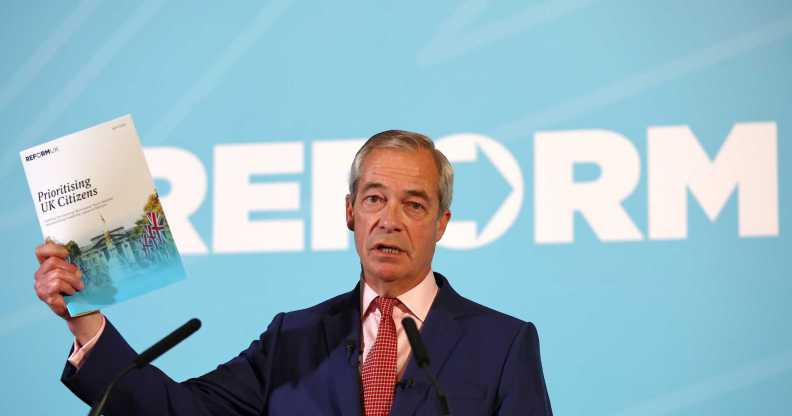
Gay and bisexual men are backing Reform, a poll suggests (Lia Toby/Getty Images)
Nigel Farage’s far-right Reform UK is the most supported party amongst gay and bisexual men in the UK, a new poll has found.
The populist political party was founded in 2018 as the Brexit Party and has since rebranded and made a name for itself over its controversial anti-immigration and eurosceptic policies.
As well as opposition to mass migration, the party bills itself as ‘anti-woke’ and has several anti-LGBTQ+ – and notably anti-trans – policies, including a recent pledge to repeal the 2010 Equality Act.
In recent months, a number of Conservative MPs have moved over to Reform, including Suella Braverman and Robert Jenrick.
The new voting intention poll carried out by More in Common, a research agency tackling polarisation and division across various countries, found Reform is the most popular party for both gay and bisexual and straight men.
The data found 25 per cent of gay and bisexual men would vote for Reform, with 33 per cent of straight men also pledging support to Farage’s party.
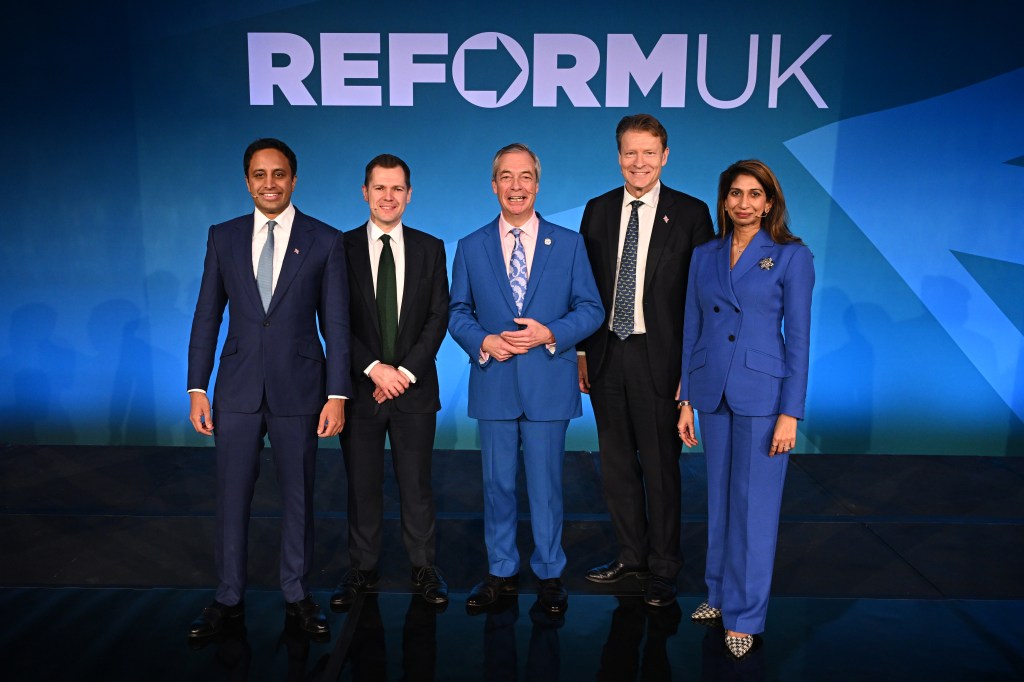
By contrast, Zack Polanski’s left-wing, pro-trans Green Party was the second most popular choice for gay and bisexual men at 19 per cent. However, amongst the straight men surveyed, only 7 per cent support the Greens.
For lesbian and bisexual women, the Greens were by far the most popular choice, with more than a third backing Polanski (37 per cent). This was not reflected for straight women, with just 11 per cent saying they would vote Green and the majority of their support going to Reform (29 per cent).
Keir Starmer’s Labour, which is currently in government, was no group’s first choice. The most support the party courted was from straight men (22 per cent), followed closely by lesbian and bisexual women (21 per cent).
The Conservatives, now led by Kemi Badenoch as the opposition, was only more popular than Labour amongst the straight women surveyed, with 23 per cent intending to vote blue.
The sample included 8,921 adults who were surveyed between 24 November and 16 December 2025.
Reform certainly does not have the best record when it comes to the rights of LGBTQ+ people.
In the party’s last manifesto it vowed to overhaul the Equality Act, cull DEI and ban so-called “transgender ideology” – a term used as an anti-trans dog whistle – in primary and secondary schools.
Following last year’s local elections, the party announced the 10 councils is controls would be banned from flying the Pride flag.
This came some months after a Reform member was captured on camera calling a Pride flag displayed on a police car a “degenerate flag”.
Research conducted in 2024 also revealed that more than two-thirds (69 per cent) of Reform votes believe trans people should not be able to legally change their gender via a gender recognition certificate (GRC), while just under two-thirds (65 per cent) believe same-sex couples should be allowed to get married in the UK.
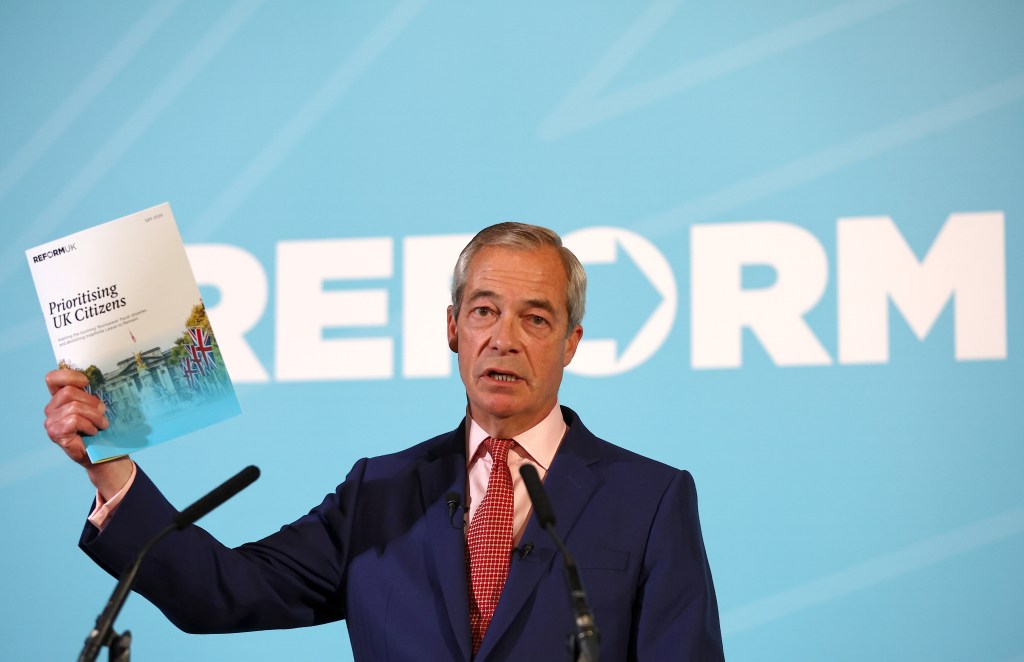
Farage, himself, has also be criticised for the views he has expressed about LGBTQ+ folks.
He previously praised Margaret Thatcher’s time as prime minister as a period of “real advancement for gay people in society”, claiming gays and lesbians “were not discriminated against the way they had been by nearly every prime minister before”.
When reminded of the abhorrent law that was Section 28, implemented by Thatcher’s government, Farage said that “was done because she feared some of the very, very extreme left-wing elements within the teaching union”.
In 2019, Farage said people living with HIV should not be able to enter the UK, claiming that the country is “incapable” of treating people with the virus because of immigration while in 2013 he said he did not back same-sex marriage.
Farage echoed this latter sentiment in July 25, when he branded equal marriage “wrong”.
“It is a settled issue. I didn’t support it. I thought it was wrong to introduce it to the public without even putting it in a manifesto,” the Reform leader told LBC.
“I was very surprised that David Cameron did that. I thought the civil partnership arrangement that we had was actually working equitably and fairly.
“So I thought the work that was done was wrong, but look, we have moved on.”