
Pop icon Agnes on making 2025’s ‘song of the summer’ and how the LGBTQ+ community changed her life
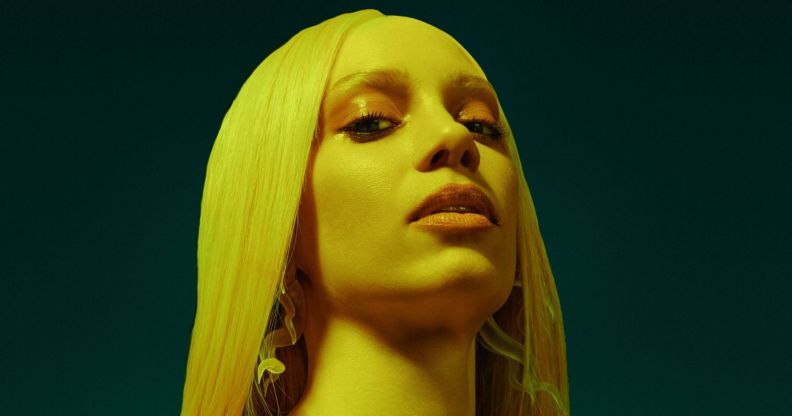
Pop music maven Agnes has dropped ‘Milk’, 2025’s biggest earworm. (Fredrik Hvass)
Once you’ve heard “Milk”, the new single from Swedish pop star Agnes, you’ll hear it a million times over, even if you never press play on it again.
“I turn milk into butter and butter into money, and with the money, honey, I create the life that I like!” goes the absurdly catchy hook, over a beat so propulsive, listening to it leaves you feeling like a mole being whacked with a rubber mallet.
I sing it in the kitchen: “I turn milk into butter!” I hum it in the car: “And butter into money!” It pokes at my brain while I’m trying to work: “And with the money, honey, I create the life that I like!”
Agnes, born Agnes Emilia Carlsson in Vänersborg, Sweden, explains that “Milk” – taken from her upcoming sixth studio album, for which I am prohibited from sharing the title – has a deeper, more profound meaning. It’s about “having the self confidence in knowing who you are and what you want,” and is a “playful” nod to “being in control of yourself”.
Yet as she laughs about how the track almost ended up being set to punk rock production à la Swedish band The Hives, I feel she knows that what she’s actually created is just immaculate, ridiculously fun disco-pop. She says so – or, rather, howls so – on the track’s soaring first verse: “Ridiiiiiiiculous! Yeah, call it what you want.”
“A 9.9 motherquake on the c*ntometer.”
Agnes is chatting over Zoom, hunkered down in a friend’s studio, which looks like a bunker decked out with cherry-red walls. Fittingly, she’s shielding herself from the outside storm that is battering the small Swedish island of Gotland, where she’s currently staying.
She’s sweet and smiley. It might have something to do with “Milk” dropping just a few days prior, and the fan response being instantly rapturous. “Song of the summer!” is a remark I’ve spotted more than once on social media. Or, as a slightly more descriptive response put it: “This song rated as a 9.9 motherquake on the c*ntometer.”
She laughs. In the studio, she tries not to predict how fans will respond to new tracks, “but sometimes I can, especially because I have fans from the LGBTQI+ community. I have my friends out there and sometimes I have ideas and I’m like, ‘Oh I wanna share this right away because I know there’s gonna be hilarious and wonderful [reactions].”
To most, Agnes is the woman behind “Release Me”, the velvety, violin-strung europop banger which dropped in late 2008. Arriving alongside a myriad of similarly unfussy, club-ready pop, from Kelly Rowland’s “When Love Takes Over” to Cascada’s “Evacuate The Dancefloor”, “Release Me” slotted in nicely and scaled the UK charts, peaking at number three.
It wasn’t without a little leg up from the LGBTQ+ community, though. “There was no record company or radio station that was why that song became so big. It was really the clubs and the DJs and I know for sure 99 per cent of the clubs were gay clubs. So [the] song really organically grew and got bigger and bigger. That’s why I love that song so much,” Agnes says, “because I feel like it’s my friends that’ve been out there and running with the song, saying ‘You have to listen to this!’”
By the time “Release Me” was ascending the charts and embedding itself in people’s brains, Agnes, then just 20, was already a pop music maven.
As a child, she took singing lessons and joined a choir. In 2005, aged 17, she won Swedish Idol, the country’s Pop Idol spin-off. Two albums of early Britney-esque, R&B-hued pop followed, both of which topped the Swedish charts, but “Release Me” offered what appeared to be a watershed moment.
“‘Release Me’ wasn’t the first song I wrote, but ‘Release Me’ was the first song I had [with] a clear vision of what I wanted to make and how I wanted it to sound like and what I wanted to say,” says Agnes. “That was like such a big thing for me.”
It seemed to be a flash in the pan. Dance Love Pop, the record that followed “Release Me”, failed to meet its commercial heights. Another record followed in 2012, the broodier, electronic Veritas, but by this point, Agnes seemed burnt out. She needed time away. “When I decided to take a break, I was 26 at the time and I started out when I was 16. So, I had been in it for like 10 years and I really felt like I needed to take some time off and really try to understand like, who am I? What do I want to say?”
She returned six years later with Nothing Can Compare, a woozy trance-flecked EP featuring a spoken word interlude from late, trans Paris Is Burning star Venus Xtravaganza. Yet it was in 2021, with the release of her fifth record Magic Still Exists, that Agnes found a new lease of life in the pop sphere.
Showered with praise online on a nearly daily basis to this day, Magic Still Exists was a cool, shimmering and defined collection of disco pop belters, which arrived alongside visuals that exploded in vivid neon and sharp shapes.
The Guardian ranked it as one of the best records of 2021, comparing it to Dua Lipa, Donna Summer and ABBA, and it’s earned a sort of modern cult status comparable with Carly Rae Jepsen’s Emotion and MARINA’s Electra Heart.
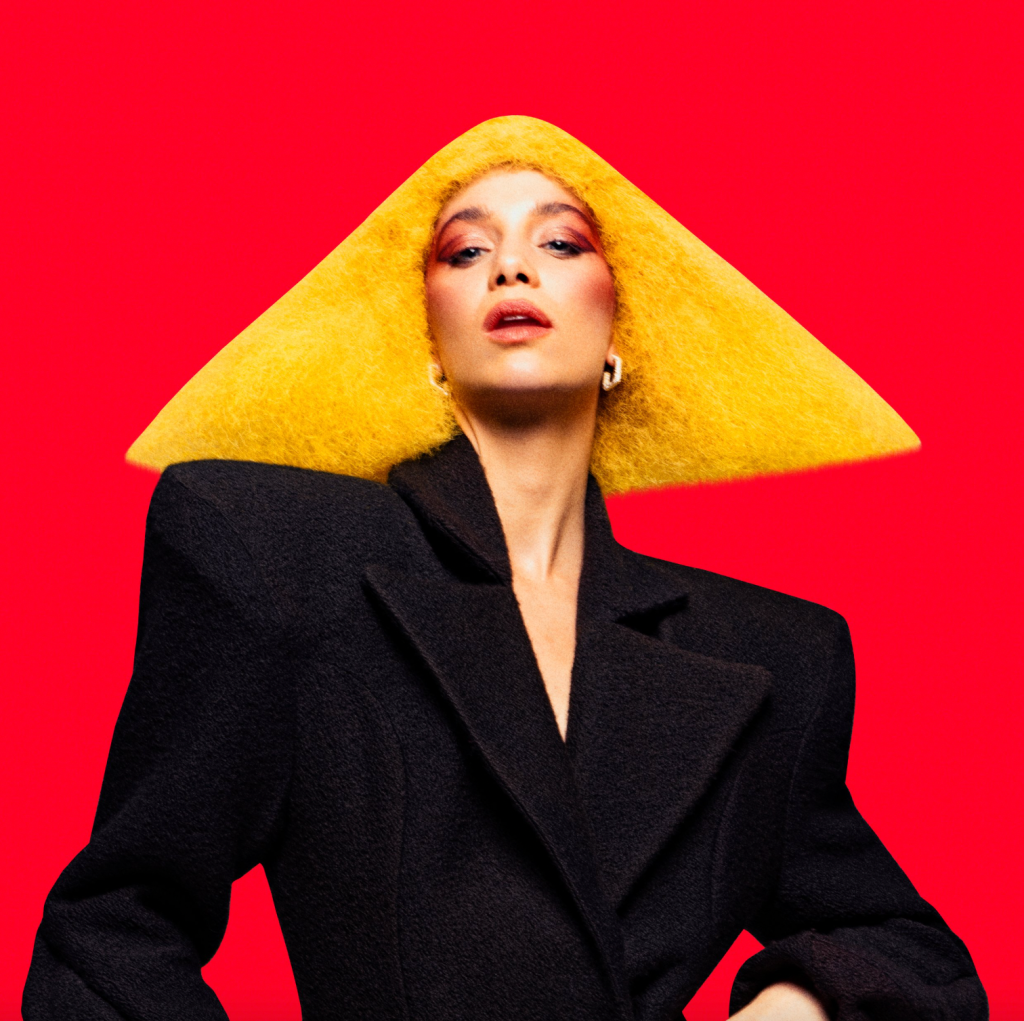
Yet if Magic Still Exists appeared to be the work of someone with self-assured panache, it wasn’t quite. “When I did that album, I was in a pretty – how can I say – in a bad place,” she says candidly. “I had a lot of self-doubt and a lot of anxiety, so for me, I wanted to make an album that made me feel lighter and stronger afterwards. Magic Still Exists, it was something I needed to do for myself. Disco for me is that, you know, light in the tunnel,” she smiles.
Agnes describes the record, and the response, as “healing”. “I think for me, Magic Still Exists was such an important album because I really feel like that is my first album. That was the first time I really put my life, my time, my love, my heart into something,” she says.
During her years-long break, she taught herself the basics of music production, so she could experiment with new sounds without help. “I think so much fell into place,” she muses. “I knew like who am I as an artist, who am I as a songwriter, how do I want to perform things, how am I on stage. So it was really a healing process for me.”
Having been released during lockdown, she’s keen to tour it for the first time soon.
Watching Agnes mull over her music-making process is fascinating. She chews over the mechanics of slotting lyrics into songs “like a puzzle,” spending “years” perfecting songs, and the lengths she goes to to fit visuals with her music.
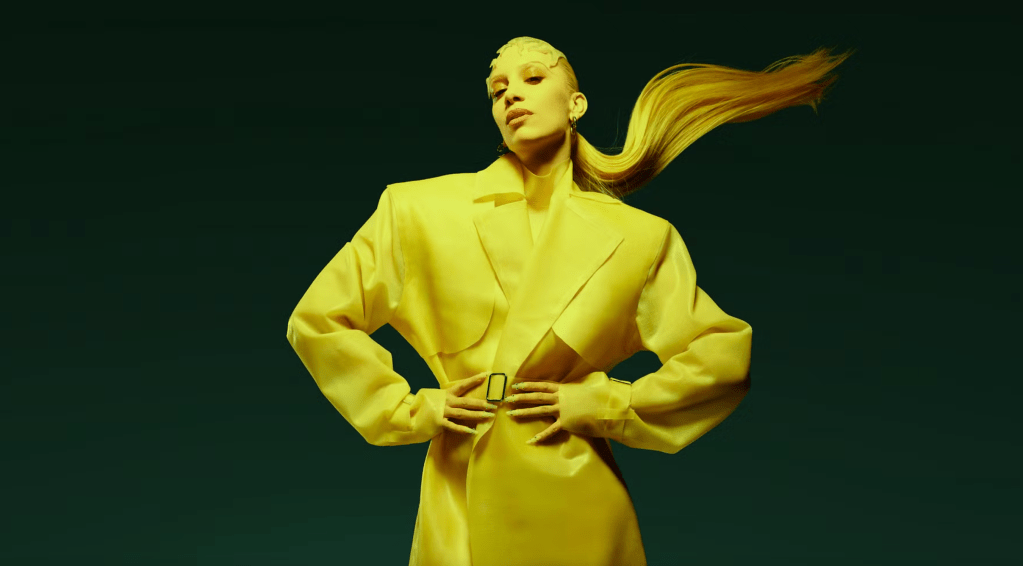
“Often the song itself points out where I should go visually. If it doesn’t directly, I usually listen to my songs on repeat and go to a museum, watching art, or go into the internet looking at pictures, looking at runways, looking at films and everything that sort of pops out and has the same vibration as the song,” she says. I can almost see the cogs in her brain turning, and her head fizzing with ideas.
Drag is a “big inspiration” in how she “accelerates” herself aesthetically, constantly chopping and changing. “That’s why I love drag, because it’s so strong and it says so much.” Drag loves her back: “Release Me” featured as a lip-sync song during Drag Race UK vs The World back in 2024.
Agnes’s world-building and maximalist sensibilities feel akin to the likes of Lady Gaga or Miley Cyrus, while her vocals have both the grit of Anastacia and honeyed intonation of Mariah Carey. But if she holds any resentment about not being as mainstream as her pop peers, she doesn’t show it: she appears to be a rare case of an artist without ego.
Besides, all her energy has gone into her new record. Before “Milk” (Oh no, there it goes again…) came “Balenciaga Covered Eyes”, a dark and smokey slice of house.
She describes the forthcoming album as “more feminine” with a “raw vibe”; still maximalist, still disco, but with “less elements” than Magic Still Exists, giving each song more space to breathe. It’s a record acknowledging “contradictions”, that you can be “selfish and loving at the same time. Ugly and beautiful. Have hubris and be humble”. The visuals so far have been vivid yet clean, somehow both futuristic and retro; contradictions that work effortlessly.
“[The album title] explains everything,” she says. “So, if the last album was important to me about the light in the tunnel and to feel the love and happiness, this album is more about being honest and being like, everything is not always OK – and that’s OK.”
Agnes’s sixth album is out in 2025. “Milk” is out now.
Share your thoughts! Let us know in the comments below, and remember to keep the conversation respectful.