Henry Moodie on debut album and the queer relationship that changed him: ‘It was a whole thing’
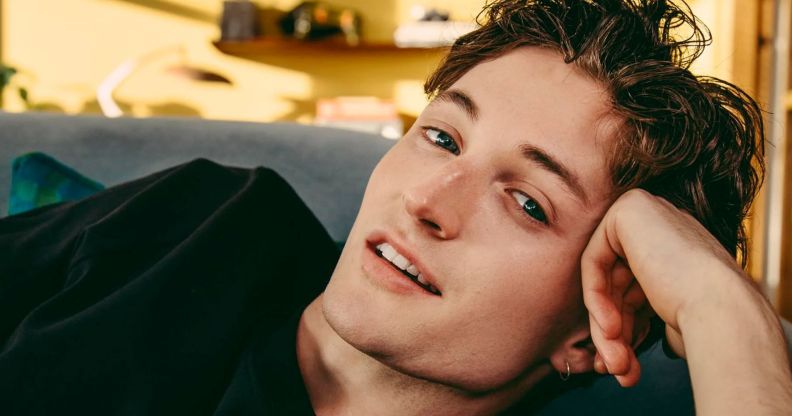
Henry Moodie talks his debut album and the queer relationship that changed him. (Katie Silvester)
In writing his debut album mood swings, 21-year-old British singer-songwriter Henry Moodie learnt a lot about himself. “It’s almost made me understand myself on a deeper level,” he tells PinkNews. “It really is the truest form of me as a songwriter.”
Moodie has had some practice. He started songwriting at school, in Surrey, as a means of “therapy” to get himself through some fairly horrendous bullying. “It was my way of processing everything,” he says now.
Then, three years ago aged just 18, and with a little help from TikTok, Moodie reaped the rewards of his trauma scribbles: his debut song, “you were there for me”, smashed through the realms of social media and into mainstream consciousness.
It became his first UK top 40 hit, has amassed more than 120million streams on Spotify, and has propelled him to release a consistent stream of songs since. He’s now got a billion streams under his belt, a social media following in the millions, and an army of fans anxiously awaiting his debut record.
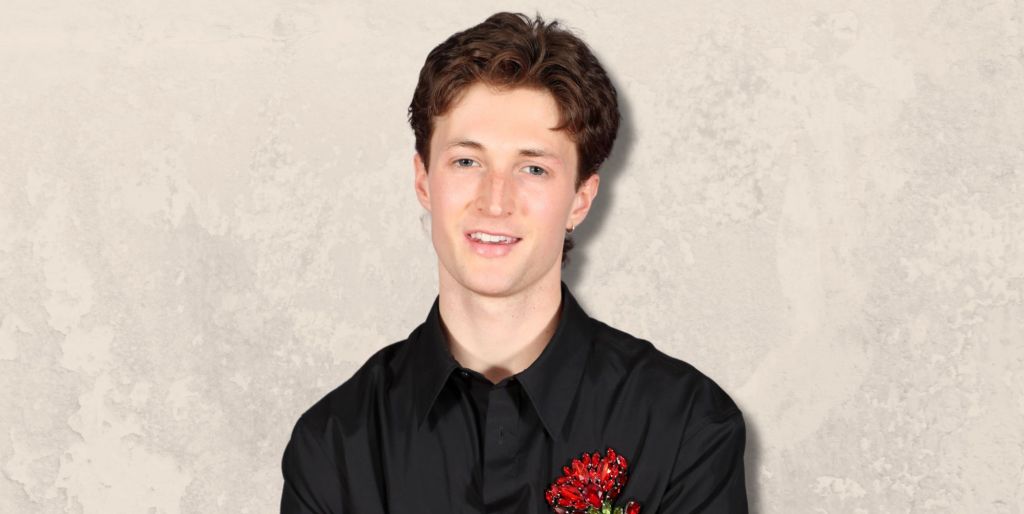
On mood swings, Moodie digs deep into coming-of-age relationships, situationships gone awry, and the ones that got away. He speaks to PinkNews about how writing the album taught him about who he is, the LGBTQ+ musicians shaping his world right now, and the queer relationship in his teens that transformed him.
PinkNews: TikTok has launched a whole new generation of pop stars who have gone viral and then seen huge success with music. How did you navigate that pipeline?
Henry Moodie: TikTok is a crazy one because it is just the most powerful app in the world these days. You can use it to really present your artistry. I’m still navigating it, but my dream one day would be to really branch away from being a ‘TikTok singer’ and being a “proper” artist, like a Chappell [Roan].
Have you found TikTok has opened more doors in your career? Or have you struggled with the huge visibility the platform offers?
I think it opens a lot of doors to be honest. I wouldn’t be here if it wasn’t for TikTok because I promoted my first song, ‘you were there for me’ [on the app]. I wrote and produced it completely myself in my bedroom. I wasn’t signed. I was completely independent and I remember putting it out and then that opened so many doors for me and helped me get my record deal, helped me get on tours and really kickstarted my career. I’m very grateful.
Because of the focus on social media in the industry today, have you felt pressure to constantly grow your audience before getting music out?
I’ve actually done a big switch with this. A couple years ago I was really focused on virality and if a song wasn’t going viral on TikTok then, even if I liked the song, I wouldn’t put it out. Now, I’m really realising the most important thing as an artist is to just grow your fanbase and that’s something that’s really in your control. You can’t really control viral moments.
In terms of longevity, I think building your artistry, building your fanbase, the people who genuinely care about your music, that’s the most important thing. And if you’re constantly just focused on numbers, then it’s just a losing game.
If the music finds the right people, then it’s doing its job.
I remember when I was in school, music to me was like my therapy. I got bullied and I hated school and I would always go to the music block during breaks and lunch and write songs. It was my way of processing everything. To my core, songwriting is really why I do this. It’s my favourite thing in the world. For a minute there I lost that and I was so focused on trying to get a TikTok moment. It’s just way less fulfilling.
With this album I’ve learnt so much about myself through writing all these different songs and it’s almost made me understand myself on a deeper level and it really is like the truest form of me as a songwriter. So I’m very excited for it.
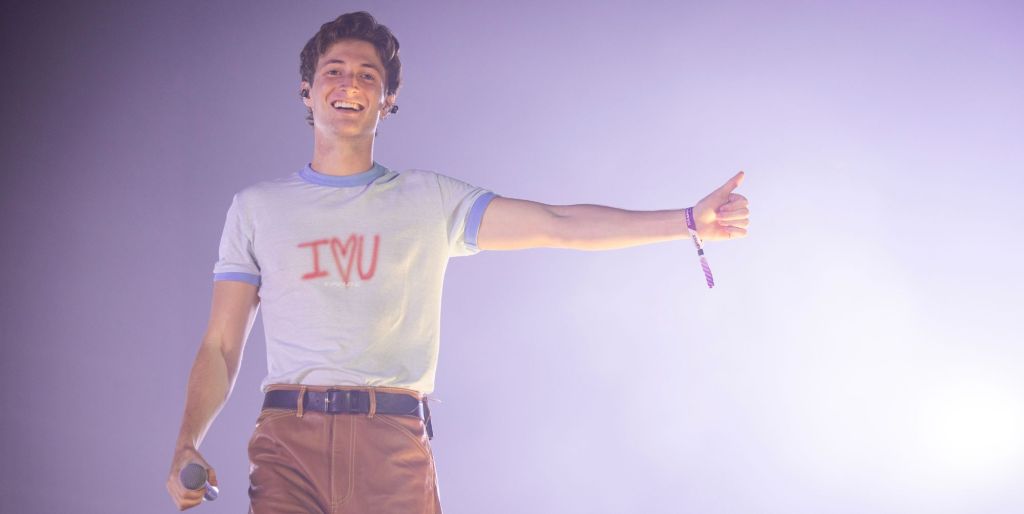
What gave you the confidence to put yourself out there when you hadn’t been accepted at school?
I think there is this deep need for validation that a lot of us artists have because of getting bullied in school or neglected when we were younger. If you felt like you didn’t really fit then I feel like you carry that into your later life. There’s definitely a part of me that wants to feel heard and finally seen because I didn’t really get that in school.
TikTok has become such a powerful space for queer expression. How has that influenced your own confidence as an artist?
Obviously social media has its positives and negatives, but an amazing thing about it is if you didn’t really feel like you belonged in school, you can find your groups online. I think the fact that people online like Conan Gray, Troye Sivan, Chappell Roan, all these people being so confident in their sexuality makes you feel like you can do that yourself. It’s nice to be seen through someone else.
Music is like a mirror. It genuinely just reflects who you are. So finding those people is so special. There’s so many different types of queer artists out there now. It’s not like one thing.
You have written a lot about relationships. How did that early experience of love shape the way you write and understand relationships now?
I think it shaped me in relationships because through writing every relationship song, I’ve actually learned way more about how I am in a relationship. It brings out parts of you that you didn’t even realise. The more and more I’m connecting with myself through writing these songs the more I’m understanding how I work in a relationship, my green flags, my red flags.
Is that something we will see on mood swings?
There’s one song on there called “Cigarette” that I’m very excited for people to hear. That tells [of] my first relationship experience with a guy when I was 16, I think. It’s been ages since the situation, but I’ve never written a song about it because there’s been other relationships since that I’ve written about, but that’s the one that I can never quite crack. I finally did it on this song.
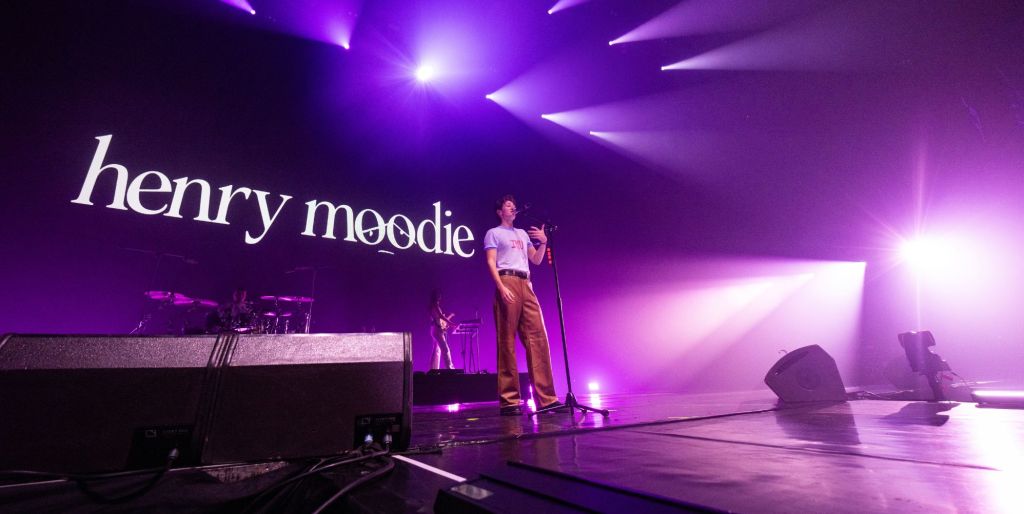
What is the story of “Cigarette”?
The story of “Cigarette” is sadly not a good one. It’s bad. It’s someone who had a girlfriend but didn’t tell me and then I found out later, but then you’re so in love with this person, you can’t let them go. It was a whole thing. I guess it’s that closeted story. It was just such a significant relationship in my life that I feel like I had to write about it somewhere and now I’m finally confident enough to put that one out. I’m excited.
At 16, he was moving like that?
Literally, was moving crazy at 16.
Being queer is a crazy experience because it’s this triangle of: ‘I like men. I’m also a bit scared of men. I also want to be accepted by men‘.
Yeah, completely. I hate men, but I love men. It was a really delicate thing, so I tried to capture the delicacy a little bit in the production of the song and the lyrics and the vibe. I feel like it is maybe my favourite on the album.
You showcased a queer relationship, featuring transgender Heartstopper actress Bel Priestley, in the music video for your song “Closure”. Why was that important to you?
[Bel Priestley] is a legend. Love her, and she’s so good at acting as well in that music video.
I do feel like we’re in a really scary place right now. Specifically the trans community [is] getting a lot of hate online and it’s horrible. Trans people are my favourite people and it’s just a completely natural part of being a human that’s been around since the start of time. They deserve to be celebrated. That’s why I, in that music video, really wanted to express a trans relationship. I feel for all my trans friends. They’re going through a lot. They deserve to know how special and amazing they are.
Henry Moodie’s debut album mood swings is released on 24 October.
This interview has been condensed for length and clarity.
Share your thoughts! Let us know in the comments below, and remember to keep the conversation respectful.