
Non-binary veteran Lindsay Church is fighting for democracy in Illinois: ‘If not us, then who?’
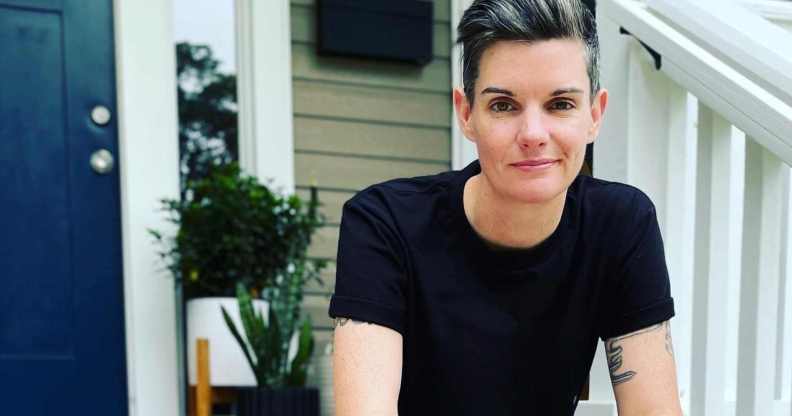
“I don’t care what you do, I don’t care what you say, we’re not going to be erased, we’re not going to go away” (Supplied)
"I don't care what you do, I don't care what you say, we're not going to be erased, we're not going to go away" (Supplied)
Lindsay Church never saw themself as a politician, but – amid their identity being bureaucratically erased, masked ICE agents stalking their neighbourhood and the incumbent Democrat representative locking out all other party members from running this November – stranger things have happened.
A veteran, non-profit leader, parent and non-binary person, Church and their wife – who was six months pregnant at the time – fled Richmond, Virginia in 2023 amid ongoing anti-queer harassment and set up just outside Chicago in Illinois, some 800 miles away.
It was a place they had a family connection to, where they no longer heard gun shots at night or felt like they could not use the bathroom for fear of being questioned about their gender. It became home, a safe space that allowed Church to “take some of that armour off” and just enjoy the simplicity of visiting local restaurants, walking around the neighbourhood and taking their child to the park.
Increasingly, as the federal government cracks down on LGBTQ+ rights, immigrants and US citizens alike are violently detained – and shot – and the voices of local voters are effectively silenced by those in power, the newfound safety Church and their family found in Illinois is under threat.
They are not planning on standing by, though.
They have launched a campaign for federal office in the state’s 4th congressional district, forthright in their belief that “safety has never been so important, as it has been in the last few years”, not just for themselves, but their neighbours and all Americans.
“I love the people that live around the community that I get to call home because I have spent a lot of my life as a military family, never knowing where home was,” Church told PinkNews in an exclusive interview.
“We bought this home 16 days before my baby was born. We had 16 days to get everything together and being able to bring them home and know that this was a community that would love them, support them, and that they could grow in, meant everything to me.
“Forever I’m going to fight for this district, because this district brought me home.”
Covering parts of Chicago’s Southwest side, Cook County and DuPage County, Illinois’s 4th congressional district is staunchly blue and has not elected a Republican since 1986. An area with a predominantly working class, Hispanic population, it has elevated poverty levels where around 12.8 per cent of people live below the poverty line – this rises to 18 per cent for children under the age of 18.
The area was long notable for its downright bizarre design as one of the most gerrymandered congressional districts in the country, with gerrymandering being the term used to describe the manipulation of electoral boundaries to advantage a party. So odd was its shape that it inspired the Ugly Gerry font type, a front created in protest against gerrymandering by using different, unusually shaped US congressional districts as the characters for each letter. The 4th, given its shape, represented the letter ‘U’.
The district has been represented by Jesús “Chuy” García since 2018, who has easily kept a Democrat stronghold in the area and commanded a huge majority victory in each subsequent election.
In November, however, García was widely lambasted for announcing his retirement after the filing deadline had closed for the 2026 mid-term elections. It was a ploy that set up his chief of staff – who filed her own application just before the deadline – to be elected as his successor without competition, because it kept all other Democrats out of the race.
The Democrat voting population were, therefore, left with only that choice and that choice alone – hardly democratic.
That did not sit right with Church.
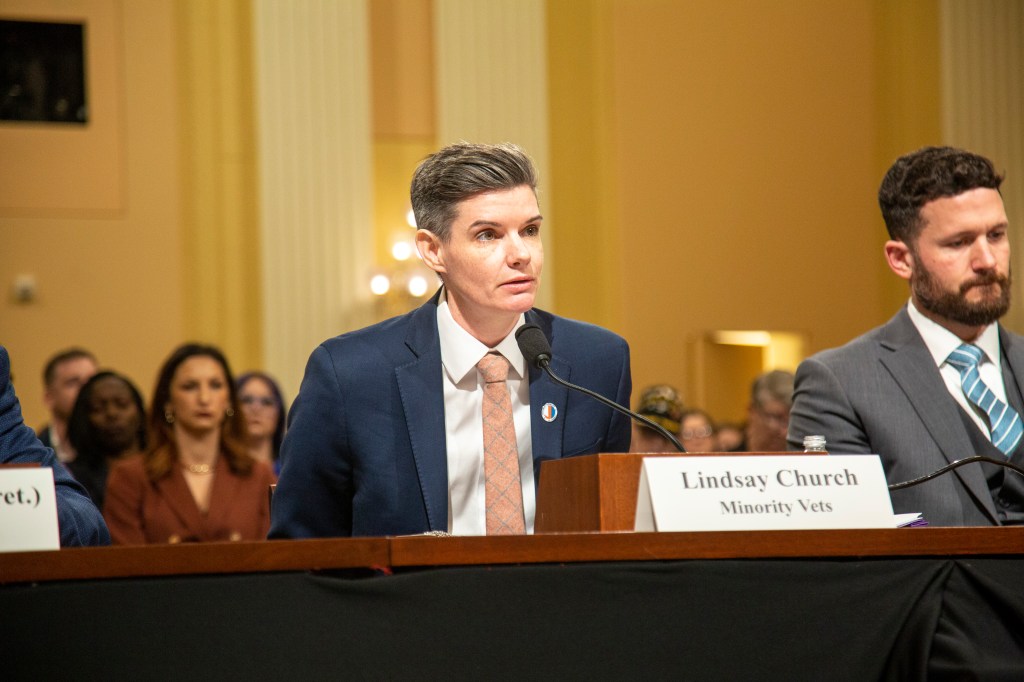
“Our community and our country deserves real choice. In the district that we live in, we are so heavily Democratic that the Democratic nominee genuinely goes on to win the election, which means that this decision was made for us without us casting a single ballot,” they explained.
“I’m a person that believes that democracy is worth fighting for and that it requires talking to your neighbours, your communities, the cities, everyone, in order to gain the support necessary to run.”
They continued: “Like I said, I did not imagine myself to be a politician or somebody that would run for office, but if not us, then who? And if not now, when?”
Church is no stranger to having their voice silenced.
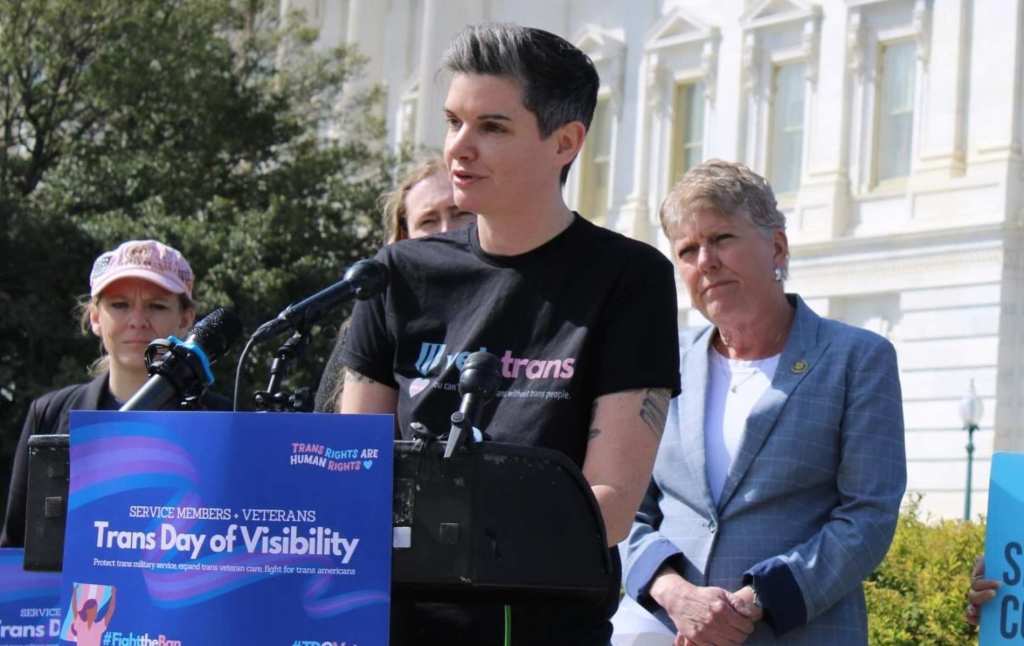
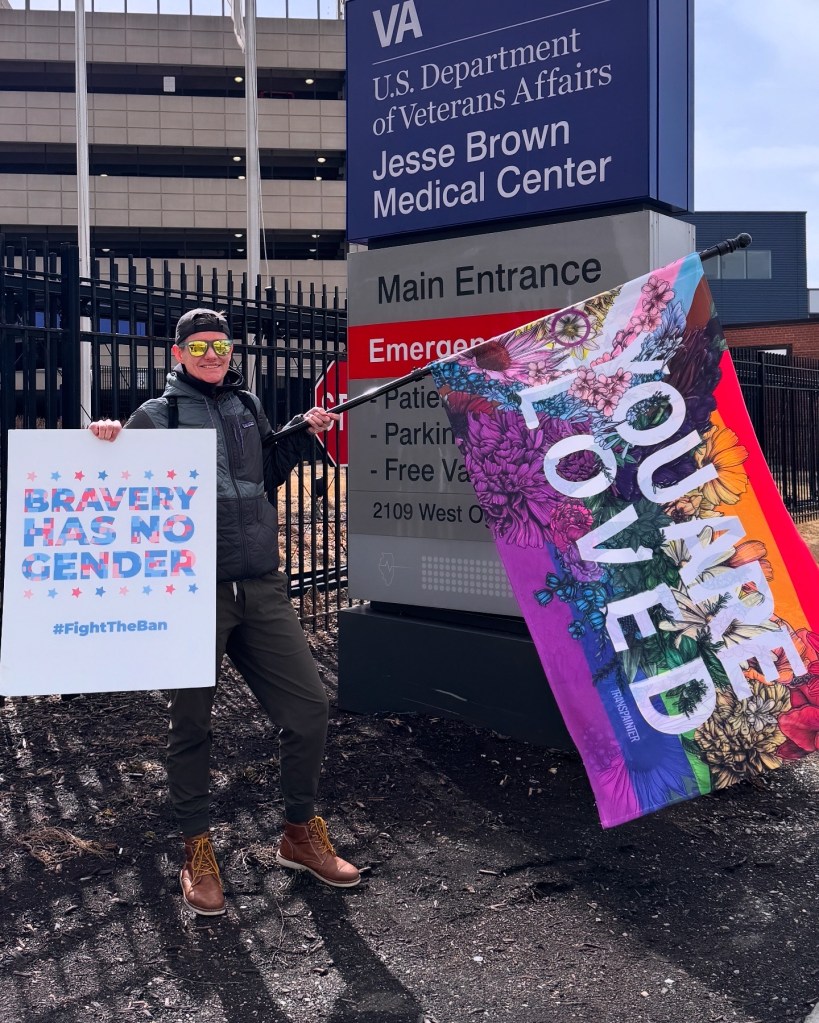
They are a veteran who served under ‘Don’t Ask, Don’t Tell’, a non-binary person whose identity was legislated out of existence last year by a stroke of Trump’s signature on an executive order, and in recent months they have watched as their friends who are still serving are purged from the military under the Trump administration’s re-instated trans ban.
Church was part of the original push to overturn ‘Don’t Ask, Don’t Tell’ and watching the ban return – which has been estimated to impact around 15,000 service people – has put their heart “at a place [they] can’t explain”.
“We don’t have representation on the floor. There’s no trans service member that has made it through to the floor of Congress. We have been fighting from outside the doors and it’s so important for us to be there, to be talking about these issues, to be representing ourselves and to see ourselves in this tapestry of America,” they explained.
“Our administration has made it so dangerous to be just a person in general,” Church continued, going on to admit that they do feel scared of what will happen to them for speaking out.
“What will the administration try to do to me? What will the media turn me into?” they questioned.
“All of it is connected to this bigger attempt to scare us into compliance and to make us so small that we don’t try to make history, that we don’t try to fight these fights.”
“This is existential for me,” Church said. “I’ve watched my existence and my communities, my friends, trans youth, literally lose every bit of their rights while we also don’t have the representation we need to fight back.”
Currently, Delaware representative Sarah McBride – who was sworn-in as the first ever out trans member of Congress in January – is the only political representation trans people have in the Legislative branch of US government.
Since her election, McBride has been subject to threats to her life and vile transphobic abuse by other elected-representatives, with South Carolina Republican and anti-trans MAGA stalwart Nancy Mace tabling a trans bathroom ban for the whole of the US Capitol just to keep McBride from using the female toilets.
That is just for being an out and visible trans person in politics, an elected representative who beyond fighting for trans rights is there to advocate for her constituents on kitchen table issues that impact everyone in her state and beyond: the inflation, job stability, living standards, quality education, healthcare access and so much more.
People like McBride, Church said, are a “crack in the ceiling” and an “opportunity for us to see that we might be able to have a future here”.
“It can’t be one person that’s out here trying to fight back against all of this because this is an onslaught that not one person can handle or what not one person can be the fighter for.”
For Church, and all others who have found themselves the fervent target of the Trump administration’s anti-trans rhetoric, winning looks different: it is about showcasing LGBTQ+ people cannot be erased and their voices cannot be silenced.
“At this moment in time when they’re trying to tell us that people like me don’t exist and that we can’t exist, standing up and saying: ‘I don’t care what you do, I don’t care what you say, we’re not going to be erased, we’re not going to go away’.
“This is our country and we deserve to be a part of it.”