
Whitewashing, influencers and gay death penalty: Dubai was never a ‘safe’ place
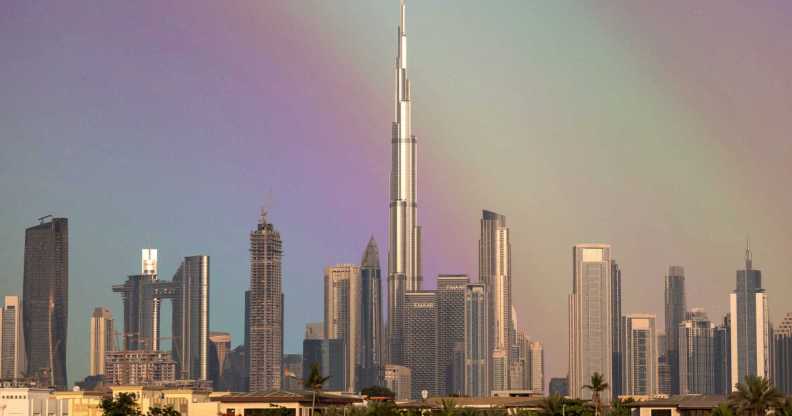
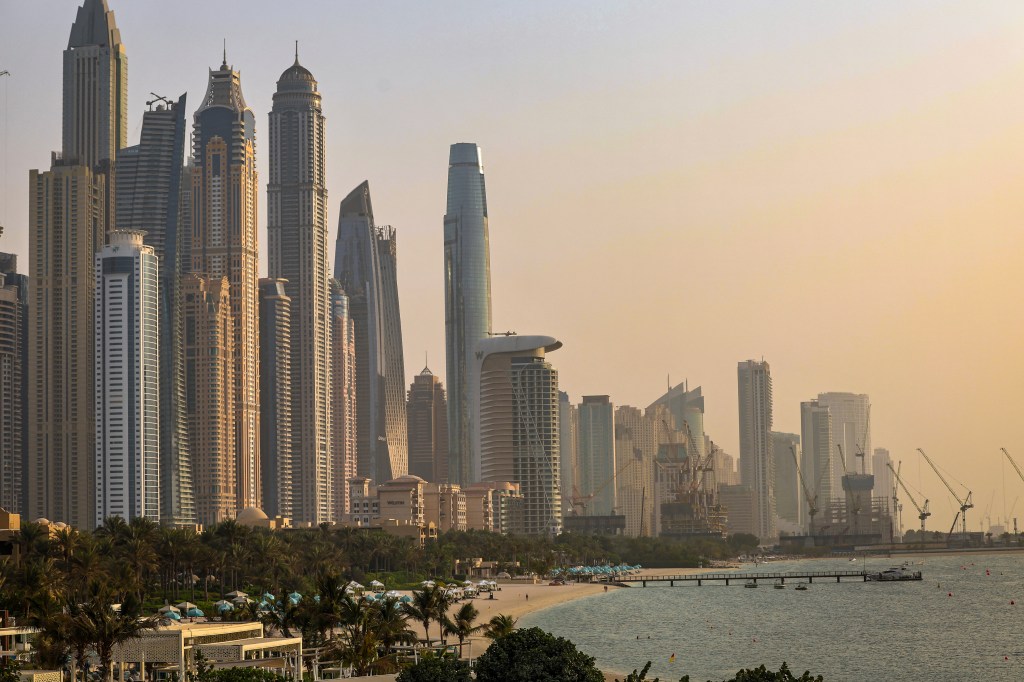
Dubai is not the safe haven it makes itself out to be ( FADEL SENNA / AFP)
Dubai’s glittering veneer as a futuristic and faultless oasis in the heart of the Middle East for wealthy, Western expats has been shattered. But, as queer people have long known, beneath the city’s picture-perfect influencer posts, luxury shopping malls and record-breaking skyscrapers, lies a dark underbelly of human rights abuses.
For many, Dubai was never the safe haven it purported to be.
The world was rocked on Saturday (28 February) when the United States and Israel launched widespread strikes on Iran, targeting its military infrastructure and leadership.
The attacks on capital city Tehran led to the death of the country’s Supreme Leader, 86-year-old Ayatollah Ali Khamenei.
Khamenei had ruled the country since 1986 – making him the longest serving ruler in the Middle East at the time of his death – and his decades in power were characterised by authoritarianism and the violent crushing of political dissents. The country’s spiritual leader, Khamenei exerted absolute power over all branches of Iran’s government and its military.
Following the confirmation of his death, Donald Trump described Khamenei as “one of the most evil people in history”.
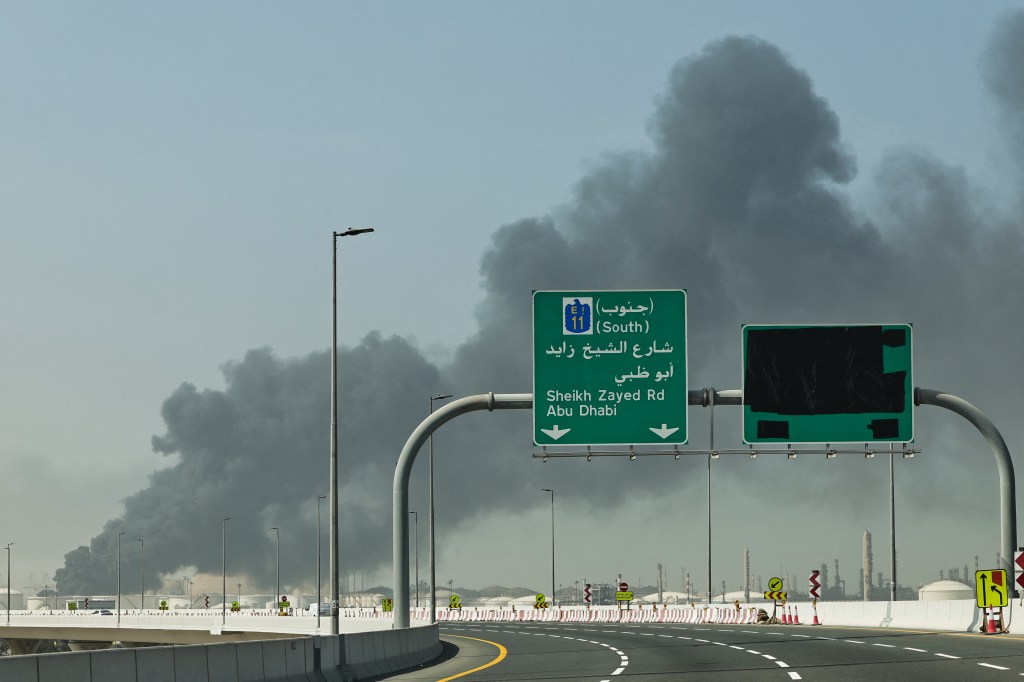
In response to the US-Israel attacks, Iran launched retaliatory missile and drone strikes across the region, targeting Israel and US military sites in neighbouring Gulf countries including Qatar, the United Arab Emirates and Saudi Arabia, amongst others.
The conflict has seen mass damage to homes, hospitals and government buildings across Iran, with hundreds of Iranians reportedly having lost their lives – including 165 school girls and staff.
Civilian planes across the Middle East have been grounded as airspaces shut, leaving hundreds of Brits stranded in several Gulf states as Keir Starmer’s government works to evacuate citizens.
Before the events of recent days saw tone-deaf influencers post aghast clips as the telltale smoke trails of missiles made their way across the sky, Dubai was seen by many as an infallible paradise in the middle of an unstable and often volatile region.
The United Arab Emirates has sought, in recent years, to cultivate an image of the city as a playground for the rich and famous: crime-free, tax-free, modern, luxurious and blessed with year-round sunshine.
Once an 18th century fishing village, Dubai was a small city in the mid-twentieth century before mass building projects saw it become the sprawling, sky-high metropolis we know today in the space of less than half a century.
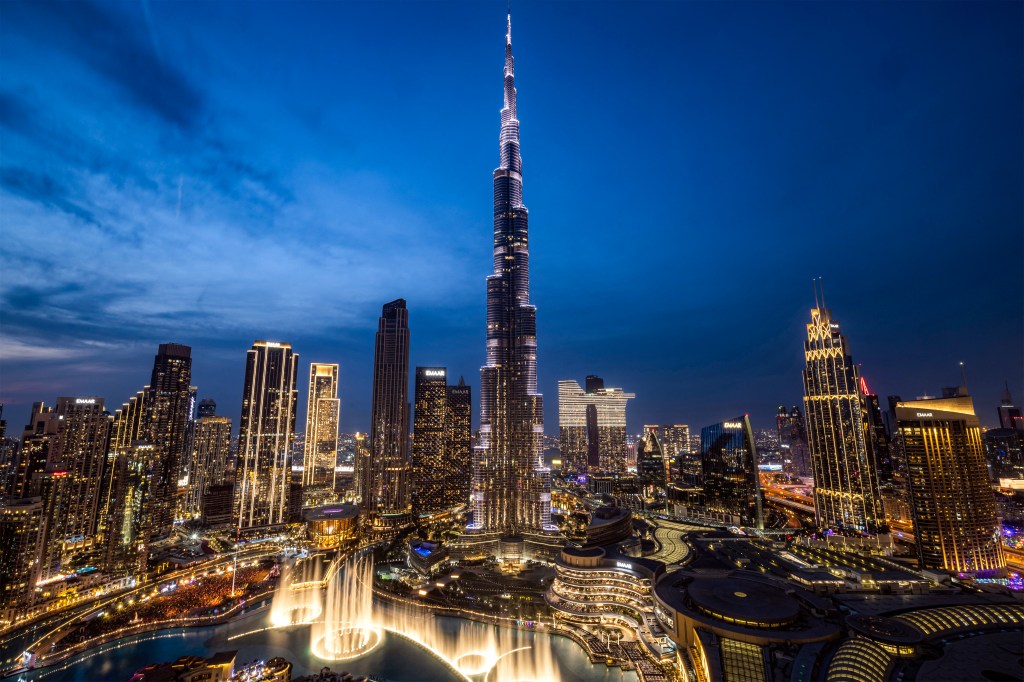
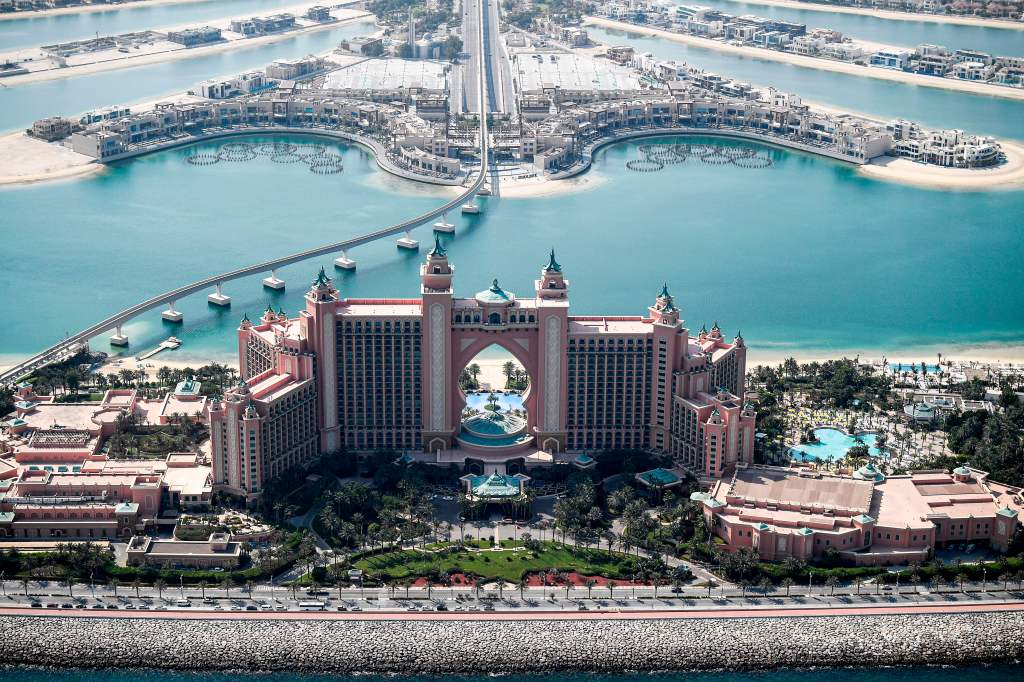
Multi-million pound homes, hundreds of luxury hotels – including the $25,000 a night Burj Al Arab – 19 Michelin starred restaurants, designer outlets, golf courses, supercar rentals and, of course, the city’s iconic three artificial archipelagos: Palm Jumeirah, Dubai Islands, and Palm Jebel Ali: Dubai prides itself on luxury and excess.
But, beneath the glitz and glamour of influencers’ poised Instagram pictures, a darker Dubai lurks.
Much like its neighbour Saudi Arabia, the UAE’s luxury and high profile events often whitewash its long and troubling history of human rights abuses.
As outlined by Human Rights Watch in its World Report 2026, the UAE is “deploying a long-term strategy to improve its reputation on the international stage” by conveying an image of openness which sits at odds with the government’s strict restrictions on freedom of expression, severe criminal penalties, allegations of torture and forced labour of migrant workers.
The UAE’s Federal Penal Code also criminalises what Human Rights Watch describes as “vaguely defined acts”, meaning the authorities can arrest and jail people for a variety of behaviours such as dressing in a gender nonconforming way, public displays of affection and publicly supporting the rights of LGBTQ+ people.
Across the board, LGBTQ+ rights in the UAE are nonexistent.
Homsexuality is illegal in the country, with the UAE being one of just a handful of nations which still punishes consensual same-sex acts with the death penalty.
Under Sharia law, alongside the death penalty, punishments include lengthy prison sentences, floggings, deportation and chemical castration and forced anal examinations, with family members carrying out honour killings against LGBTQ+ family members.
In Dubai specifically, consensual same-sex sexual activity is also criminalised through local legislation.
As noted by a UK government research briefing: “Article 177 of the Dubai Penal Code (1970), as amended in 1994, punishes ‘unnatural crimes (sodomy)’ – defined as ‘sexual intercourse with another person in contravention of the laws of nature’ – with a penalty of up to 10 years’ imprisonment.
“Additionally, Article 183 establishes that ‘sexual intercourse’ is deemed to have occurred once the sexual organ has entered in the slightest degree, whether or not that entry is accompanied by secretion of semen.”
It perhaps goes without saying, given that homosexuality is so severely punished, but there are no legal protections against discrimination for LGBTQ+ folks, trans folks cannot access gender-affirming care or “cross-dress”, and conversion practices are government-sanctioned.
Detained in Dubai, a London-based organisation that supports foreigners in legal trouble in the UAE, alleged there is a “hidden” LGBTQ+ scene in Dubai but described how unofficially queer-friendly venues are subject to police raids and are constantly under surveillance.
The organisation also noted how the authorities use entrapment tactics on dating apps to lure queer people out and arrest them.
In 2024, Manuel Guerrero Aviña – a HIV-positive British-Mexican gay man living in neighbouring Qatar – was detained using such a Grindr ‘sting’.
Is there any wonder the United Arab Emirates ranks so lowly in human rights league tables?
Assuming Dubai is, or has long been, a safe place for everyone is a privileged notion at best and a down-right ignorant one at worse.
While Dubai residents might have the world’s finest foods, clothes and cars on their doorstep, and may even consider some of the world’s biggest celebrity names their neighbours, the truth is that they are living in a gilded cage, with the most vulnerable suffering in silence.
Just like beauty is only skin deep, Dubai’s luxurious facade is only a thin veil that disguises its true face.