
Trump’s trans military ban will impact thousands of people in the US armed forces
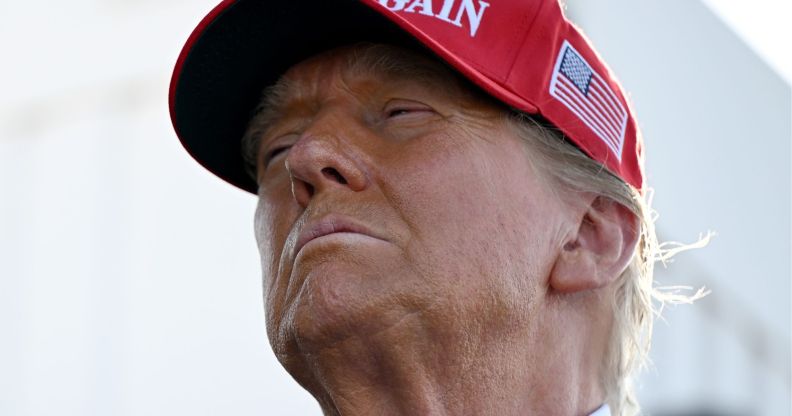
Donald Trump is planning to ban trans people from the US military yet again. (Getty)
The US Supreme Court will allow the Trump administration to remove transgender service people from the military whilst legal challenges to the policy continue to play out in court. But how many people, exactly, will this impact?
The unsigned, emergency order which was published by the court’s conservative majority on Tuesday (6 May) lifts two preliminary injunctions put in place by lower courts against the anti-trans policy.
It enables Donald Trump’s government to make good on his executive order that vowed to remove trans military personnel because they are “morally unfit” to serve and in which his government claimed the armed forces had been “afflicted with radical gender ideology”.
The court’s three left-leaning members – Sonia Sotomayor, Elena Kagan and Ketanji Brown Jackson – all noted they “would deny the application”.
Since taking office for his second term on back in January, Trump has signed a raft of executive orders aimed at removing the rights of transgender Americans, including proclaiming the official policy of the US is that there are “only two sexes”, restricting gender-affirming healthcare for trans youngsters under the age 19, eliminating diversity, equity and inclusion programmes across the government and in the military and banning trans people from serving.
Following this, secretary of defence and anti-woke stalwart Pete Hegseth implemented a ban on trans people signing up to serve in the US military if they have ever had a “history of gender dysphoria”, whilst a Pentagon memo filed in court declared trans service members will be “identified” and separated from the US military unless they receive an exemption.
Exemptions will allegedly only be granted if evidence can be “provided there is a compelling government interest in retaining the service member that directly supports war-fighting capabilities” and they “demonstrate 36 consecutive months of stability in the service member’s sex without clinically significant distress”.
This is not the first time Trump has enacted a trans military ban as during his first term in office, in 2019, he barred trans people from enlisting or serving.
However, Joe Biden repealed that order in 2021 in what transgender staff sergeant Cathrine Schmid told PinkNews was a significant and hopeful moment.

The new ban on trans folks in the military has left service people disappointed, scared and hurt.
One trans military member told Task & Purpose, a publication serving the military community, back in March that a ban has resulted in a “feeling of disillusionment” because there was a “trust that as long as we met the standards and upheld our duty, we would be judged by our performance, not our gender identity”.
“This directive shatters that trust, replacing it with a harsh reality of exclusion and discrimination,” they added.
How many trans and non-binary people are in the US military?
Sources estimate that roughly 15,500 trans people are serving in the US armed forces at the moment.
Previously, Rachel Branaman, the executive director of the Modern Military Association of America, said the volume of discharges would “undermine the readiness of the military” and “create an even greater recruitment and retention crisis”.
“Abruptly discharging 15,000-plus service members, especially given that the military’s recruiting targets fell short by 41,000 last year, adds administrative burdens to war-fighting units, harms unit cohesion and aggravates critical skill gaps,” she told The Independent. “There would be a significant financial cost, as well as a loss of experience and leadership that will take possibly 20 years and billions of dollars to replace.”
Share your thoughts! Let us know in the comments below, and remember to keep the conversation respectful.