
Why Hayley Kiyoko’s ‘Girls Like Girls’ may be the definitive lesbian anthem 10 years on
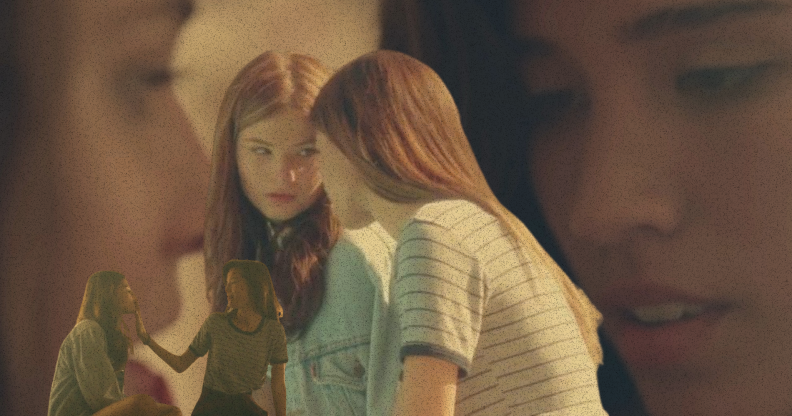
Hayley Kiyoko’s “Girls Like Girls” was an era-defining lesbian bop (Hayley Kiyoko)
Picture this: it’s June 2015 and I am about to do something very secretive.
I gently close the door to my bedroom at my parents house in Wolverhampton in the West Midlands and let the latch softly click shut.
It’s the summer at the end of my first year of university and, at the time, I was a few weeks away from turning 19. I remember it was a warm day, with the light bleeding through the blinds and casting sun spots on the adjacent wall. I know that because I can recall purposefully closing my bedroom window – which had been open to let some air in – lest the neighbours hear what I am about to do and find out my secret.
I opened up my laptop, which was a cheap old thing that got hot enough to burn the bare skin of my legs whenever I played The Sims, and typed YouTube into the Google search bar, ensuring the volume on the video I selected was turned so far down that it played like a whisper.
I can’t remember at all what I did next, the mundanity of the task lost to time. Maybe I was going to tidy my bedroom, or sort out some of my old things in my wardrobe which my mum designated I do before I went back to London, or perhaps I was going to spend the afternoon getting ahead with my reading lists for September. Yes, I was that person who actually did the reading lists during the summer, as anyone who knew me then – or even now – can attest to.
But what I do know is that whatever I was doing in that small room on that summer’s day all those years ago – behind a closed door which was physical version of the invisible closet I was trapped in – the synth-pop melodies and catchy, painfully relatable lyrics of Hayley Kiyoko’s “Girls Like Girls” were audible to my ears only, wrapping around me like a comforting blanket and holding my hand like an old friend.
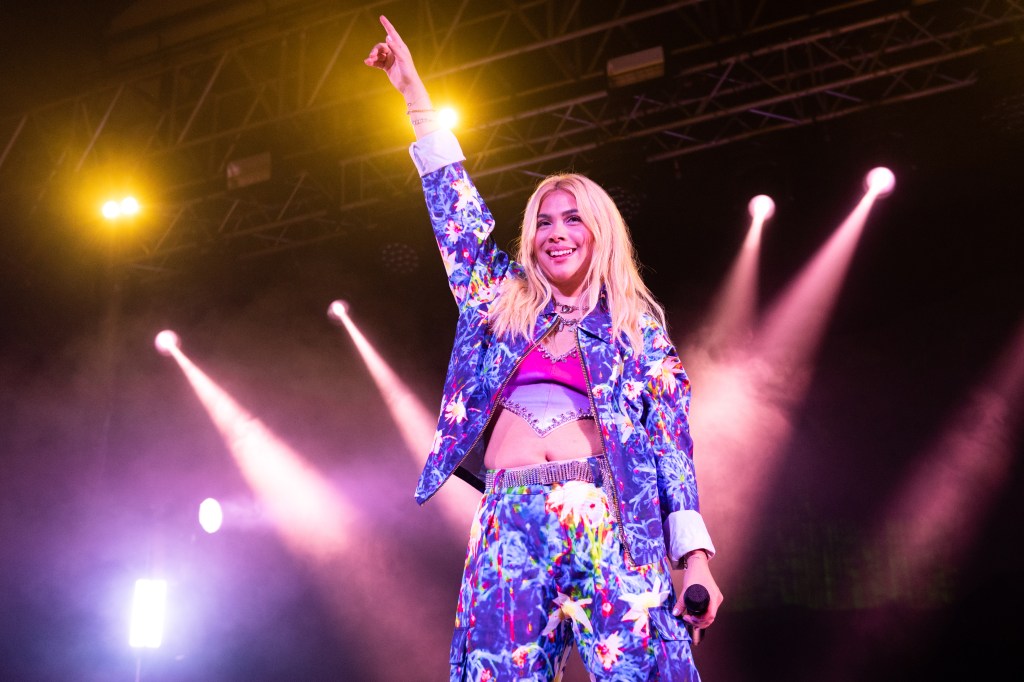
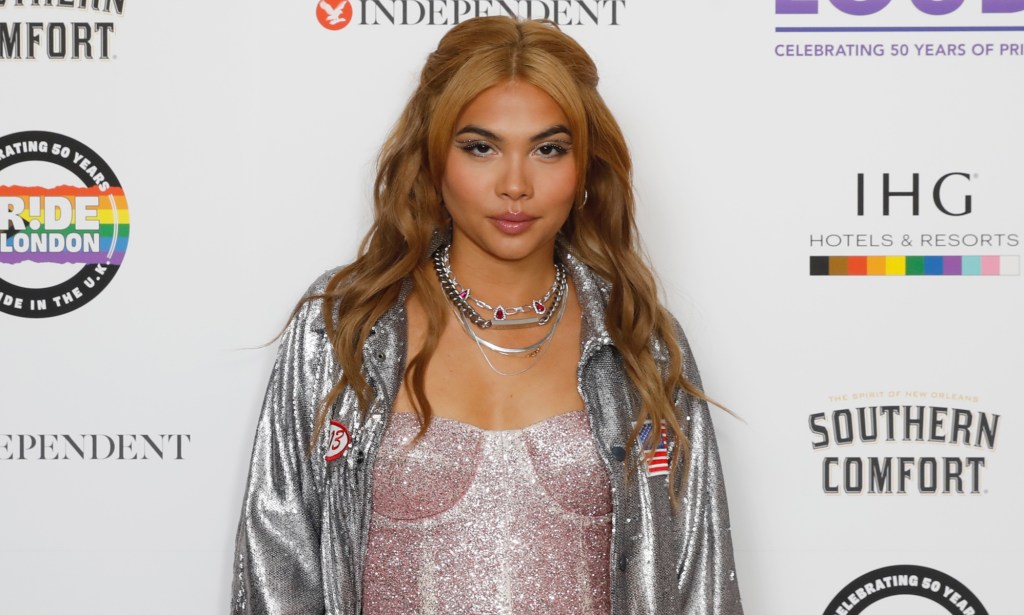
Before Hayley Kiyoko was the lesbian pop icon-turned-author-turned-film director we know today – aka ‘Lesbian Jesus’, as she has been dubbed by her fans – she was an ex-girl band member and former Disney Channel star trying to make it on her own the music industry.
Most notably, she was not out publicly.
In an interview with Billboard in 2019 Kiyoko said she was not out at that time because she was concerned how people would perceive her as a pop singer who is also a lesbian.
“It’s the immediate judgment that people have, and the stereotypes that they have on a female who likes women,” she told the outlet.
“I wanted to be known for being Hayley… for who I am, and not who other people think I am. That was a big fear of mine, because you’re really putting yourself in the line of fire by opening your personal life up to the world.”
It’s unsurprising she felt that way, given the lack of out and proud lesbian pop stars at the time – but more on that later.
‘Girls Like Girls’ marked the first time Kiyoko publicly expressed her love for women and it is pertinent, then, that the song in itself was born from a coming out moment.
She has recalled in various interviews over the years that ‘Girls Like Girls’ came about during a session with co-songwriters Owen Thomas and Lily May-Young in 2014 at a recording studio, when May-Young seemingly knew something was upsetting Kiyoko.
“She was like, ‘What is something you’ve never sung about before?'” the artist told PAPER in 2018.
“I came out to her, and said, ‘I just want to sing about being cocky and stealing someone’s girl, because that’s my dream.’ She told me to write about it.”
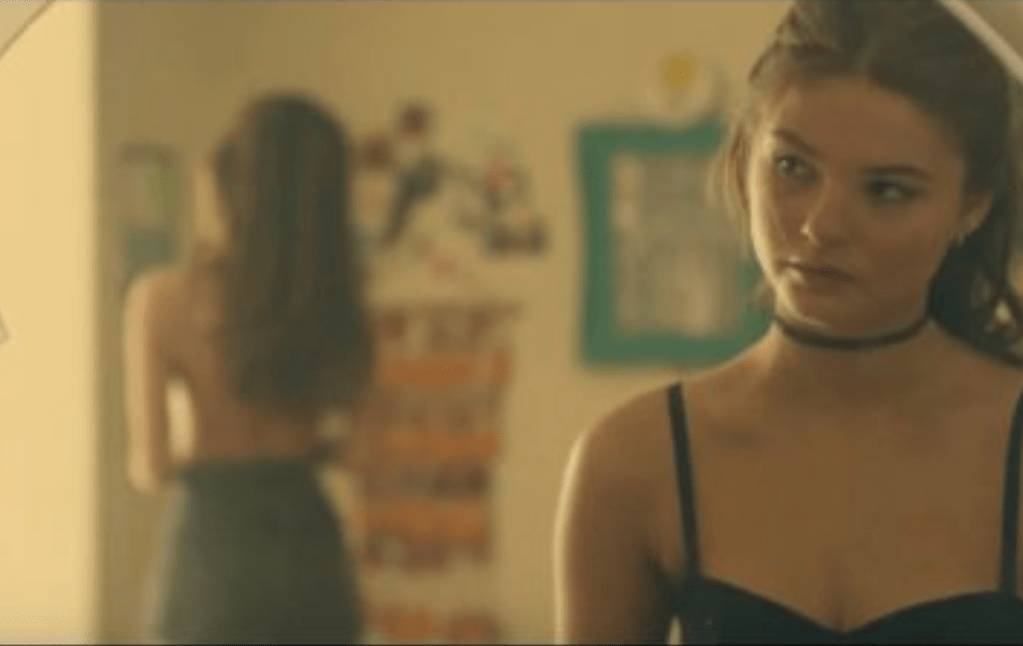
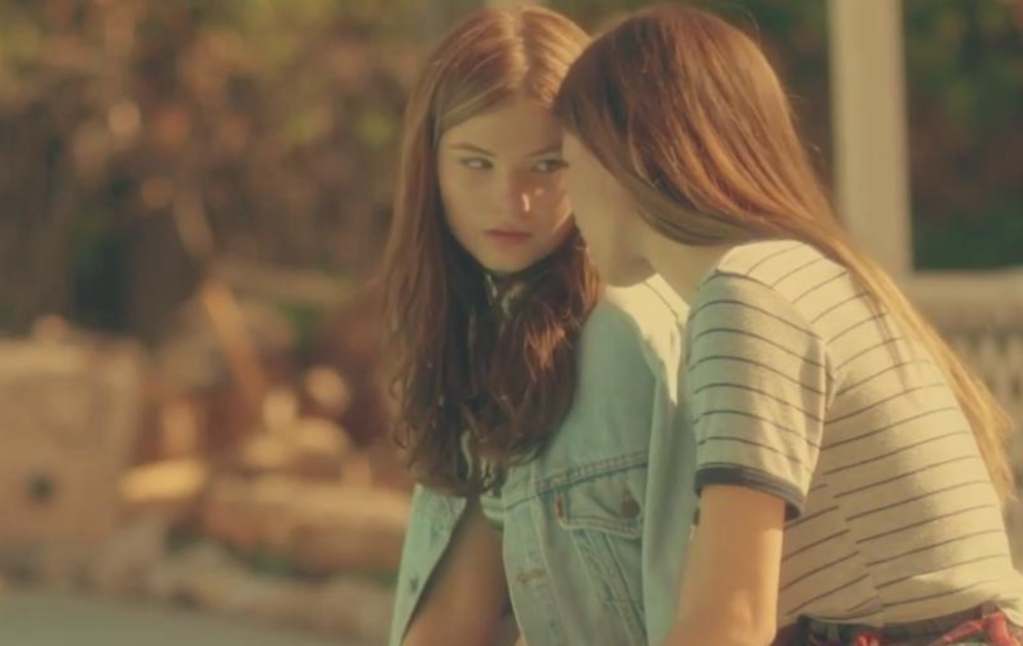
The song they wrote and its accompanying music video, which was directed by Kiyoko alongside Austin S. Winchell, was indeed very much about “stealing someone’s girl” but it was more than that: it was an emotive supercut about love, desire and intense longing, totally normalising queer relationships and set against the backdrop of hazy, summer days – much like the days I spent watching the music video after its release.
Between the track’s evocative, honest lyrics (“We will be everything that we’d ever need, oh/Don’t tell me, tell me what I feel/I’m real and I don’t feel like boys“) and the crackling chemistry of the music video’s acting leads – Stefanie Scott and Kelsey Asbille – as they presented their palpable portrayal of earnest yearning, Kiyoko struck a chord with young queer women.
It was a cultural moment that felt very special indeed, it was entirely fresh and something as timely as it was timeless, the legacy of which continues to this day.
The track seemed to scratch an itch the community, as a collective, had but was seemingly unaware of: the intense desire to be represented in mainstream pop music.
Now, there have been many phenomenal lesbian singers over the years, long before Kiyoko was even born in 1991, and spanning every genre. Billie Holiday, Lesley Gore, Dusty Springfield, Tracy Chapman, k.d. lang, Joan Jett Melissa Etheridge, and of course Teagan and Sara, just to name a few. These performers redefined music and gave us an amazing collection of iconic tracks. Seriously, who isn’t brought to tears by the soulful simplicity of Chapman’s “Fast Car” or moved to defiant, feminist rage by Gore’s “You Don’t Own Me”?
But when we think about the landscape of music in 2015, the biggest female artists in the world were Taylor Swift, Lady Gaga, Ariana Grande, Katy Perry, Rhianna, and Adele, who sold out stadiums, dominated awards shows, appeared on the covers of glossy women’s magazines and fronted major beauty and fashion campaigns. There were certainly no mainstream lesbian singers doing that.
Where was our ‘it’ girl? Our lesbian pop princess? Our mainstream celesbian?
I so distinctly remember watching “Girls Like Girls” for the first time, listening to the lyrics as the storyline played out on the screen before me and feeling absolutely transfixed, like I was watching something I had truly never seen before. It was undeniably a pop song but it was sung by a lesbian singer, about lesbian experiences and had a lesbian storyline in the music video – which had a happy ending as well (no lesbians died!!!). The authenticity of Kiyoko’s words, the painful relatability of them she passionately pleads “Tell me if you feel it too!”, the clear imagery of her vision, shone right through. It didn’t feel like I was watching and listening to something niche, something made for a small part of a minority community; it was a fully realised pop song about love, that just happened to be lesbian.
Perhaps that speaks, in part, to the changing times in the early to mid 2010s.
“Girls Like Girls” came out at an important intersection of political and cultural change. At the time, the world certainly was not perfect for LGBTQ+ folks – far from it – but on the whole queer communities in certain places – namely the US, UK and Europe – generally felt like we were on the upswing in the fight for our rights. Approval ratings for LGBTQ+ rights from the general population were increasingly moving in an upwards direction, Orange is the New Black – a woman and LGBTQ+ fronted show – was the biggest series on Netflix, homosexuality was decriminalised in dozens of countries during that first decade-and-half of the twenty-first century and same-sex marriage was legalised in several European nations – as well as South Africa and Argentina – throughout the 2000s and early 2010s. These countries were followed by the United Kingdom in 2013 and then the United States on 2015. Interestingly enough, literally just two days after the music video for “Girls Like Girls” came out.
It wasn’t easy of course and there was endless criticism, endless pitfalls, endless blocked avenues. Progress was slow and queer representation in pop culture remained sparse, plagued with misrepresentations and the ‘kill your gay’ trope as LGBTQ+ folks searched for scraps in a society that was still entirely hetero and cisnormative. But at the same time, the world only ever seemed to march forward, inch-by-inch, with the days, weeks and months that passed. Progress crept forward so consistently that we felt we had reached a tipping point that society would never revert back from. It felt like the world was becoming a place where LGBTQ+ people could thrive, not just simply survive.
It is certainly a stark contrast to where we find ourselves today, in the middle of a global roll back on LGBTQ+ rights amid the sweeping rise of fascist ideologies.
No surprise then, in 2015, the song connected with the community so positively.
We had protections from discrimination, recognition of our love and identities and growing equality – we had same-sex marriage for goodness sake, why not a lesbian pop star too? The song and video quickly went viral and amassed Kiyoko a huge and passionate following of queer women, eager to consume mainstream WLW content from this new and exciting pop artist who truly represented them
“I was performing for like 50 people, we didn’t have a green room, and I was sitting in the trunk of the minivan that we were driving across the country. That’s when the video hit 500,000 views,” Kiyoko said of the success of “Girls Like Girls” to Billboard.
“That was out of my hands, because it was other people sharing it. That’s what was so beautiful about the whole situation, is that … people felt connected to it.”
Kiyoko’s next tracks, “Cliff’s Edge” and “Gravel To Tempo”, built on her success from “Girls Like Girls”. Each subsequent song was as gay as the last and in her equally sapphic music videos – which put Kiyoko in front of the camera – she performed intricately choreographed routines, the hallmark of a pop artist, and kissed plenty of pretty ladies.
In 2018, Kiyoko released her first album Expectations, a 13-track sapphic spectacular that touched on everything from yearning (“Sleepover”) to turmoil (“Curious”) to jealousy (“He’ll Never Love You (HNLY)” with Kiyoko’s signature relatable lyrics packaged in a pop box of danceable rhythms and upbeat synths whilst the accompanying music videos were a visual feast for the eyes. The album’s cover art in itself defined what it – and Kiyoko more widely – was about: in the image, the artist is sat on a stool, looking longingly at a woman lying in front of her naked, “paint me like one of your French girls”–style. We, the consumer, are looking at Kiyoko looking at this woman, quite literally the female gaze (or gays, see what I did there?) in action. Expectations saw Kiyoko take home a raft of awards including Billboard Women in Music’s Rising Star gong and Push Artist of the Year at the MTV Video Music Awards, firming up her status as an out and proud pop singer who puts out quality queer hit after quality queer hit and also appeal to the masses.
Kiyoko didn’t stop there, a second album and a couple of EP’s later, the artist-turned-author and expanded the world of “Girls Like Girls”, releasing a fully realised young adult novel of the same name. A full-length film, directed by Kiyoko, is currently in the works.
No wonder fans dubbed her ‘Lesbian Jesus’, a moniker that still sticks today.
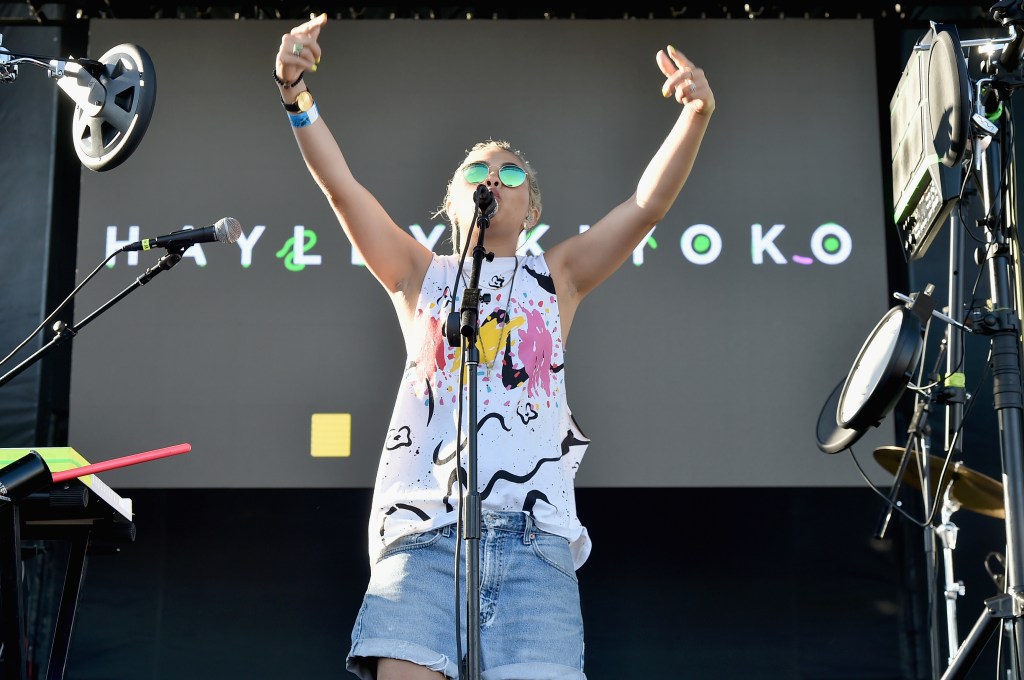
In 2015, I – like many I am sure – could hardly have imagined the vast range of incredible lesbian artists we have today who are mainstream, dominating the charts and shaping the cultural zeitgeist. In just the last couple of years alone we have seen Chappell Roan break the attendance record at Lollapalooza, Renee Rapp make Regina George a dyke icon and G Flip record a masc version of “Cruel Summer” that got approval from Taylor herself. That’s not to mention the success of Fletcher, Gigi Perez, Halsey, Lucy Dacus amongst many, many others.
Can we credit Kiyoko and the success of “Girls Like Girls” for this wave of sapphic singers that are now blessing our ears and Spotify Wrapped? Maybe.
It feels disingenuous to the artists themselves to suggest their success as out queer women in the music industry is only possible thanks to Kiyoko. Chappell Roan, in fact, signed with Atlantic Records in May 2015 – a month before “Girls Like Girls” was released. But, regardless, the truth is that Kiyoko’s iconic track has gone on to amass more than 150 million hits on YouTube and launched her highly successful career as a pop artist – let alone as a gay pop artist. It is success that stands on its own. Prior to releasing the song, and as aforementioned, Kiyoko said she was worried about the perceptions being a lesbian pop singer had. These are perceptions, thanks to her own success, which might very well no longer exist in the minds of record label executives choosing what to invest time and money in. A pop artist can be lesbian, so what? They can still produce hits, sell out tours and make shed load of money, the same as a straight singer can.
We will never know what the world would be like today if Kiyoko never released “Girls Like Girls” but what we do know is that folks felt a little bit more represented, a little bit more seen, because of it. Kiyoko’s other tracks added much to the lesbian cultural canon and provided material for people to cry and laugh and sing their hearts out to. That could only ever be a good thing.
In a way, it feels very full circle to have written this piece for the ten year anniversary of “Girls Like Girls”.
In 2015 I was not out, deeply ashamed of who I was and always trying to desperately hide anything that could even slightly suggest I am queer, like happening to found listening to “Girls Like Girls”. Fast forward a decade and I am more out than I ever thought I would be, proud to live and love the way I do and shameless in joking with friends that I only listen to lesbian music nowadays. Whilst I first watched the music video for Kiyoko’s iconic track with the sound lower and hidden behind a closed door, I have no doubts I will go and watch the film adaption on the big screen, holding my girlfriend’s hand.
But be it in 2015 or 2025, it’s true what Kiyoko sung about a decade ago: girls like girls, like boys do, nothing new.