
What does omnisexual mean and how is it different to pansexual?
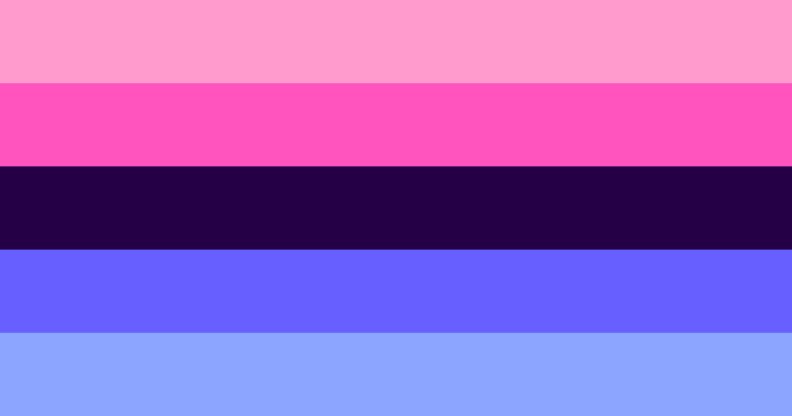
The omnisexual pride flag (Wikimedia Commons)
Omnisexual Awareness Day is celebrated each year on 6 July – but if you’re wondering what it actually means, you’ve come to the right place.
A handful of famous faces have used the term to identify their sexuality, including pop superstar Kesha. Omnisexual is a sexuality which is pretty similar to pansexuality, but with one distinct difference.
On dating app Feeld, “BOY CRAZY” hitmaker Kesha previously labelled her sexuality as “omnisexual”.
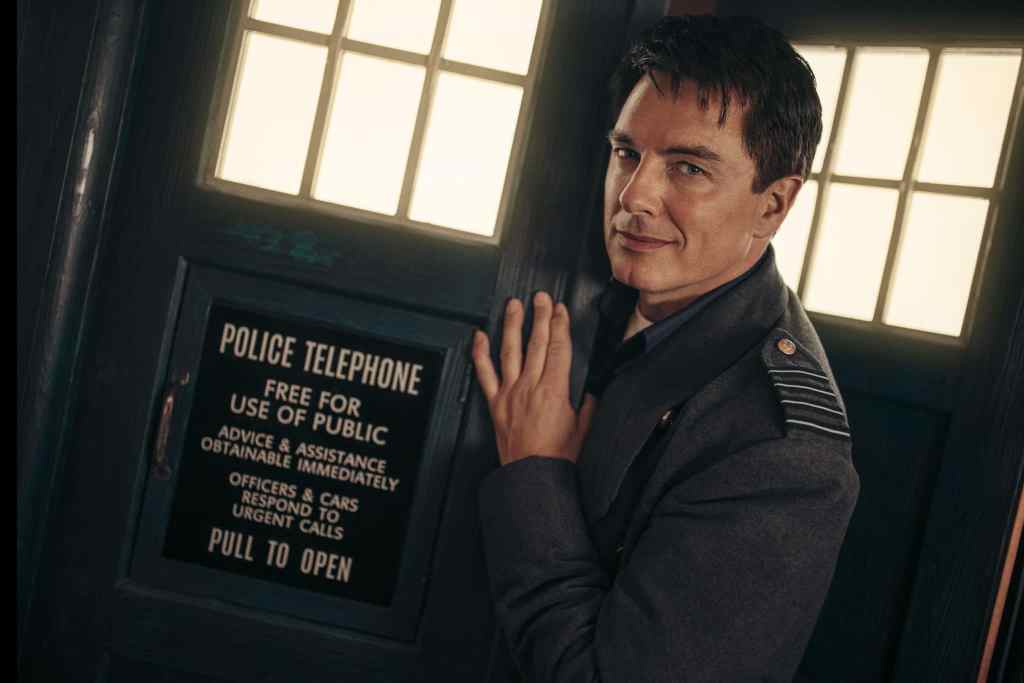
The 38-year-old music superstar is on a fairly slim list of stars who have proclaimed themselves to be omnisexual. Nineties American singer Sophie B. Hawkins, famed for her hit “D*** I Wish I Was Your Lover”, revealed in 1992 that she is omnisexual, while Doctor Who character Captain Jack Harkness, played by John Barrowman, is referenced as being omnisexual on the show.
According to Feeld’s vice president of creative Andrew Peet, Kesha updating her status on the app to identify as omnisexual saw “a real uptick” in other members of the app doing the same.
Put simply, being omnisexual means being attracted to people of all gender identities and orientations. It’s a description similar to that attached to pansexuality, which describes someone who isn’t limited by sex or gender when it comes to those they’re attracted to. The difference is subtle, but it’s there.
What’s the difference between omnisexuality and pansexuality?
Both those who identify as pansexual and those who identify as omnisexual are attracted to all genders. However, while the gender of a person doesn’t matter too much for someone who is pansexual, someone who is omnisexual may have a gender preference, or may be attracted to someone because of their gender.

Luke Brunning, an applied ethics lecturer at the University of Leeds and relationship expert for Feeld, describes how someone’s gender can “animate” an omnisexual person’s attraction to them.
“Omnisexuality means being attracted to people of all genders,” he says, explaining how the prefix “omni” means “all”.
“That gender animates these attractions distinguishes omnisexuality from pansexuality,” he adds, stating that for pansexual people, someone’s gender is “less salient” to them.

“That the full range of genders are found attractive typically distinguishes omnisexuality from bisexuality,” he continues.
“This is not to say gender differences are flattened. Omnisexuals often find their attraction to each gender has a different character, and they may have preferences for some genders more than others.
“In practice, these differences are subtle and sometimes disputed in the community, but they point to the fact that sexual attraction is nuanced and extends beyond familiar binaries. Work to describe and explore these complexities has been a key part of alternative sexual communities for some time. Theorists are busy playing catchup.”
Another sexuality expert at Feeld put it this way: though an omnisexual person is attracted to people across the gender identity spectrum, someone’s gender may “enhance the connection” for an omnisexual person.
“While pansexual folks might say ‘gender isn’t really part of the equation,’ omnisexuals are more like, ‘oh, I clocked it and I’m still into it.’ It’s attraction with awareness, not in spite of it.”
Share your thoughts! Let us know in the comments below, and remember to keep the conversation respectful.