
‘Asexual inclusion in conversion therapy ban is step in right direction but not end of story’
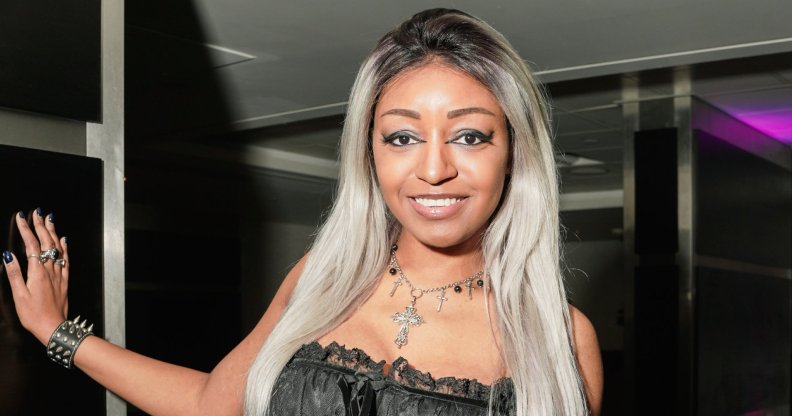
Asexual activist and model Yasmin Benoit (Getty Images)
Things are moving in the right way for asexual representation, writes asexual activist and model Yasmin Benoit for PinkNews, but there is still work to be done…
On 25th of June, just before the end of Pride Month, the UK government published the long-awaited draft of the Conversion Practices Bill.
That same day, it was confirmed by Olivia Bailey – the Parliamentary Under-Secretary of State for Inequalities – in the chamber that “asexual people will be included in the remit of the bill.” For the first time in memory, asexuality was acknowledged on record in Parliament and in a climate of uncertainty, a promise was made.
It has taken since 2018 to get to this point. It was the then Prime Minister Theresa May who announced the LGBT+ Action Plan and first committed to banning conversion practices. That same year, what was then known as the Government Equalities Office released the National LGBT Survey, which illustrated the prevalence of queer people being offered or undergoing conversion “therapy”.
That same survey found that asexual people are 10% more likely to have that experience than those of other orientations, indicating that we are a particularly vulnerable group to conversion practices. Despite this being conducted by the government themselves, one supported by existing data, asexuality was left out of the conversation.
At the beginning of my journey into activism, I was speaking at a conference when an asexual person told me about their experience with conversion therapy in healthcare, how they were made to feel broken, to undergo invasive, unnecessary tests, and how they were coerced into psychosexual therapy that sought to convince them to be heterosexual. Their experience inspired me to approach Stonewall and partner with them on a report into asexual discrimination, with a large section focused on our experiences in healthcare and how our
conversion practices manifest there.

I have since heard many more stories like the one in 2018. My research with Stonewall became one of the key resources I used when raising awareness. Even before the Labour government came into power, I have been going back-and-forth to Parliament, meeting MPs and planting the seeds that I hoped would blossom into asexual people being included in British legislation for the first time.
Asexuality is still a medicalised orientation under the World Health Organisation’s International Classification of Diseases (ICD), and we are not recognised as a sexual orientation under the UK Equality Act 2010. It’s a dangerous combination and I was not the first to acknowledge it, nor to call for our protection. In 2017, the British Association for Counselling and Psychotherapy published a Memorandum of Understanding (MoU) advocating for a ban on conversion practices. This included 25 organisations, including NHS England, and it asked for asexuality to be clearly included in a ban.
The Green Party were the first to explicitly include asexual people in their call for a conversion therapy ban, via their Equality and Diversity Spokesperson, Ria Patel, in 2022. It was why I focused my efforts more on the Liberal Democrats and Labour. In 2025, I began to see results. The Lib Dems published their LGBT+ Agenda – written by Christine Jardine – and acknowledged the medicalisation of asexuality and called for our inclusion in a ban.
While my countless meetings with Labour MPs had been receptive, I could not be sure of whether asexual inclusion would be a priority while the party was constantly putting out fires. Then, after stirrings and rumours, the draft bill finally arrived to a mixed reception. The thoughtful phrasing around defining conversion practices as causing an individual “to have or not to have” a particular sexual orientation, seemingly allows for asexual inclusion without us being recognised as a sexual orientation under the Equality Act.
However, the apparent exemption for those providing a ‘health care service,’ risks leaving people – including asexual people – vulnerable to harm in an environment where our conversion ‘therapy’ is more frequent. It was why Robert McKenna MP – in a display of allyship – posed the question to Olivia Bailey in the chamber, referencing precisely that, and secured an answer that had never been uttered on record by a Labour politician before.
To see two members of Parliament, two gay politicians who had not known about how conversion practices impact asexual people until I sat down with them, discuss the matter openly in the chamber and insist in our protection, gave me hope. We are now at the point where the bill will be strengthened and improved upon, and now I am more confident that asexuality is being seriously considered in that process, and our voices heard.
This news comes not long after Niger became the first country to criminalise asexuality in their new penal code. Being asexual can be punished with up to 10 years in prison and a fine of up to 100 million West African CFA francs – the equivalent of over £100,000 GDP. They also criminalised lesbian, gay, bisexual, transgender, queer and intersex “practices,” as well as “indecent or unnatural acts.” It is an example of how we are seeing LGBTQIA+ rights targeted across the world, and a reminder of why the asexual community cannot be left behind in our fight for progress.
Share your thoughts! Let us know in the comments below, and remember to keep the conversation respectful.