Sasha Allen on Adore Delano, label drama and defying transphobes: ‘I’ve been writing a lot of political music’
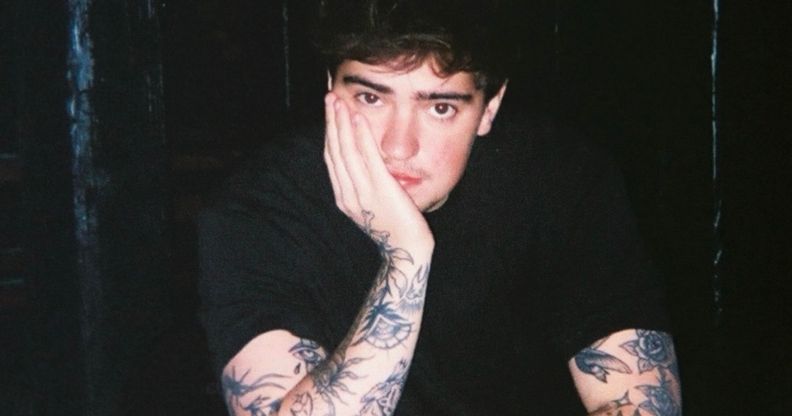
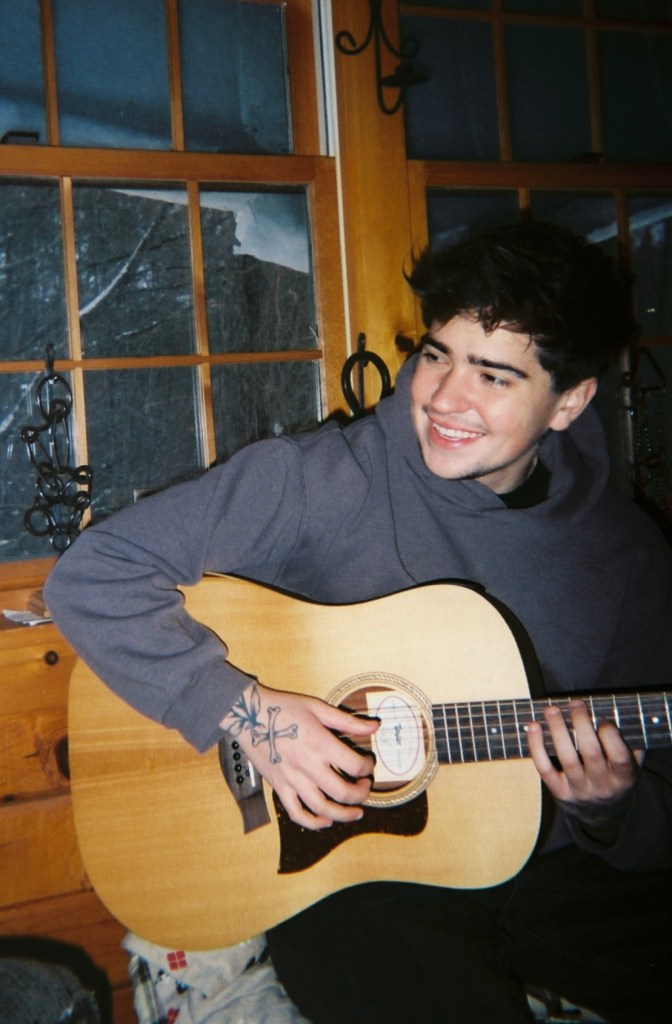
Sasha Allen’s new song “What It Feels Like” is about his girlfriend Adore Delano. (Supplied)
Sasha Allen was a lovesick puppy when he wrote his folksy, featherweight new single “What It Feels Like”.
It’s a paean to his partner Adore Delano, the singer, actor and finalist of RuPaul’s Drag Race, written at 2am while she was out of town for five weeks filming a movie. They live in Los Angeles, five minutes away from one another, and have scarcely spent much time apart since meeting in November 2024. He tried, as every enamoured musician before him has done, to describe that gooey, intangible feeling of falling in love.
“I was like, f***! Like, what does that even feel like?” he says, speaking from LA, where he moved to from Connecticut three years ago. He binned off describing emotions, instead writing about their relationship as though it was “a movie that I feel like I’m watching,” he says, “because that’s honestly how I feel and that’s how I felt for the past six months at the time I’d been with her. Once I stepped back and did it like that, it very much fell into place.”
Allen and Delano’s love story does play out like a movie, one told via impossibly sweet TikTok montages and shadowy kisses, like in the song’s official visualiser. On social media, fans have crowned them a power couple and, as a T4T (trans for trans) couple, a warming antidote to the cruel vitriol the community faces otherwise. Their PDA might be cloying – yes, the song dropped on Valentine’s Day – if it weren’t so glaringly obvious how besotted they are with each other.
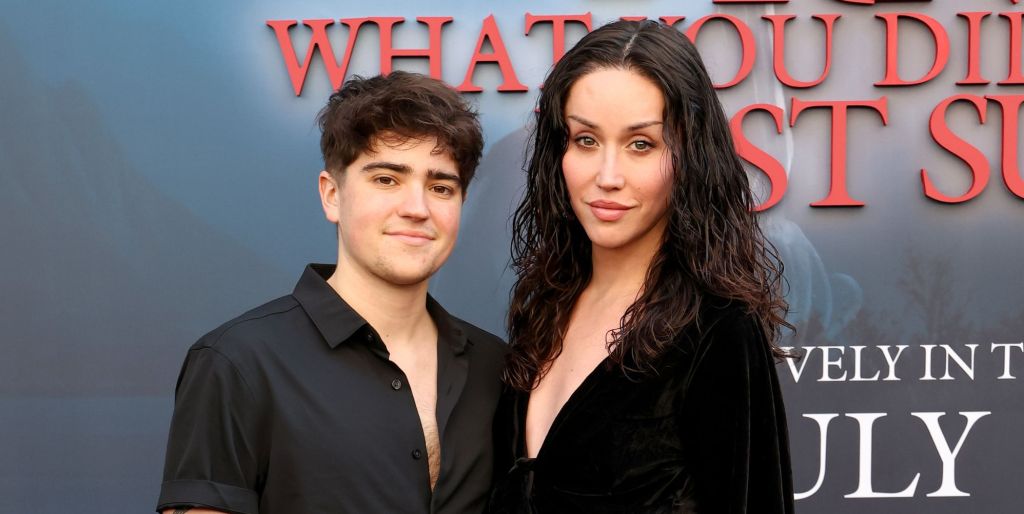
The pair connected after Allen slid slickly into Delano’s direct messages, which then spawned a whirlwind of hours-long dates. They met when Allen was at a crossroads in his personal life and career, three years after he became a household name in the US after making it to the semi-finals on season 21 of The Voice, competing as a duo with his music teacher father, Jim, under the mentorship of coach Ariana Grande. Struggling with his confidence and artistic motif, Delano relit a fire in him that had almost gone out. After meeting her, “everything got a lot brighter,” he smiles. “She puts my life into a lot of context and changed a lot of things. It felt like my life very much started in a new way when I met her.”
On “What It Feels Like”, he confesses in smoky vocals that Delano taught him how to “talk to [himself] in the mirror a bit softer”. How was he, a budding 24-year-old musician with boyband looks and a burgeoning fanbase, feeling about himself beforehand? “From like the first time I met her,” he says, “I felt like I was in a place where I was so – and still am, in a way – focused on everything that I could always do better and everything I could improve on, or all the parts about me that are not good enough.”
Meeting Delano, he was “scared that she would also see those things” in him too. Instead, she flipped the narrative: where he saw unmet career goals, she saw bubbling ambition. When he felt self-doubt, she encouraged self-love. “I started looking at everything through a new lens when I met her which I’d never experienced before,” he says, his eyes glinting with gratitude.
The way he gushes over Delano is touching; while most people in the public eye want to keep their romantic lives private, Allen seems keen for the world to know what a marvel his girlfriend is. “Even the past s*** and things that sucked, like those suddenly made sense. I suddenly felt grateful for things that I once was like, ‘Why did this happen to me? Why has this gone this way? Why does my life look like this?’ She changed the context of all of it.”
By the time they met, Allen’s dream-making experience on The Voice had become something of a nightmare. Encouraged to pick up a guitar by his father aged six and writing his first songs aged 12, Allen seemed destined for a career in music. He began transitioning with hormones aged 16 and posted his first TikTok at 18, slowly amassing a following – he has 1.6million followers on the app today – who enjoyed his candid videos about his transition and musical aspirations. On The Voice, Kelly Clarkson and Grande both turned in their chairs after hearing Jim and Sasha Allen’s tender rendition of John Denver’s “Leaving on a Jet Plane”.
While they missed out on a place in the final, Grande – who Allen still speaks with today – helped them to secure a record deal with her label, Republic Records, owned by Universal Music Group, on which they released their EP, 16 Borders in 2022. Later, Allen signed an independent deal with the label.
How excited was he to see that come to fruition, 15 years after he first picked up an instrument? “Oh my God,” he smirks. The first comparison he can make is to how the girls in Netflix’s recent documentary Reality Check: Inside America’s Next Top Model felt. At first? Elated. They’d made it. “It was very much exactly that. It was like: this is the thing. This is the moment. It’s only up from here,” he says, smacking his tattooed hands together. Then, he laughs: “It was the very common story of that not being the case and learning that pretty quickly.”
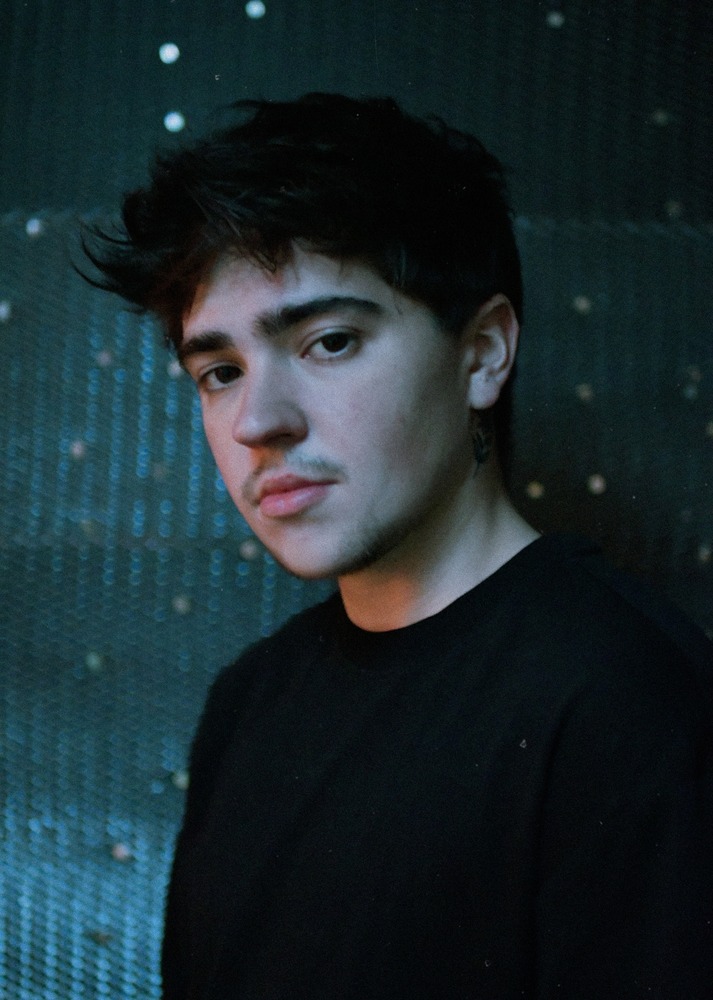
Then just 21, he says he needed someone at the label to hold his hand through his early days in the industry. “It wasn’t even close to that,” he laughs. “It was like getting pushed down a flight of stairs a little bit.” He clung to the contract for three years, holding on to his own hope, and that which he was fed by label execs, that he’d be able to release music soon. Instead, “it just turns into a s*** show.” He has since indicated that the label – which recently made headlines for allegedly refusing to allow Kim Petras to release her music – felt that Allen wasn’t pop enough. Today, he claims he was told he “sucked”. No music was released. “It killed my confidence so much. I had to recover from the disappointment of that really heavily,” he says. “It was like the highest of highs to lowest of lows.”
It was Delano, he says, who gave him the self belief to ask to be dropped by the label. And he was, in early 2025. He released the bluesy guitar ballad “When I Forgive You”, about the contrast between his accepting 90-something-year-old grandma and spiteful transphobes, last spring, to a viral reception. His debut EP Jawbreaker, a stirring, soulful collection of personal stories set to sparse guitar strokes and chirpy harmonica, arrived in April. Writing music for fun, not for corporate label metrics, has been reinvigorating. “I want my music to do well and be heard by people but when it all rests in that, it’s a hell scape,” he says fervently. “I live once. Like, I don’t want to live in a joyless cesspool.”
On Jawbreaker, Allen eviscerates the label (“David & Goliath”), croons about meeting Delano (“Kick Us Out Again”) and brilliantly highlights how asinine transphobia is (“Bones”). He’s coy when I ask about his debut album, previously promised as a 2026 release, but acknowledges that “new stuff in general” is coming this year. He’s been writing about lots of things – “finding community, finding acceptance, feeling heard, feeling seen, epic highs, epic lows” – but, he says, politics will always be a throughline in his work. “I feel like my existence is inherently very political. I’ve been writing a lot of political music.”
What is the reality of being a young trans person under the rule of Trump, a man who has continuously mocked and attempted to outlaw trans people from existence? He takes a moment to think. “It makes me feel really sad and really angry,” he sighs. As a trans person with a platform, his inbox has become increasingly full with messages from terrified people. A teenage trans girl kicked out of her home and living on the streets of Mississippi has messaged. So too has a trans father of three who is unable to afford gender-affirming care.
“It’s so depressing and enraging,” he says of the vitriol. “If trans people were just allowed to, you know, live the way they want to live, we would really just want to live quietly and peacefully. We just want to live our lives and do the things we like to do and have fun and have joy, literally just like everyone else.” Political utopia seems to be drifting further out of view; last summer in the Democrat state of Connecticut, where Allen began taking hormones as a teenager, it was announced that gender-affirming care for trans youth would be “winding down”.
It’s bleak, but he’s resisting. The other day, Allen spoke to his mother on the phone about the small, rebellious acts he can take to centre joy. He finds solace too in the fact that there is some young trans person out there watching him on TikTok as he makes his songs, embraces his girlfriend and basks in the Californian sunshine, living life regardless. “I want to be the person, like the dudes that I used to look at and be like ‘Maybe I’ll get there one day’, and I want to be that for someone.”
“What It Feels Like” is streaming now.
Share your thoughts! Let us know in the comments below, and remember to keep the conversation respectful.