
The Mysterious Gaze of the Flamingo filmmaker on crafting an AIDS storyline: ‘You cannot just avoid violence’
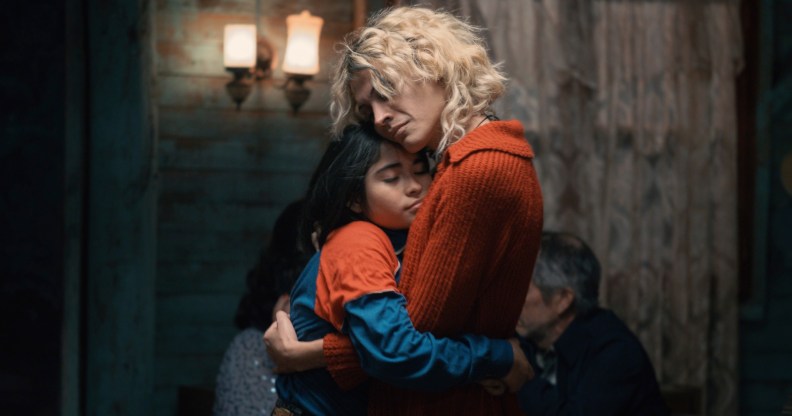
The Mysterious Gaze of the Flamingo is an allegory of the AIDS crisis. (MUBI)
Tackling the AIDS pandemic in cinema is often, understandably, a deeply melancholic affair. However, The Mysterious Gaze of the Flamingo offers a new vision through which to explore this time in queer history.
The Mysterious Gaze of the Flamingo marks an impressive feature debut from Chilean writer-director Diego Céspedes. The film offers up an allegory for the AIDS pandemic, a colourful and humorous portrait of chosen family framed as a western drama sprinkled with magical realism.
Set in 1982, 11-year-old Lidia (newcomer Tamara Cortés) is coming of age in a mining town in the Atacama Desert, Chile. The young girl is the baby in a chosen family of LGBTQ+ performers, all of whom care fiercely for her. But Lidia is nestled under the loving Flamingo’s wing (played by Matías Catalán) and within the matriarchal care of Mama Boa (Paula Dinamarca).
The queer performers stage nightly shows for the miners at the local cantina until whispers begin to spread of a mysterious, deadly disease. In search of someone to blame, the town turns on this queer family and theorises the disease is transmitted through a gaze shared between men in love, and there is no known cure.
“Every good film has something queer in it.”

“What’s happening right now in the world, with this new fascism, is because we don’t look each other in the eye,” Céspedes says to PinkNews. “Pro individualism, and we just forget that we have someone in front of us. When you see another person in the eye, you can understand if she’s suffering, if she’s happy, she has a weird feeling that she needs to tell you, you can understand all that stuff, but we miss that, and that makes the gaze a very poetic thing.”
Céspedes’ handling of desire turning monstrous is cleverly crafted with stunning imagery and moving resonance. Also, The Mysterious Gaze of the Flamingo doesn’t shy away from the fact that the most supportive figures in Lidia’s life are this group of queer and trans folks. Yet, the film arrives in a time when moral panic around trans people in the presence of children is an exposive topic.

The genesis of this project was the young protagonist with the film’s core relationship of Lidia and Flamingo, reminiscent of Céspedes’ own family. “When I was young, I saw my little sister painting the nails of my older brother while they were gossiping about the family. That intimacy, I see it in my siblings, and I see it in Flamingo and Lidia.”
“Why do we need to lie to each other? Why do we need to love each other?”
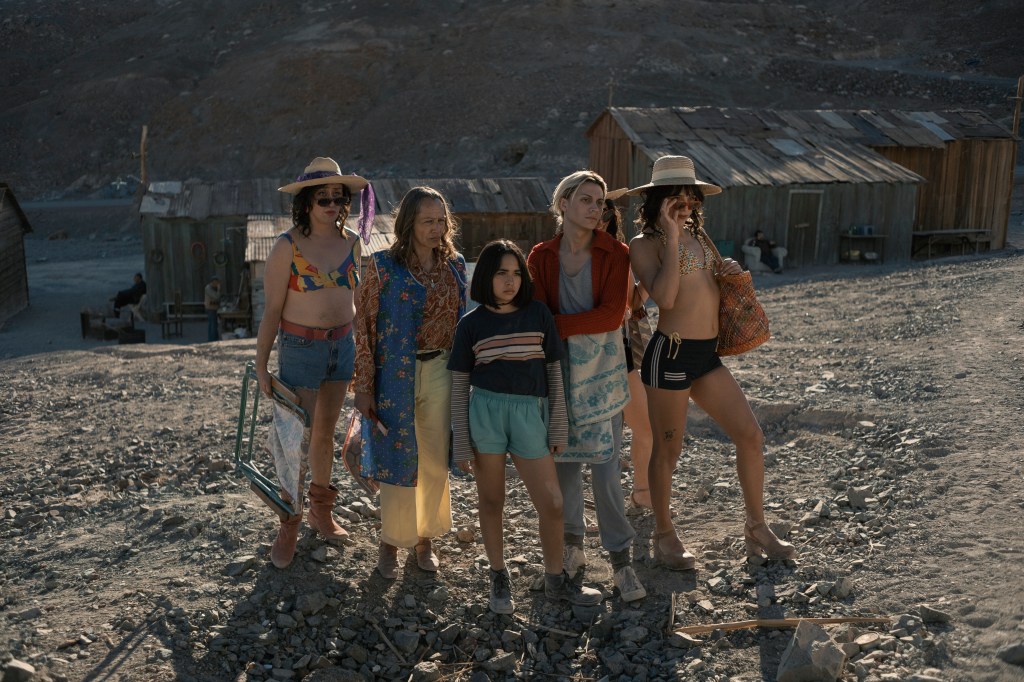
With The Mysterious Gaze of the Flamingo, Céspedes wanted to approach the world through the eyes of a young person, a “pure” perspective. “I always say, Lidia is not asking herself what her family has between their legs. She’s just feeling love and tenderness,” the director explains. “That was the biggest gift of telling the story through the eyes of a kid, the pureness of the soul.” Simultaneously, that youthful outlook on the world raises questions that Céspedes also wanted the film to approach: “Why do we feel this fear? Why do we need to lie to each other? Why do we need to love each other?”
Early on, it’s established that Flamingo is sick and their days together are sadly numbered. As the illness progresses, Flamingo confesses to Lidia: “I couldn’t imagine going to hell without you.” It’s a beautifully devastating line, one Céspedes says, that also reminds him of something his brother could have told his little sister. The filmmaker brings real depth to the characters, and even supporting performances are given individual spotlights. Such moments serve to solidify the family unit around Lidia.
“Flamingo is not a trans character to me,” Céspedes furthers. “The characters that are trans are played by trans actresses. He plays a transformista [Spanish drag queen], and at that time it was less clear than today.” Flamingo and Lidia are the viewers’ introduction to this warm chosen family, but the former is the subject of one of the film’s tougher moments.
“The characters that are trans are played by trans actresses.”
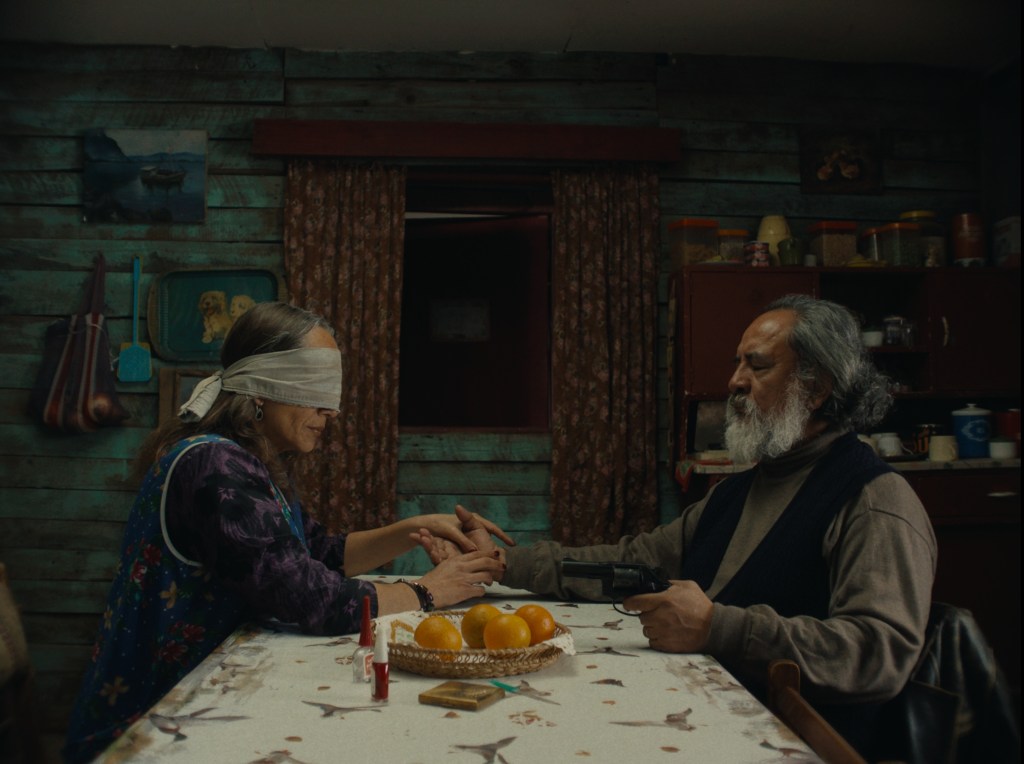
Though this portrait of queer struggle is rich with bright energy, sparkling costumes and biting humour, the film is not without its aggression. One scene, framed by cinematographer Angello Faccini from a distance and lit by moonlight, sees Flamingo’s evening become a viciously dangerous outing. Céspedes acknowledges that featuring a moment of violence may be difficult for some viewers, but such scenes were vital. “You cannot just avoid violence… For every queer person, I think it’s our decision how we will show [violence] to the world. I consciously put that there because it’s a colour that we need to paint in our big painting.”
The Mysterious Gaze of the Flamingo joins a growing canon of original queer stories, but Céspedes takes issue with the label of ‘queer cinema’ applied to his film. He shares: “I think in the industry, when you talk about queer films, you put it aside, and it’s not, queerness is everywhere. Every good film has something queer in it.”
As more diverse LGBTQ+ stories and characters make it to the big screen, Céspedes’ notion has some legs with the stretching limits of what, narratively or aesthetically, is deemed ‘queer cinema.’
“Isolating this individual and trying to [attach] a lot of labels, though that is sometimes an instrument that helps to bring us to the world, is putting us aside,” Céspedes also adds. “Like: what label are you? Forget about it. Sometimes we don’t need it, we just see a human being.”
The Mysterious Gaze of the Flamingo is available to stream on MUBI from May 15.