
Russian doctor revives debunked ‘transgender spectrum disorder’ diagnosis at congress
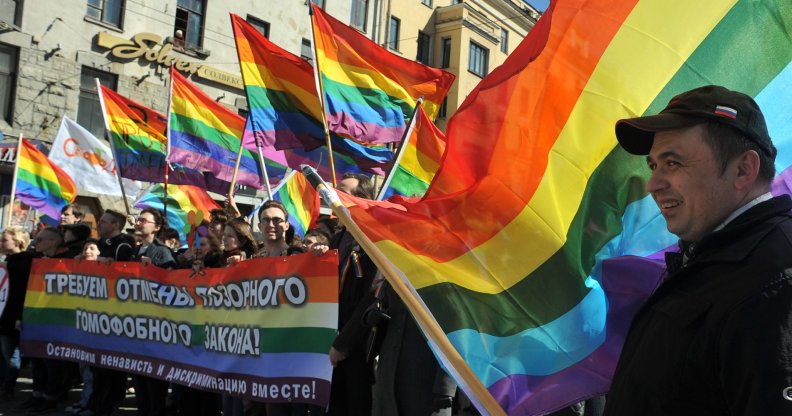
LGBTQ+ rights activists in Russia (Getty Images)
A psychiatrist in Russia has attempted to resurrect a debunked medical diagnosis called ‘transgender spectrum disorder’, which incorrectly claims that being trans is a mental disorder.
Olga Bukhanovskaya, the chief physician of the Phoenix rehabilitation and treatment research centre, presented a paper on the topic at the 18th Congress of Psychiatrists in Russia this week.
Bukhanovskaya argued that being trans is a mental disorder which also includes “homosexualism”, reported Meduza on 26 May. She also said that the “transgender umbrella” encompasses “fetishistic transvestism”, personality disorder, schizotypal disorder, and “schizophrenia combined with periodic effemination”.
She also called the rise in people identifying as trans in recent years a “transgender epidemic”, saying that it is caused by “financial infusions and grants”.
Speaking at the congress, she said: “If people now use the nice-sounding phrase ‘autism spectrum disorder,’ then we can say ‘transgender spectrum disorder,’ and all of these mental illnesses fall under it.”

Bukhanovskaya also presented the theory that the advancement of trans rights in Russia is carried out by a “fifth column of medicine”, referring to trans-friendly doctors, psychologists and lecturers.
She noted that she believes that trans-friendly lecturers are responsible for “promoting gender theory and ICD-11 [the International Classification of Diseases] into the professional community, society, and the minds of patients.”
‘Transgender spectrum disorder’ is not a recognised medical diagnosis as being trans is not considered to be a mental illness in standard healthcare.
Only gender dysphoria, or the distress experienced by some people at a disparity between their gender identity and their sex assigned at birth, is a diagnosable condition.
Being transgender stopped being classified as a mental health condition by the World Health Organisation in 2019.
At the time, Dr Lale Say, a reproductive health expert at WHO, said: “It was taken out from mental health disorders because we had a better understanding that this was not actually a mental health condition, and leaving it there was causing stigma.
“So in order to reduce the stigma, while also ensuring access to necessary health interventions, this was placed in a different chapter.”
Share your thoughts! Let us know in the comments below, and remember to keep the conversation respectful.