
Idaho officials tell judge they can use DNA testing to enforce trans bathroom laws
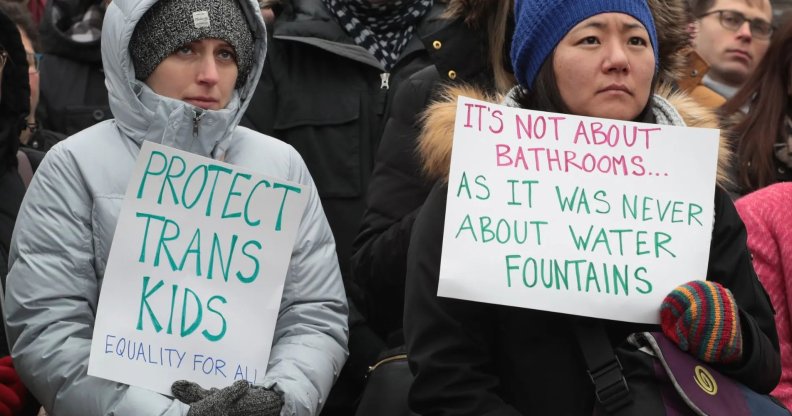
Idaho Proposes DNA Testing Amid Trans Bathroom Ban Debate (Image: Getty)
Idaho officials have told a federal judge that they can use DNA testing to enforce strict trans bathroom laws in the state.
In Idaho, transgender people are required by law to use public bathrooms and changing facilities of the sex they were assigned at birth.
That law was recently questioned by a judge in federal court while considering whether or not to temporarily block the law for a lawsuit brought by six trans people over House Bill 752.
House Bill 752 – What it means
The bill, which is set to take effect from 1 July, will create criminal charges for people who “knowingly and wilfully” enter bathrooms or changing facilities that don’t correspond to their sex assigned at birth. Repeat offenders could receive up to five years in prison.
According to the Idaho Capital Sun, US District Judge Amanda Brailsford asked officials how they could expect to enforce the bathroom law when many trans people now carry ID that corresponds with their correct gender.
Idaho Solicitor General Michael Zarian then told the judge that it shouldn’t be too difficult “because there is DNA testing.”
Zarian then went on to say that trans people would not necessarily need to consent to the proposed DNA testing, but that he doubted that they would be asked to take a DNA test on the spot.
Lambda Legal attorney Kell Olson, who is a trans man, represented the six Idahoans that filed the lawsuit. He questioned the merits of Zarian’s testing proposition, saying that DNA testing usually requires a warrant.
“HB 752 does make Idaho less safe for transgender people. It threatens serious and immediate harm, no matter what trans people do,” Olson told the judge.
Potential harm and pitfalls from the bill
Olson expanded on the pitfalls of the new law while speaking to reporters after the hearing. “If I just go to a restaurant with my family and want to wash my hands before dinner, this law comes into play. Now I have to stop and decide, do I – if this law is in effect – do I go into the restroom that is illegal now, the men’s room?” he asked.
“Or do I walk into the women’s room and take all of the risk that that now comes with, whether that’s assault or harassment, or someone calling the police, because now it looks like I’m violating the law?”

ACLU of Idaho attorney Emily Croston also weighed in, telling reporters: “I don’t think the state has an answer for how you identify someone’s biological sex… Are we just going to look at folks as they enter a restroom and determine whether we think they look enough like a man or a woman? That’s ridiculous.”