Florida book ban forces libraries to weigh up ‘nuclear option’ of removing fiction
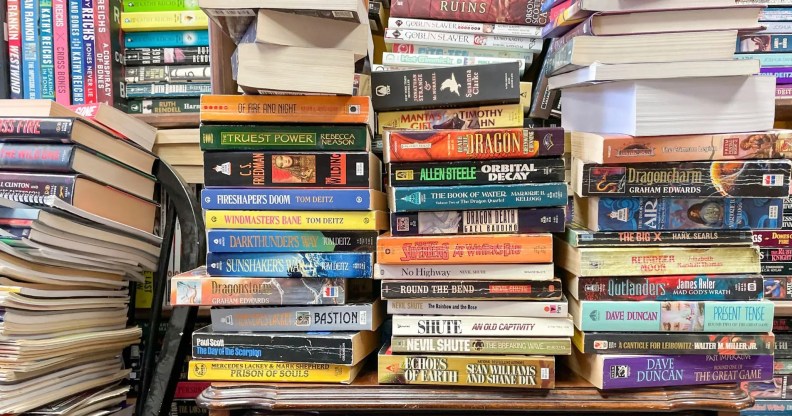
Officials are discussing how to navigate a book ban in Florida (Getty Images)
The ramifications of Florida’s book ban laws may be reaching new heights, as evidenced by a discussion on book moderation in a Florida school board meeting.
During a 16 June Clay County School Board workshop, published to YouTube, district leaders openly discussed “nuclear options” for dealing with the constant flood of book challenges, including closing high school libraries altogether or stripping them down to nonfiction only while they carefully review books for content deemed unsuitable for students.
“There doesn’t seem to be an effective moderate option,” the district’s chief academic officer, Rodger Dailey, told board members. “The options on the table are kind of nuclear options like, ‘Close the library. Take all the fiction books out, just leave the nonfiction.’ Things that would – to people who aren’t abreast of this, right? Would be shocking to them.”
The discussion comes after Florida’s HB 1069 made it possible for any county resident to challenge books in school libraries. In Clay County, a single individual filed more than 400 challenges, resulting in 287 books being removed in one school year, including classics like The Handmaid’s Tale, Slaughterhouse-Five, and The Color Purple, as reported by local news outlet News4Jax.
Notably, district officials weren’t arguing that books shouldn’t be removed; rather, they were debating how to remove them faster and with less administrative burden.

Dailey suggested flipping the current process entirely by removing books first and only returning them after they’ve been individually vetted. “You would take the books out and then put them back on once you have vetted them, as opposed to trying to comb through and find a needle in a stack of needles,” he said.
He also floated banning entire authors based on previous removals, saying: “This author has had three, four, five books removed… maybe we say that author – we’ve had too many problems to look for the one good book that author has.”
School board member Beth Clark went even further, asking: “I don’t understand why we can’t sue for providing pornography to our children. It’s that simple,” while discussing the possibility of using AI to screen books.
If libraries were eliminated, Dailey suggested replacing those spaces with research centres, computer labs, or school stores due to the low checkout rate at the senior high school, claiming that older kids are primarily consuming their information digitally instead of through print.
More than 60 studies spanning five decades were reviewed by the Center for American Progress in 2024. It found that well-resourced school libraries with certified librarians are associated with stronger academic outcomes, with the greatest benefits seen among low-income students, students of colour, and students with disabilities.
While part of HB 1069 was ruled unconstitutional by a federal judge in 2025, the decision is currently being appealed, and the law remains in effect while the case moves through the courts.
Share your thoughts! Let us know in the comments below, and remember to keep the conversation respectful.