
New study challenges claim that trans teens later regret gender-affirming care
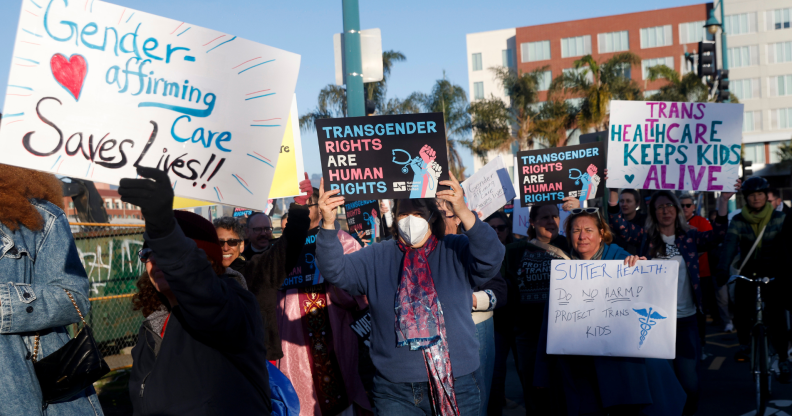
The study used data gathered from 445 young people diagnosed with gender dysphoria. (Image: Getty)
A new study, published this month in the Journal of Adolescent Health, shares data that suggests trans teens who receive gender-affirming care aren’t very likely to regret doing so down the line.
The study uses data gathered from 445 young people diagnosed with gender dysphoria under the care of four clinics in Canada between 2012 and 2017.
The clinics were Children’s Hospital of Eastern Ontario Diversity Clinic, IWK Trans Health Clinic at Dalhousie University in Nova Scotia, BC Children’s Hospital Gender Clinic, and Alberta Children’s Hospital Metta Clinic.
Of the sample group, 331 participants were assigned female at birth, and 114 were assigned male at birth. 353 underwent gender-affirming hormone therapy. Four of them later stopped hormones, and just one ceased hormone treatment and returned to identifying as their sex assigned at birth.

13 participants later returned to identifying as their sex assigned at birth after an average of roughly 2.5 years, while some of the participants shifted between a binary and non-binary gender identity after about 2.5 years.
Gender fluidity
In the study, adolescents were found to have a more fluid gender identity if they initially identified as non-binary.
However, none of these non-binary identifying adolescents reverted to a binary identity that aligned with their sex assigned at birth. Almost 80% of these non-binary participants began hormone therapy, with a discontinuation rate of 1.1%.
None of the young people who stopped puberty blockers or secondary supportive medical treatments due to a change in their gender identity ended up identifying with their sex assigned at birth.
From this study, it can be concluded that an overwhelming majority of young people who were a part of university-associated clinics in Canada to receive gender-affirming care still identify as transgender or nonbinary, with over 97% still identifying as such.
In total, only 2.9% chose to begin identifying their gender with their sex assigned at birth within a time frame of 2.4 years.