WNBA says Enes Kanter Freedom and Royce White cannot play after claiming to identify as women
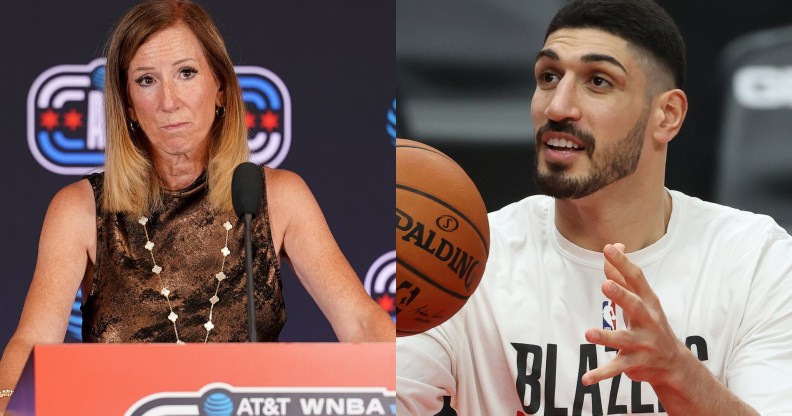
WNBA Commissioner Cathy Engelbert and former NBA player Enes Kanter Freedom. (Getty Images)
The Women’s National Basketball Association (WNBA) has told Republican lawmakers that former NBA players Enes Kanter Freedom and Royce White are ineligible to play in the women’s league, describing the pair as “both men” in a letter.
WNBA commissioner Cathy Engelbert responded to a congressional inquiry on 16 October in a letter provided to OutKick, following Freedom and White’s controversial announcements that they intended to enter the 2027 WNBA Draft while claiming to identify as women.
“With respect to your questions regarding eligibility, only women are eligible to play in the WNBA, and the individuals you cite in your letter are both men,” Engelbert wrote.
The response came after Republican representative Marlin Stutzman of Indiana and four other House Republicans asked the league to explain how it defines “women” under its collective bargaining agreement and why the two former NBA players had been deemed ineligible.
However, Engelbert did not provide the wider definition requested by lawmakers or announce any changes to the league’s eligibility rules.
Former NBA players’ ‘bad-faith’ challenge
Freedom, who retired from professional basketball in 2022, and White, who left the NBA in 2014, announced their intention to enter the WNBA Draft in April 2027.
Their declarations have been widely criticised as a political stunt targeting transgender athletes and the debate over who should be eligible to compete in women’s sport.
Freedom argued that the league’s existing rules did not explicitly specify sex assigned at birth as an eligibility requirement. White similarly claimed he could enter the draft by identifying as a woman for the purposes of professional basketball.
In August, the WNBA condemned what it described as “bad-faith efforts to use these topics to demean or marginalise others”, adding that there were no immediate eligibility matters affecting the league.
The controversy has unfolded amid growing political pressure on women’s sports organisations to introduce or strengthen restrictions affecting transgender athletes.
Freedom has said his effort is intended to pressure the WNBA into explicitly limiting participation to biological females. He has acknowledged that determining a person’s identity and determining eligibility to compete in a particular sporting category are separate questions.
Speaking to OutKick after Engelbert’s letter, Freedom criticised the commissioner for declaring him ineligible without explaining the standards behind that decision.
“Cathy Engelbert cannot clearly define what a woman is, but she’s absolutely certain that I’m a man,” he said.
Freedom also said he believed Engelbert had misgendered him, telling the outlet: “Yes, 100%.”
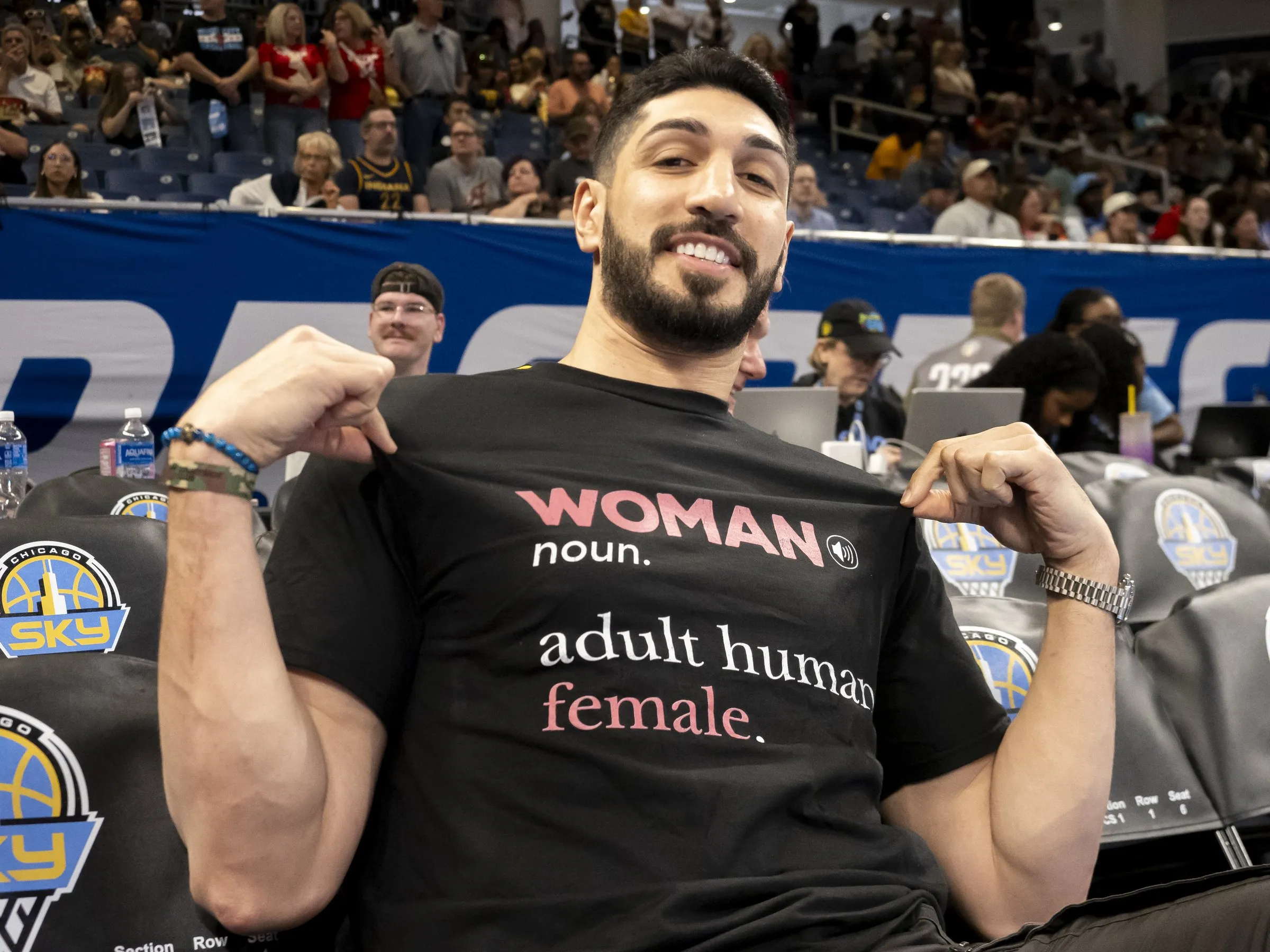
The pair’s claims should not be confused with the experiences of transgender athletes seeking to participate in sport in accordance with their gender identity. Their stated aim is to challenge the league’s eligibility framework and push for more restrictive rules.
WNBA commissioner faces questions over eligibility
The WNBA’s current collective bargaining agreement states: “Only players who are women are eligible to play in the WNBA.”
The provision does not, within that wording, explicitly define “women” or set out a detailed explanation of how the league determines eligibility.
The league has previously said it would continue discussions with stakeholders about transgender participation and the abuse directed at players online. In August, an existing anti-hate task force discussed both issues, although the league said the group had not been created solely to determine eligibility.
Freedom has questioned how those ongoing discussions fit with the commissioner’s definitive statement about him and White.
“If the task force itself has not reached a clear definition, why is the commissioner making such a definitive statement?” he asked.
Engelbert is due to leave her role at the end of 2026. Freedom has said he will continue pursuing his challenge unless the league changes its rules, and has called on the next commissioner to explicitly restrict eligibility to biological females.
Trans athletes remain at the centre of a political debate
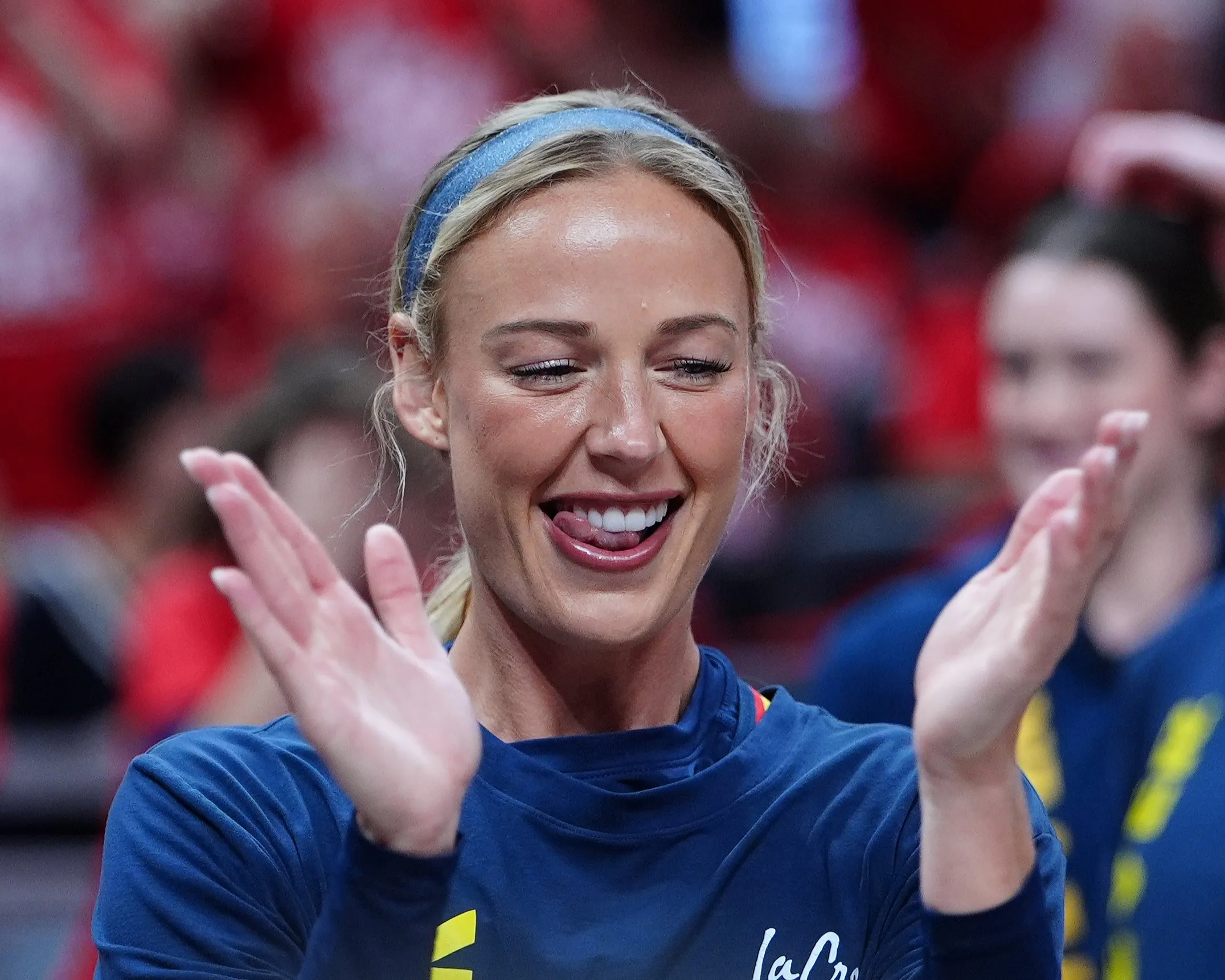
The latest development follows months of controversy surrounding transgender participation in sport, including comments from Indiana Fever guard Sophie Cunningham, who has publicly supported excluding trans girls and women from female sports.
Those remarks prompted both support and criticism, with some WNBA players and coaches expressing support for transgender inclusion.
The league has also condemned attempts to use the debate to demean or marginalise people, as rhetoric targeting transgender athletes continues to feature prominently in US political discourse.
For transgender people, debates about eligibility are not simply theoretical disputes. Policies that exclude trans athletes can affect their opportunities to participate in sport, their sense of belonging and the wider public perception of their identities.
Freedom and White’s campaign has added another layer to that debate, using a provocative challenge to the league’s rules to advance a more restrictive approach to women’s sport.
While Engelbert’s letter confirms that the pair will not be eligible to play under the league’s current assessment, it does not settle the wider questions about how eligibility should be defined or how transgender athletes should be treated.

For now, the WNBA has reiterated its position on Freedom and White without announcing a new policy. The league’s wider discussions around eligibility, inclusion and the treatment of transgender people in sport remain ongoing.