
Turkish government denies targeting LGBTQ+ people with ‘My Family is Safe’ operation
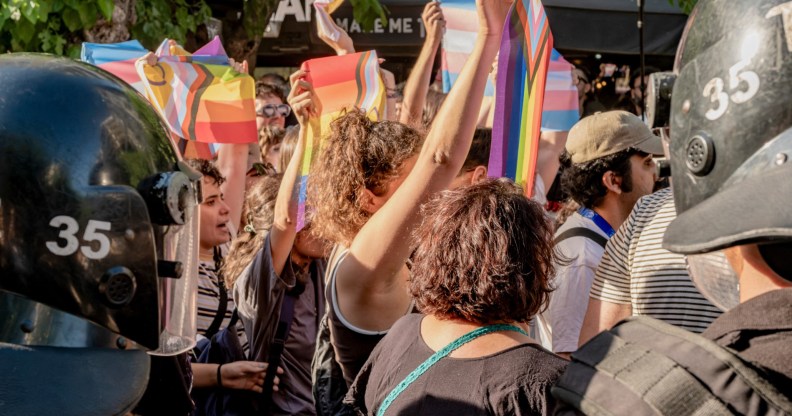
Protesters hold up Pride flags in Turkey. (Murat Kocabas/Getty)
The government in Turkey has denied targeting LGBTQ+ people and organisations through its ‘My Family is Safe’ operation.
In September 2026, the ‘My Family is Safe’ operation was launched as a large-scale effort targeting LGBTI organisations and human rights defenders across the country.
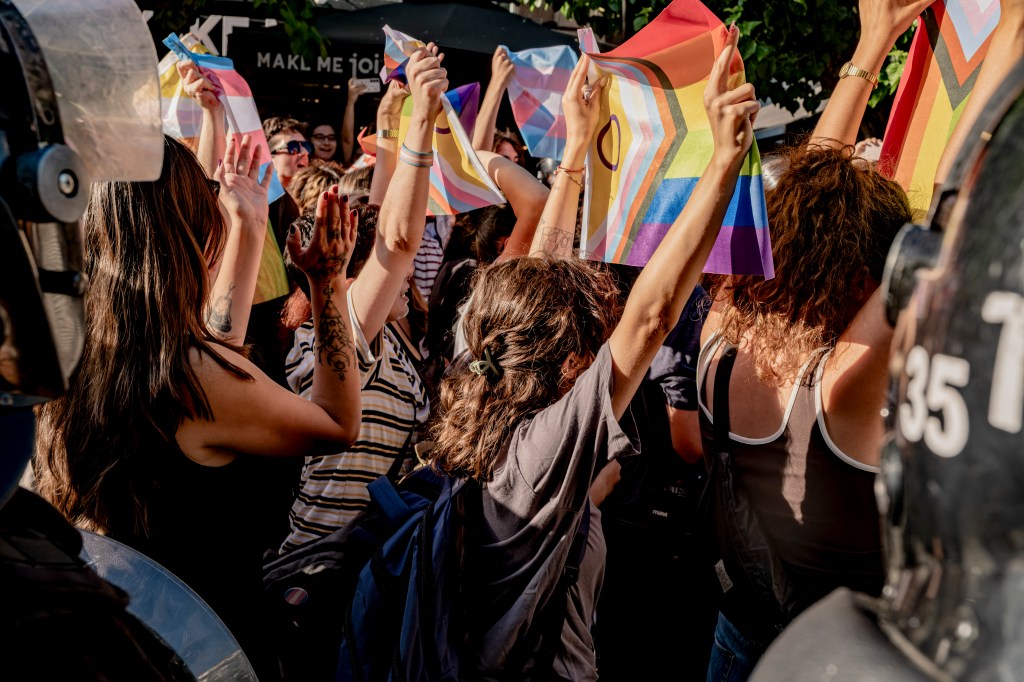
The same month, a number of protesters were detained in Istanbul and Ankara. In Istanbul, protesters had gathered outside the city’s main courthouse to demand the release of LGBTQ+ people arrested following raids on gay bars and queer organisations.
The government’s latest statement is a response to an open letter from Michael O’Flaherty, Council of Europe Commissioner for Human Rights, directed to the Ministers of Türkiye.
O’Flaherty outlines that the Turkish government’s actions are “contrary to European and international human rights standards.”
O’Flaherty highlights worries over the ‘My Family is Safe’ operation. The letter notes: “I have been informed that more than 100 people, including 44 human rights defenders and activists, including board and oversight committee members of LGBTQ+ organisations, have been detained, and that the majority of them have been remanded in pretrial detention.”
‘I stand ready to continue our dialogue on this and other human rights issues in Türkiye’
Another area that O’Flaherty spotlights is that the government is censoring LGBTQ+ information, which is prohibited by the European Court of Human Rights.
He notes that the charges “concern the ordinary functioning of LGBTI organisations, their public activities and sources of funding.”
Furthermore, he continues: “The operation has been reportedly accompanied by restrictions on freedom of expression, with blocking of hundreds of social media accounts and some websites from access in Türkiye.

O’Flaherty concluded: “The European Court of Human Rights has established that freedom of expression constitutes one of the foundations of a democratic society.
“Any restriction must have a clear legal basis, pursue a legitimate aim and be necessary and proportionate… I stand ready to continue our dialogue on this and other human rights issues in Türkiye.”
‘No discriminatory action was taken with the intention of targeting specific associations’
In response, the Turkish government said it’s committed to “fulfilling its international obligations on the protection of human rights.”
They also argue that the ‘My Family is Safe’ operation was not intended to restrict freedom of expression but instead tackled “criminal activities”.
The document also adds: “No discriminatory action was taken with the intention of targeting specific associations or specific individuals in the course of these procedures.
“The said investigation solely focused on the public order and the protection of the rights of the victims.
“Particular attention was paid to overtly obscene posts of sexual, pornographic or provoking nature that contradict with morality, undermine the Turkish family structure protected by the Constitution and, in particular, adversely affect the psychosocial development of children.”
The document states that the Government “highly doubts” offences related to “‘obscenity’, ‘prostitution’… and ‘sexual abuse and exploitation of children’ could be considered as falling within the scope of the ‘ordinary functioning of LGBTI organisations and their public activities’ as claimed in the Commissioner’s letter.”
Earlier this month, Turkish prosecutors requested that an Istanbul-based LGBTQ+ rights association be dissolved.
Four members of the Social Policy, Gender Identity and Sexual Orientation Studies Association (SPoD) were facing potential prison sentences. Reportedly, the court ordered the release of the two imprisoned defendants and lifted the judicial supervision measures imposed on the two defendants standing trial without detention.
The UK government’s foreign travel advice for Turkey states: “Same-sex sexual activity is legal in Turkey. However, many parts of Turkey are socially conservative and showing affection in public could receive unwelcome attention.”