‘I’m trans and Muslim – stop treating my life like a public trial’
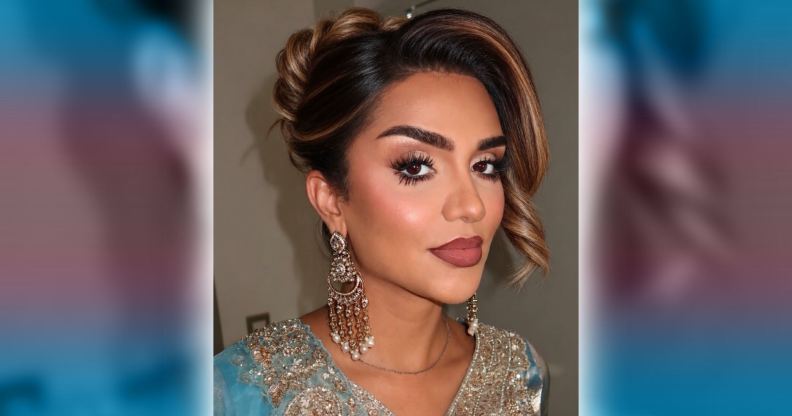
Faye Kingston writes for PinkNews for Transgender Awareness Week (Faye Kingston)
For Transgender Awareness Week, Faye Kingston explores the pressure to constantly explain herself, the hope her everyday life can offer others, and why visibility should come with respect for boundaries.
I can tell people I am trans and Muslim in one sentence. Defending that sentence could take up the rest of my life, if I let it.
There is always another comment to answer. Another stranger insisting those identities cannot belong together. Another demand to explain my gender, justify my faith or respond politely to something deeply personal.
This Transgender Awareness Week, I want to talk about what happens after we make ourselves visible. Sharing our experiences can help people understand us. It can also leave us feeling that our lives are permanently on trial.
I choose to be open about who I am. That does not mean my existence is up for negotiation.
I share beauty, culture and moments from my everyday life. Sometimes I am enjoying an outfit. Sometimes I am laughing with someone I love. Yet the conversation in my comment section quickly turns into a debate about whether I am even allowed to be the person sharing it.
Am I really a woman? Can I really be Muslim? Why do I look or dress a certain way? The questions change, but the underlying expectation remains exactly the same: explain yourself.
People tell me I cannot be trans and Muslim, as though I must give up one part of myself to make the other acceptable to them. My relationship with Allah is personal. Being trans doesn’t make me any less Muslim. I share that for anyone who’s been made to feel they have to choose between their faith and who they are.
I welcome questions from people who want to understand. Some have never knowingly met a trans person. Others have encountered us mainly through arguments online. An honest conversation can challenge assumptions. But curiosity requires a willingness to hear the answer. There is little room for understanding when someone has already decided that anything I say about myself must be wrong.
“You cannot be trans and Muslim” is a conclusion. Adding a question mark to the end of it doesn’t suddenly turn it into curiosity.
When people talk about gender diversity as something foreign to South Asia, I think about Pakistan’s khwaja sira communities. The term itself appears in accounts of the Mughal courts, and khwaja sira people in Pakistan today have their own identities and traditions.

There are many ways to be a trans Muslim. We have different families, beliefs and experiences. I can explain what my life means to me without having an answer for everyone else’s.
My life is one life. It should not have to represent an entire community perfectly.
Growing up, I wanted to see a trans Muslim woman living openly. Today, I share parts of my life because I want someone else to feel less alone.
When I share a moment with my sister, speak about my relationship or wear clothes that connect me to my culture, I think about someone watching who is still finding themselves. They may be wondering whether their future could include a partner who loves them, a family relationship that grows or a connection to their faith.
My marriage and my relationship with my sister are parts of a life I once struggled to picture.
An ordinary moment in my life could be something another trans Muslim has struggled to imagine in theirs.
Their path may look different from mine. Someone keeping their identity private deserves support while deciding what feels safe. They should be able to recognise themselves in our community while taking their own time.
Being a role model also means showing that living openly can include boundaries. I can choose what to share and which conversations to join. Sometimes I respond to a comment with a joke. Sometimes I want to challenge it directly. Other times, I want to put my phone down and give my attention to someone I love.
Leaving a comment unanswered does not mean I have lost an argument. It means I have a life beyond it.
Transgender Awareness Week gives us an opportunity to share experiences, challenge prejudice and celebrate trans lives. Those listening have a part to play. Before asking something deeply personal, consider why you need to know. Listen to the story someone has chosen to tell. Respect their decision to keep something private.
Support can be as ordinary as asking about a trans relative’s day, taking an interest in their work or celebrating their happiness. Those exchanges give us room to be understood as whole people.
I am proud to be a Pakistani Muslim trans woman. I will keep sharing parts of my life because I know how much it would have meant to see someone like me growing up.
You can learn from what I choose to share. You do not get to demand the rest.
Faye Kingston can be found on Instagram and TikTok at @fayekingstonx.
Share your thoughts! Let us know in the comments below, and remember to keep the conversation respectful.