
Reform UK’s LGBTQ+ policies as support surges after local election
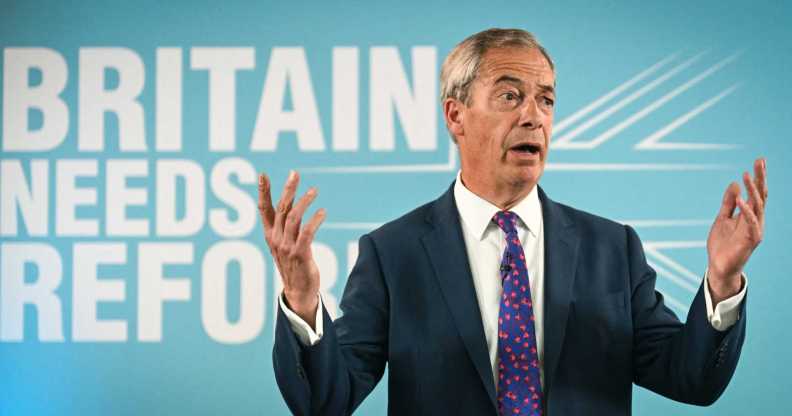
Nigel Farage (JUSTIN TALLIS/AFP via Getty Images)
Reform UK has seen a surge in popularity in 7 May’s local elections, with more than 300 more councillors being voted into local government. On the other hand, Labour has seen a dramatic decline, while the Conservative party has had losses too.
The results have seen some Reform UK supporters demand a general election, with calls to get Labour out of government. The next general election is not scheduled to take place until August 2029.
While the prime minister can choose to hold a general election before then, speaking to BBC News, Keir Starmer said he is “not going to walk away from those challenges and plunge the country into chaos”.
But, to play devil’s advocate, if there was a general election, and support for Reform UK remained the same, this is what it would mean for the LGBTQ+ population.
And, spoiler alert, it’s grim.
Reform UK’s LGBTQ+ policies
Reform UK’s manifesto – titled ‘Our Contract With You’ – takes aim at “‘woke’ ideology”, specifically “transgender indoctrination”.
In the opening statement, from party leader Nigel Farage, it says: “Divisive, ‘woke’ ideology has captured our public institutions. Transgender indoctrination is causing irreversible harm to children.”
In its education section, it vows to “ban transgender ideology in primary and secondary schools” in their first 100 days in government.
“No gender questioning, social transitioning or pronoun swapping. Inform parents of under 16s about their children’s life decisions. Schools must have single sex facilities,” it reads.
Later, it vows to “mandate single sex spaces”, saying: “Public toilets and changing areas must provide single sex facilities.”

It also says it will “review the online safety bill”, adding: “Social media giants that push baseless transgender ideology and divisive Critical Race theory should have no role in regulating free speech.”
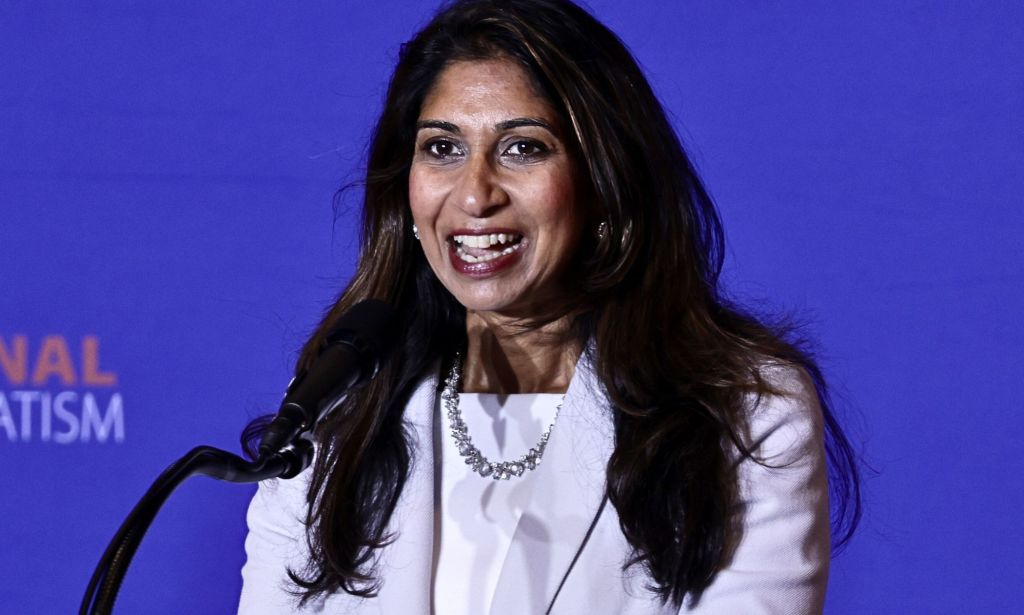
In February 2026, Suella Braverman said that, if voted into power, “on day one, we will get rid of the equalities department, we will scrap the equalities minister … and we will repeal the Equality Act”.
She continued: “We are going to work to build a country defined by meritocracy not tokenism, personal responsibility not victimhood, excellence not mediocrity, and unity not division… The Britain that I love is being ripped apart by diversity, equality and inclusion.”
Reform UK’s manifesto repeats that promise, in it’s “Common Sense Policing not ‘Woke’ Policing” section.
It reads: “Scrap all Diversity, Equality and Inclusion (DE&A) roles and regulations to stop two-tier policing.”
A later section reads: “The Equalities Act requires discrimination in the name of ‘positive action’. We will scrap
Diversity, Equality and Inclusion (DE&I) rules that have lowered standards and reduced economic productivity.”
While the manifesto hones in on trans people specifically, it’s likely other members of the LGBTQ+ community would suffer too.
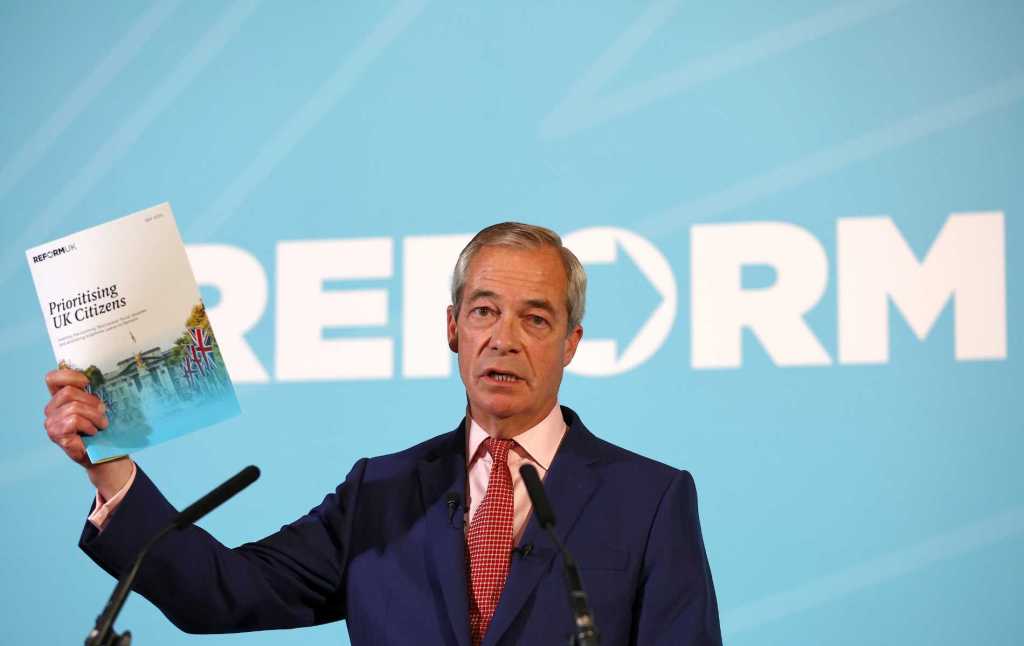
Leader Farage said in 2025 that legalising same-sex marriage was “wrong”.
He said on LBC: “It is a settled issue. I didn’t support it. I thought it was wrong to introduce it to the public without even putting it in a manifesto. I was very surprised that David Cameron did that. I thought the civil partnership arrangement that we had was actually working equitably and fairly.”
While the manifesto doesn’t mention it, the party website says they will “defend and protect British culture and traditions”.
It says: “Religious freedom is a core feature of our culture, but our culture is built upon Christian values. Those will be protected and celebrated.”
While some Christian denominations formally conduct same-sex marriages, others, like the Church of England, do not.
Share your thoughts! Let us know in the comments below, and remember to keep the conversation respectful.