
World Cup ‘Pride Match’ Egypt vs Iran – how bad are LGBTQ+ rights in those countries?
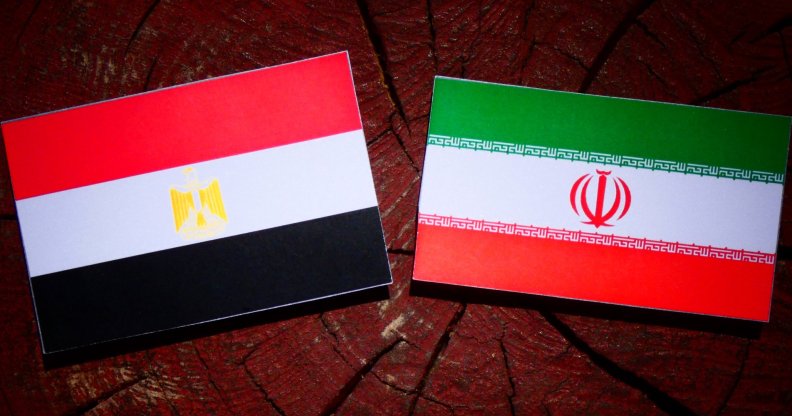
What are LGBTQ+ rights like in Egypt and Iran? (Getty Images, stock)
Seattle is set to host the World Cup‘s “Pride Match” on 26 June, with the draw being Egypt vs Iran.
It was confirmed this week that rainbow flags will be allowed to fly in the stadium, despite protests from both countries.
The match is not officially linked with Pride, instead local organisers in Seattle have designated it as such as it coincide’s with the city’s Pride weekend.
FIFA president Gianni Infantino said in January that “there will be no ‘Pride Match’ at the World Cup”, but acknowledged the local, external organisers marketing it as that.
Of course, eyebrows were raised when the match was drawn, and it was confirmed Iran and Egypt would be facing off.
Neither country have positive track records with LGBTQ+ rights. In fact, it’s grim.
LGBTQ+ rights in Egypt
In Egypt, LGBTQ+ residents face extreme hardships, with violence and discrimination both common, and police targeting members of the community.
Same-sex sexual acts are not criminalised under Egyptian law, as such, however the African country has a number of morality clauses which do criminalise it. One, as per ILGA, is the law on “Combating of Prostitution”, which is selectively used to target queer people.
Similarly, behaviour or expression which is deemed immoral, scandalous or offensive to the teachings of a recognised religious leader may be prosecuted.
In the case of Egypt, most people are Sunni Muslim or Coptic Christians. Neither religion recognises homosexual relationships.
Furthermore, same-sex marriages are not recognised under Egyptian law.
There are no protections against discrimination based on sexual orientation or gender identity in the provision of goods and services, health, education, school bullying, employment or housing.

The country is also not believed to make penalties worse for hate crimes on the basis of sexuality or gender identity.
It is not legal for a trans Egyptian to change their gender marker, either.
LGBTQ+ rights in Iran
In Iran, things are even worse. Sexual activity between members of the same sex is illegal, and in some cases is punishable by death.
If two men have anal sex – or what the Islamic Penal Code of Iran defines as “sodomy” – then the receiving partner receives the death penalty.
The giving partner will be sentenced to death if he used force, coercion, is married, or if he is non-Muslim and the receiving partner is Muslim. In other circumstances, he is sentenced to 100 lashes.
“Intercrural sex”, non-penetrative sex in which a penis is inserted between a partner’s thighs, or under Article 235 of the Islamic Penal Code of Iran, between the buttocks, is punishable with 100 lashes. But if neither of the men are Muslim, they are executed.
All other physical intimacy between men is illegal, with punishments chosen by a judge. They range between 31 and 74 lashes.
If a man repents before conviction, and a judge accepts it, the penalty may be reduced to flogging, imprisonment or a reprimand. If the repenting comes after conviction, the judge can submit a request to the Supreme Leader for a pardon.
Despite the laws, it’s reported that few cases of consenting sex between men results in a death penalty. Instead, they may be sentenced to life in prison.
For women, female-to-female genital contact is illegal and punished with 100 lashes. If a woman is convicted of the crime – called “tribadism” – for a fourth time, she will be sentenced to death.
There are no other explicit laws criminalising other forms of sex between women.
Same-sex marriage is not legally recognised in the country, and there it is believed there is no protection against discrimination.
As per ILGA, trans people in Iran can legally change their gender, if they have been “diagnosed transsexual” and go through gender affirming surgery, which is also legal.
Share your thoughts! Let us know in the comments below, and remember to keep the conversation respectful.