
Are the Minions queer, genderless and immortal?
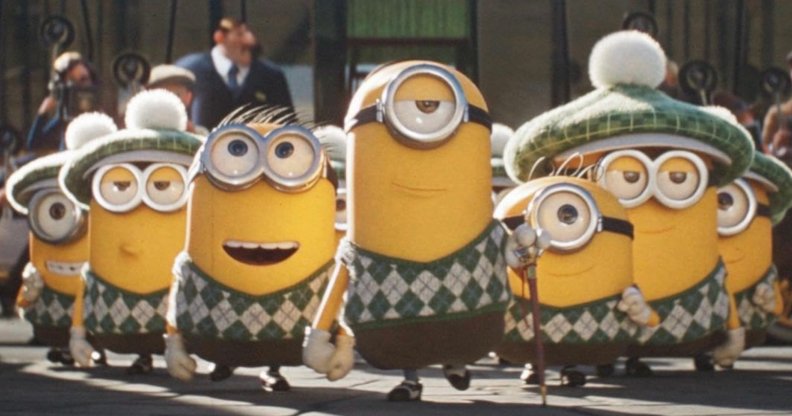
Turns out the Minions may be inherently queer by biology (Universal)
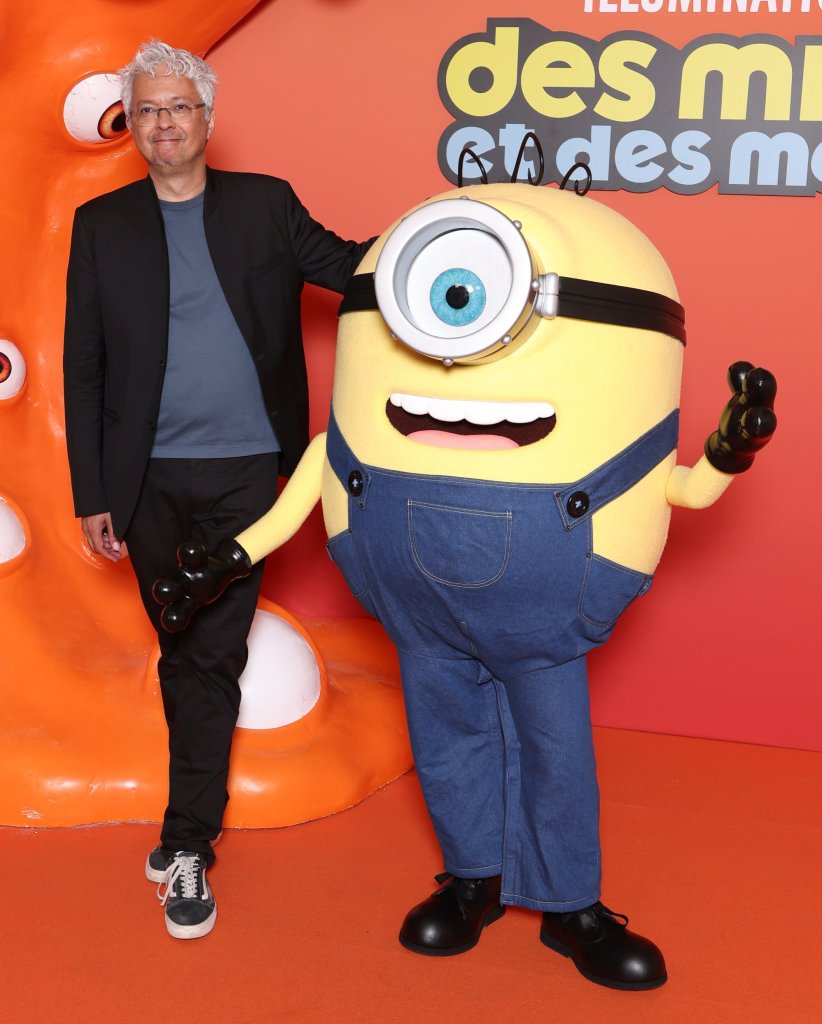
French animator, writer, director and producer Pierre Coffin’s recent interview promoting the latest Minions film left readers with far more questions than answers when Coffin delved into the reproductive method, genders, and lifespans of his kooky yellow characters.
During his dialogue with The Guardian on 2 July, Coffin was asked a series of fan-submitted queries about the Minions ranging from the innocuous “Do you like bananas in real life?” (he doesn’t particularly), to the more esoteric “If you could remake a French New Wave film with Minions as the cast, which would you choose and why?” (Breathless, Godard’s 1960 masterpiece). However, the elusive functions of Minion society and Minion sexuality were cracked open when Coffin was asked: “Will we ever see a female Minion? How do they reproduce?”
Coffin shot down the concept of a “female Minion” by surmising that “a female Minion would be the beginning of the end. Universal would want to do it because they’d think it would please all the women out there. But I’m not convinced. If I were a woman, I’d think it was tokenistic.”
He then reminisced about a past attempt, saying: “We did play around with the idea of having the Minions land on this island where there was another tribe who were all, apparently, female. But it didn’t go further than that. In my head, female Minions would look exactly the same as male ones. And in terms of how they breed: they don’t. They just are.”
While Coffin’s answers are largely anecdotal, the implications they provide on Minion biology, gender, and sexuality are astounding – and should be taken with heed considering he’s a co-creator of the characters and quite literally the primary voice behind each of them.
While the Minions are clearly aware of gender differences in human society – often donning dresses, skirts, and various female-presenting disguises for their escapades in the films – within Minion society itself, Coffin indicates that gender is ultimately completely irrelevant. From a structuralist perspective, categories only acquire meaning through opposition. If there are no female, non-binary, agender, or otherwise differently gendered Minions against which “male” can be contrasted, then masculinity loses its semantic value altogether. In Minion society, being male is no more descriptive than having yellow skin; their “he/him” pronouns exist only by convention and to serve those who need to address them in a gendered manner.
As far as Minion sexuality goes, Coffin made it abundantly clear that sexual dimorphism is absent. With no observable reproductive methods existing for the Minions besides just… being, Minion relationships exist purely for bond-building and personal gratification within their world.
Samantha Allen, managing editor of Them, makes note of the queer-coded weight of these chosen familial bonds in her 2 July analysis of Coffin’s interview, writing: “It’s entirely possible for Kevin to have a family without having sired children… it’s entirely possible for them to form romantic connections without reproduction, as queer people know quite well.”
If gender serves no biological or social function among Minions, then neither does sexuality in the way humans typically understand it. Their relationships are untethered from reproduction, inheritance, or rigid gender roles, leaving affection, companionship, and chosen family as ends in themselves. In a species where everyone is masculine-coded – and therefore, paradoxically, no one is meaningfully “male” at all – the little yellow henchmen may have accidentally stumbled into a remarkably queer conception of kinship.
Coffin also revealed that the Minions exist outside of the crushing weight of mortality. When asked in his Guardian interview, “Do Minions live for ever?”, Coffin replied with a simplistically Earth-shattering “Yes.”
This is where things start to fold in on themselves a bit philosophically. If the Minions do not reproduce, do not visibly age in any conventional sense, and, crucially, do not die, then the usual biological scaffolding that underpins gendered and sexual classification simply collapses.
Coffin’s answers, while completely innocent in nature on their face, provide next-level insight into the Minion world. A society that appears to have transcended age, gender, sexuality, and even death itself seems almost incomprehensible by human standards – and yet there they are, existing in perpetual present tense, laughing, singing, and committing organised workplace crimes for Gru.
In the end, perhaps the Minions don’t reflect a society beyond gender and sexual categorisation so much as a reminder that we created such labels for beings far more complicated than they are. Or maybe they’ve simply outlived the need for them entirely.
Share your thoughts! Let us know in the comments below, and remember to keep the conversation respectful.