
FIFA urged by anti-discrimination partner not to adopt trans ban for Women’s World Cup
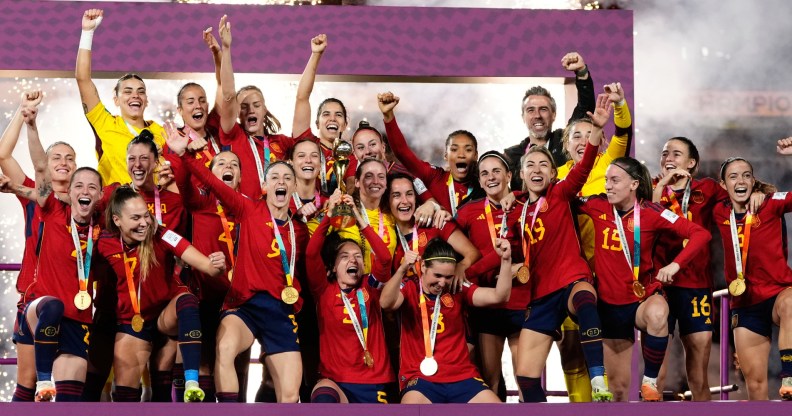
FIFA has been urged not to adopt an Olympic-style trans ban (Getty Images)
FIFA’s anti-discrimination partner has advised against adopting an Olympic-style ban on transgender athletes for the next Women’s World Cup.
The head of the White House World Cup Task Force, Andrew Giuliani, told Politico on 16 July that getting FIFA to guarantee that “women play in the Women’s World Cup and not biological men” could cause huge problems during planning negotiations for the tournament.
A trans ban like that announced by the International Olympic Committee in March this year would represent a massive victory for the Trump administration following recent efforts to ban trans girls and women from participating in women’s sports.
Piara Powar, the executive director of the Fare network, which “brings together individuals, informal groups and organisations driven to combat inequality in football,” warned a ban in the 2031 Women’s World Cup would stigmatise trans athletes, as well as women with intersex characteristics, even further.
“We think it’s important that even if a ban comes into force for the World Cup in 2031 it should not be embedded in FIFA regulations permanently,” Powar told Politico.

“FIFA should not go the way of the IOC and exclude human beings from participation in football.”
FIFA does not currently undergo any sex-verification methods for players, instead relying on national federations to verify eligibility of its players before submitting rosters.
In March, a ruling from the IOC confirmed that transgender women will be banned from the female categories of future Olympic events.
The new policy, titled ‘Policy on the Protection of the Female (Women’s) Category in Olympic Sport’, will come into effect for the Los Angeles 2028 Olympic Games. The IOC described the policy as “evidence‑based and expert‑informed”.
The IOC has also shared that eligibility for female sporting events will be determined by one-time gene-screening sex tests, which will “ensure fairness and protect safety, particularly in contact sports”.
Any athlete found to have the SRY gene, which is found in Y chromosomes, will be deemed not “biologically female” and therefore ineligible to compete in the women’s categories. The eligibility criteria will also apply to intersex athletes who have gone through male puberty.
Share your thoughts! Let us know in the comments below, and remember to keep the conversation respectful.