
Trump admin’s proposed US Census rules could mean ‘forced outing’ for trans Americans
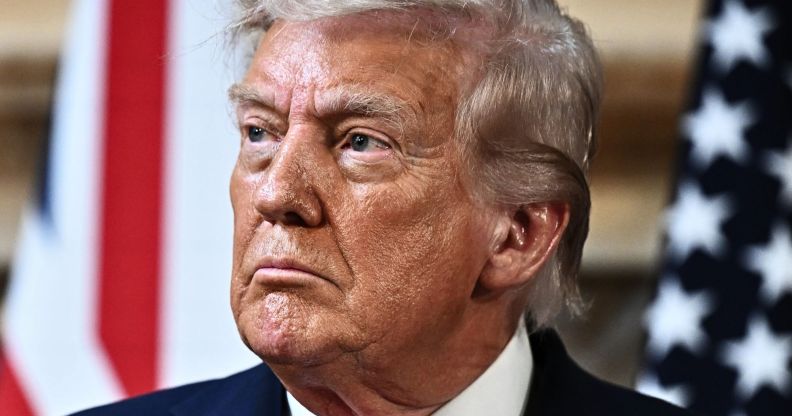
US President Donald Trump (Getty Images)
The Trump administration is proposing sweeping changes to the rules governing the 2030 US Census, including a requirement that could make questions about biological sex mandatory for respondents, a change critics say could effectively force transgender people to disclose their trans status to the federal government.
The proposal, published by the Census Bureau on September 10, would prohibit questions about race, ethnicity and sexual orientation from appearing on the short-form decennial census. At the same time, it would allow questions about biological sex, date of birth and household relationships to be included for the purpose of verifying the population count. The proposed rule is part of a much broader overhaul of the decennial census.
News outlet The Needle argued the practical impact would leave trans people with limited options: disclose sex assigned at birth, lie, or refuse to take part. It wrote: “By requiring trans people to identify themselves by their sex assigned at birth, and with a looming threat of prosecution for noncompliance, the Trump Administration is compelling every trans person to out themselves to the Federal Government.”
The Needle also claimed: “This is an attempt to weaponise the Census to make a list of every trans person in the United States.”
What the proposal would change
Alongside the biological sex provision, the Census Bureau is proposing new criteria for determining who should be counted when congressional seats are apportioned between states.
Under the proposal, the Bureau would exclude undocumented immigrants and people whose legal status is considered less durable than lawful permanent residency from the population used for apportionment.
Cited Pew Research estimates that roughly 16.1 million people have a legal status less secure than lawful permanent resident status, including 14 million undocumented people.
The Bureau says it is considering using an expanding collection of administrative records to determine people’s legal status. Those records could include information from the Treasury Department, Department of Health and Human Services, Department of Homeland Security, Department of State, the US Postal Service, state and local governments, tribal governments and third-party commercial data.
The Bureau is also asking for public comment on whether it should add a legal-status question directly to the census questionnaire.
Why critics are alarmed
The Census Bureau runs the decennial US Census, which is used to apportion seats in the House of Representatives and to redraw electoral districts. Census data also informs the distribution of federal and state funding and planning for public services, and the Census is legally mandated.
Questions and definitions used by the Census can become politically contentious because they affect how populations are counted and represented, including in disputes over the release of LGBTQ+ census data.
The proposal itself does not say that the government intends to compile a list of transgender Americans. Nor does it state that information supplied to the Census will be handed to immigration authorities or other government agencies for enforcement purposes.
Under Title 13, the Census Bureau is generally prohibited from using information collected from individuals for purposes other than statistical purposes or publishing information that identifies an individual. Census employees are also legally bound to protect confidential information.
But the proposed rule’s expansion of administrative-record use is distinct from the confidentiality rules governing responses to the Census questionnaire. For transgender Americans, the prospect of being required to provide biological-sex information to a federal agency may itself be concerning, particularly amid the Trump administration’s broader efforts to define sex in strictly biological terms and roll back federal recognition of transgender identities.
Under 13 U.S.C. §221, someone over 18 who refuses or wilfully neglects to answer a question on a census can face a fine of up to $100. The law also provides for a fine of up to $500 for someone who wilfully provides a false answer.

Public comments on the proposed rules remain open until 13 October via the federal docket on regulations.gov. None of these proposed changes are currently in effect.