Nebraska voters pass ‘Fairness for Girls’ measure to put trans sports ban in constitution

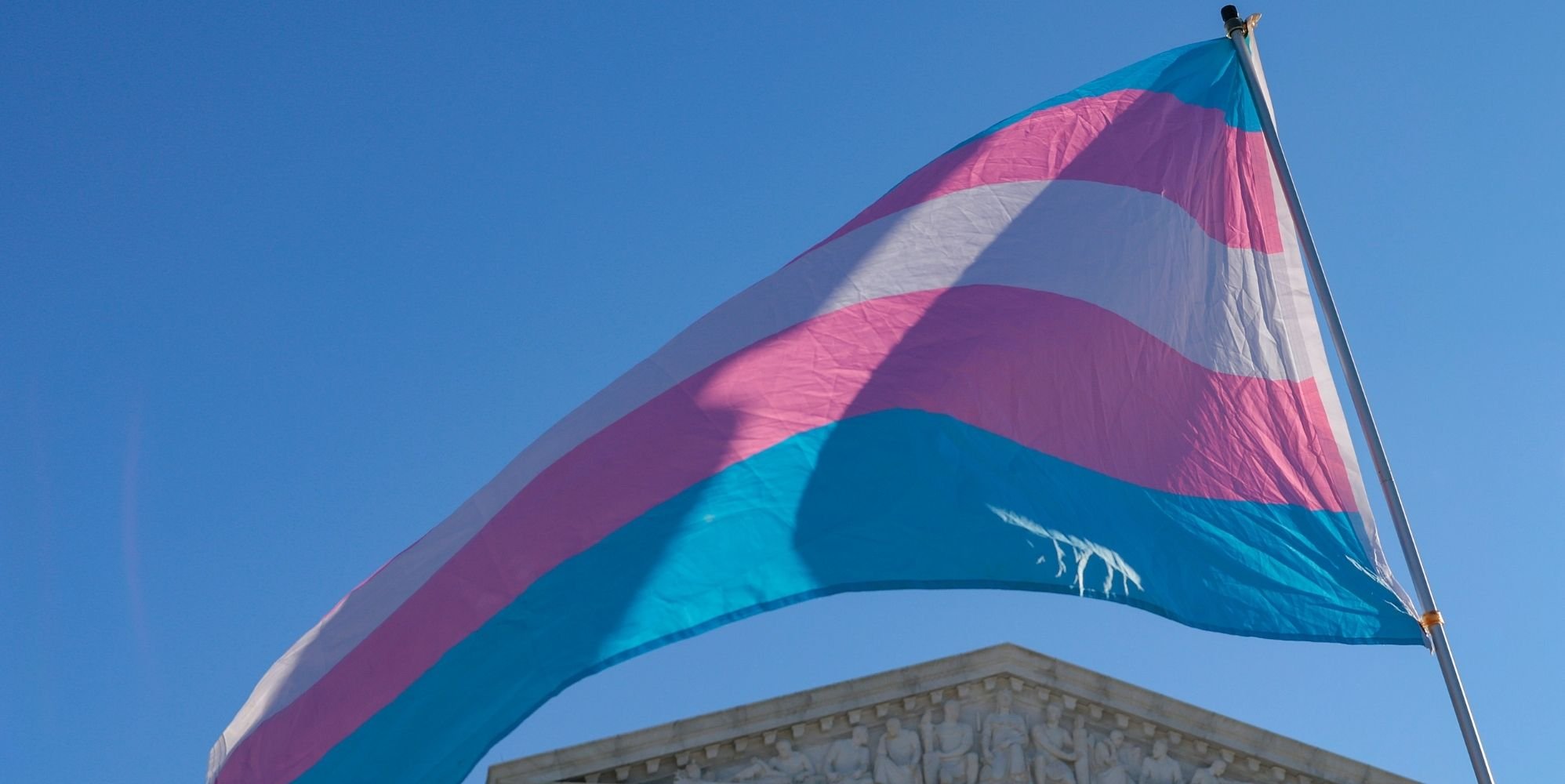
People running in front of a trans flag. (Getty Images)
Nebraska voters have approved ballot Measure 442, dubbed the “Fairness for Girls initiative”, which would write an anti-trans sports ban into the state constitution. Support was estimated at 67 per cent as of midnight local time, according to The Daily Nebraskan.
If it were brought into force as planned, the amendment would embed in the constitution a 2025 law that obliges athletes in public K-12 schools and colleges to compete on teams aligned with their sex at birth.
Measure 442 defines sex at birth in biological terms, saying a person’s sex is tied to having a reproductive system that “does or at some point will produce, transport, and utilize” either eggs (for those assigned female at birth) or sperm (for those assigned male at birth).
The measure also sets out a wide scope. It applies to any sport or athletic team that is sponsored by a public school, a postsecondary educational institution, a private school, or an educational institution that competes against public schools.
What would Measure 442 do?
Supporters have framed the amendment as a protection for girls’ and women’s sport. The ballot language states: “The object of this petition is to amend the Nebraska Constitution to establish constitutional protections for sex-separate athletics to ensure equal access to athletic opportunities for females.”
Opponents challenged that wording in court. A plaintiff alleged the language failed to properly describe the “legal effect of the filing of the petition and the object sought to be secured by submitting the measure to the voters,” and that it “omits major provisions contained in the Initiative’s text and does not accurately reflect the text of the Initiative.”
Why did the Nebraska Supreme Court reject the challenge?
The Nebraska Supreme Court rejected claims that the initiative’s language was deliberately misleading. In its ruling, the justices wrote that the state ballot language law “does not require an initiative’s object statement to set forth every consequence that would result from the initiative measure should it be adopted by voters.”
Debates over trans inclusion in sport have become a recurring national political issue in US elections and ballot initiatives, with multiple states passing restrictions framed as “fairness” or “women’s sports” measures.

In Nebraska, the underlying 2025 law was sponsored by Republican state senator Kathleen Kauth. In 2023, she also backed legislation that would have banned gender-affirming care for under-18s in the state, prompting Democratic senator Megan Hunt, who has a trans son, to vow to filibuster every bill after it advanced.