
Man ‘likely cured’ of HIV thanks to brother’s genetic mutation in transplant
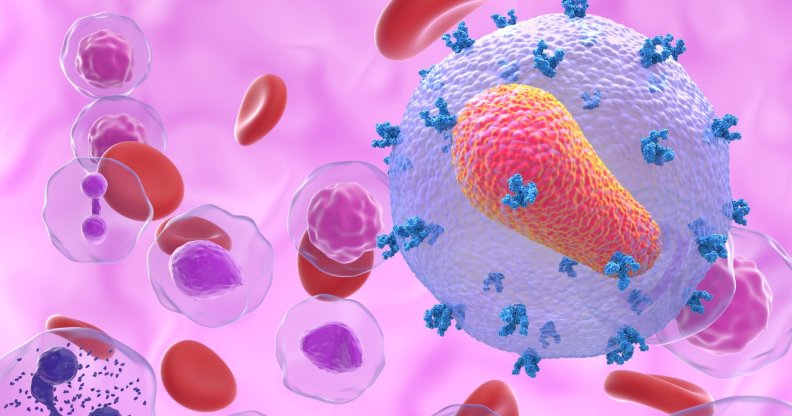
Illustration of HIV structure (Image: Stock image via Getty Images)
A 64-year-old man in Oslo has “likely been cured” after being in HIV remission for five years after receiving a stem-cell transplant from his brother, whose rare CCR5Δ32/Δ32 mutation is linked to resistance to many strains of HIV.
However, clinicians involved in the case have stressed this is not a realistic route to a widely available cure.
The transplant was carried out to treat the man’s bone marrow cancer. He was diagnosed with HIV in 2006, aged 44, and later stopped antiretroviral medication 24 months after the transplant.
Researchers published the case in Nature Microbiology on Monday. Two years after the procedure, tissue samples from his blood and gut showed no HIV DNA in the host DNA. An analysis of more than 65 million immune system cells also found no virus capable of multiplying, alongside no detectable HIV-specific T-cell responses.
The study authors wrote: “Replication-competent virus and HIV-specific T cell responses were absent, and HIV antibody responses showed a gradual decline,” adding: “The absence of HIV-specific T cell responses in our data supports the hypothesis that such an absence correlates with sustained HIV remission.”
Why this case is so rare
The man’s brother happened to have the CCR5Δ32/Δ32 mutation, and his donor cells eventually replaced the patient’s immune cells in his blood, bone marrow, and gut tissues. Scientists involved said this kind of outcome is unlikely and might not be achievable in other patients.
Study co-author Anders Eivind Myhre said: “A sibling has a 25 per cent probability of being a match for a transplant, and the frequency of CCR5Δ32/Δ32 is around one per cent” in northern European populations.
What it means for HIV care
Stem-cell transplantation is a high-risk intervention, generally reserved for serious blood cancers and other life-threatening conditions. CCR5 is a key co-receptor used by many HIV strains to enter immune cells, which is why CCR5-targeting has long been a major avenue in HIV treatment and cure research. Clinicians also distinguish between a sterilising cure (no virus anywhere) and long-term remission without treatment.
For most people living with HIV, antiretroviral therapy (ART) allows an undetectable viral load and a normal lifespan. The principle of U=U (Undetectable = Untransmittable) is widely accepted: people with sustained undetectable viral load do not sexually transmit HIV. LGBTQ+ communities, particularly gay and bisexual men, have also been central to HIV activism, research advocacy, and public health messaging.
Study author Marius Trøseid told Live Science the patient “feels like he has won the lottery twice … He was cured of his bone marrow disease, which could be fatal, and he’s also now cured of HIV, most likely.”

Share your thoughts! Let us know in the comments below, and remember to keep the conversation respectful.